

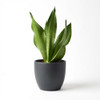


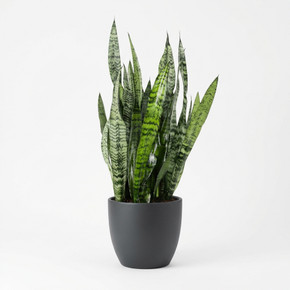


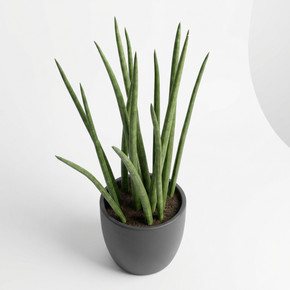
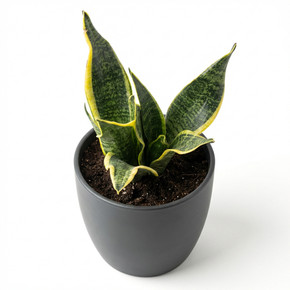
Add a bold, architectural look to any space with the compact Snake Plant 'Hahnii'. This dwarf, bird’s-nest form stays neat and tidy, thrives on minimal watering, and fits perfectly on desks, countertops, and reception areas. A top choice for beginners and busy offices—stylish, resilient, and ready to grow with you.
Common Name: Snake Plant 'Hahnii'
Botanical Name: Dracaena trifasciata 'Hahnii'
Former Name: Sansevieria trifasciata 'Hahnii'
Plant Type: Foliage houseplant
Plant Code / SKU: PLT-0041
Alternative Names:
Sansevieria trifasciata 'Hahnii'
Bird’s Nest Sansevieria
Dwarf Snake Plant
Mother-in-Law’s Tongue 'Hahnii'
Order: Asparagales
Family: Asparagaceae
Genus: Dracaena
Species: Dracaena trifasciata
Cultivar: 'Hahnii'
Synonyms: Formerly classified under genus Sansevieria
Native Range: West Africa, from Nigeria to the Democratic Republic of the Congo
Cultivar Origin: Selected and named in European cultivation in the late 19th century
Distribution: Cultivated worldwide as an ornamental houseplant
Growth Form: Compact rosette (“bird’s nest”) habit
Leaves: Short, broad, stiff, upright leaves with dark green horizontal banding and lighter green margins; smooth, glossy surface
Color: Deep green with variable lighter green bands, sometimes edged in yellow or cream
Mature Height: 15–25 cm (6–10 inches)
Mature Spread: 20–30 cm (8–12 inches)
Growth Rate: Slow
Best: Bright, indirect light
Tolerates: Low to medium indirect light
Avoid: Prolonged direct sun, which may scorch leaves
Frequency: Water thoroughly, then allow top 2–3 cm (1 inch) of soil to dry out between waterings
Quantity: Moderate—do not let plant sit in water
Dormancy: Reduce watering in fall and winter to prevent root rot
Soil Type: Well-draining, sandy or gritty mix; cactus/succulent mix recommended
pH: Slightly acidic to neutral (6.0–7.0)
Potting: Use containers with drainage holes; repot every 2–3 years to refresh soil and divide crowded rhizomes
Temperature: Optimal 18–27 °C (65–80 °F); minimum 10 °C (50 °F)
Humidity: Average indoor levels; tolerates low humidity
Tolerances: Sensitive to frost and cold drafts
Type: Balanced liquid fertilizer (e.g., 10-10-10) or slow-release granular fertilizer
Frequency: Monthly during active growth (spring and summer); withhold feed in winter
Difficulty: Very low; ideal for beginners and busy settings
Tasks: Wipe leaves to remove dust; trim any damaged or yellowing foliage; check for pests periodically
Propagation Methods: Division of rhizomes; leaf cuttings
Steps: Divide clumps when repotting by separating rhizomes with roots attached; for leaf cuttings, cut leaf into 2–3 cm sections, allow cut ends to callus, insert in moist, well-draining mix until new plantlets form
Overwatering: Leads to root rot, yellowing and mushy leaves
Underwatering: Causes brown, crispy leaf tips and edges
Pests: Susceptible to mealybugs, spider mites and scale; treat with insecticidal soap or neem oil
Air Purification: Known to filter formaldehyde, benzene and other VOCs
Uses: Decorative desktop or countertop accent; ideal for offices, reception areas and low-light interiors
Benefits: Low-maintenance architectural foliage that enhances indoor air quality and aesthetics
Toxicity: Toxic to cats, dogs and humans if ingested; contains saponins
Symptoms: Nausea, vomiting, diarrhea, drooling
Precautions: Keep out of reach of children and pets; wear gloves when handling if sensitive to plant sap
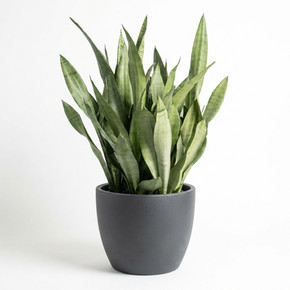
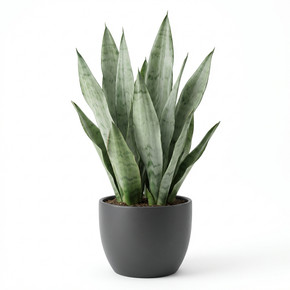
Add a bold, architectural look to any space with the compact Snake Plant 'Hahnii'. This dwarf, bird’s-nest form stays neat and tidy, thrives on minimal watering, and fits perfectly on desks, countertops, and reception areas. A top choice for beginners and busy offices—stylish, resilient, and ready to grow with you.
Common Name: Snake Plant 'Hahnii'
Botanical Name: Dracaena trifasciata 'Hahnii'
Former Name: Sansevieria trifasciata 'Hahnii'
Plant Type: Foliage houseplant
Plant Code / SKU: PLT-0041
Alternative Names:
Sansevieria trifasciata 'Hahnii'
Bird’s Nest Sansevieria
Dwarf Snake Plant
Mother-in-Law’s Tongue 'Hahnii'
Order: Asparagales
Family: Asparagaceae
Genus: Dracaena
Species: Dracaena trifasciata
Cultivar: 'Hahnii'
Synonyms: Formerly classified under genus Sansevieria
Native Range: West Africa, from Nigeria to the Democratic Republic of the Congo
Cultivar Origin: Selected and named in European cultivation in the late 19th century
Distribution: Cultivated worldwide as an ornamental houseplant
Growth Form: Compact rosette (“bird’s nest”) habit
Leaves: Short, broad, stiff, upright leaves with dark green horizontal banding and lighter green margins; smooth, glossy surface
Color: Deep green with variable lighter green bands, sometimes edged in yellow or cream
Mature Height: 15–25 cm (6–10 inches)
Mature Spread: 20–30 cm (8–12 inches)
Growth Rate: Slow
Best: Bright, indirect light
Tolerates: Low to medium indirect light
Avoid: Prolonged direct sun, which may scorch leaves
Frequency: Water thoroughly, then allow top 2–3 cm (1 inch) of soil to dry out between waterings
Quantity: Moderate—do not let plant sit in water
Dormancy: Reduce watering in fall and winter to prevent root rot
Soil Type: Well-draining, sandy or gritty mix; cactus/succulent mix recommended
pH: Slightly acidic to neutral (6.0–7.0)
Potting: Use containers with drainage holes; repot every 2–3 years to refresh soil and divide crowded rhizomes
Temperature: Optimal 18–27 °C (65–80 °F); minimum 10 °C (50 °F)
Humidity: Average indoor levels; tolerates low humidity
Tolerances: Sensitive to frost and cold drafts
Type: Balanced liquid fertilizer (e.g., 10-10-10) or slow-release granular fertilizer
Frequency: Monthly during active growth (spring and summer); withhold feed in winter
Difficulty: Very low; ideal for beginners and busy settings
Tasks: Wipe leaves to remove dust; trim any damaged or yellowing foliage; check for pests periodically
Propagation Methods: Division of rhizomes; leaf cuttings
Steps: Divide clumps when repotting by separating rhizomes with roots attached; for leaf cuttings, cut leaf into 2–3 cm sections, allow cut ends to callus, insert in moist, well-draining mix until new plantlets form
Overwatering: Leads to root rot, yellowing and mushy leaves
Underwatering: Causes brown, crispy leaf tips and edges
Pests: Susceptible to mealybugs, spider mites and scale; treat with insecticidal soap or neem oil
Air Purification: Known to filter formaldehyde, benzene and other VOCs
Uses: Decorative desktop or countertop accent; ideal for offices, reception areas and low-light interiors
Benefits: Low-maintenance architectural foliage that enhances indoor air quality and aesthetics
Toxicity: Toxic to cats, dogs and humans if ingested; contains saponins
Symptoms: Nausea, vomiting, diarrhea, drooling
Precautions: Keep out of reach of children and pets; wear gloves when handling if sensitive to plant sap




Take 20% off your first order
Enter the code below at checkout to get 20% off your first order