

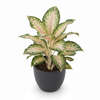





Transform your space with the vibrant tropical energy of the Dieffenbachia 'Camellia'. Each leaf is a natural masterpiece, blending creamy yellows with deep emerald green for a look that's both bold and elegant. Perfect for brightening a living room corner or adding life to an office, the Dumb Cane is surprisingly low-maintenance. It's not just a pretty face—it's a hardworking air purifier, creating a healthier, more beautiful environment for you. Add this stunning, easy-care plant to your collection today!
Common Name: Dumb Cane 'Camellia'
Botanical Name: Dieffenbachia seguine 'Camellia'
Plant Variant: Camellia
Plant Color: Multicolor (Cream and Green)
Plant Country: Netherlands
Arabic Name: دفن كاميليا
Stems: Single to multiple stalks
Family: Araceae
Dieffenbachia seguine 'Camellia' belongs to the family Araceae (Aroids). It is a monocotyledonous perennial herbaceous plant within the genus Dieffenbachia, which is native to the tropical regions of the New World. The cultivar 'Camellia' is specifically bred for its striking leaf variegation.
The genus Dieffenbachia is native to the tropical Americas, ranging from Mexico and the West Indies to Argentina. The 'Camellia' cultivar is widely distributed through global horticultural trade, with major production centers in the Netherlands.
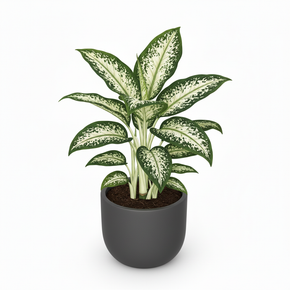
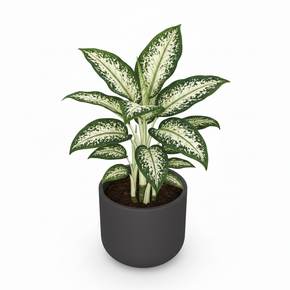
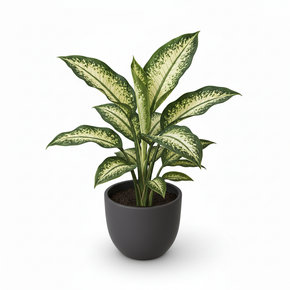
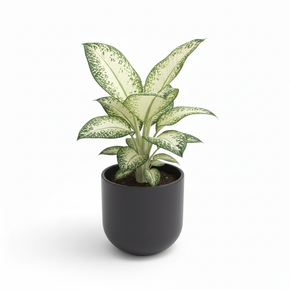
The 'Camellia' variety features large, oval leaves with a distinctive pattern. The center of each leaf is a broad expanse of creamy-white or pale yellow, which is dramatically contrasted by a thin, wavy margin of dark emerald green. The stems are thick and succulent, holding the foliage upright.
In indoor conditions, Dieffenbachia 'Camellia' typically reaches a height of 2 to 3 feet (60-90 cm) and a spread of about 1.5 to 2 feet. It is considered a medium-sized indoor plant.
This plant thrives in bright, indirect sunlight. Direct sun can scorch the delicate variegated leaves, while too little light may cause the vibrant creamy centers to turn green or the growth to become leggy.
Water when the top 1-2 inches of soil feel dry to the touch. It prefers consistent moisture but is sensitive to overwatering, which can lead to root rot. Ensure the pot has excellent drainage.
Use a well-aerated, peat-based potting mix that retains some moisture but drains quickly. A mix containing perlite or pine bark is ideal for keeping the roots oxygenated.
Dieffenbachia prefers warm temperatures between 65°F and 80°F (18°C - 27°C). It enjoys high humidity, reflective of its tropical origin; however, it adapts well to standard indoor humidity. Avoid cold drafts or temperatures below 60°F.
Apply a balanced, water-soluble fertilizer at half strength once a month during the active growing season (spring and summer). Reduce or stop feeding during the dormant winter months.
Care Level: Easy/Low Maintenance. Regularly wipe the large leaves with a damp cloth to remove dust and prevent pests. Prune yellowing or lower leaves to encourage upward growth and maintain a tidy appearance.
It is a relatively fast-growing plant under ideal light conditions. Propagation is typically achieved through stem cuttings (tip or middle sections) or by air layering.
Common issues include spider mites, mealybugs, and aphids. Yellowing leaves can indicate overwatering or poor drainage. Drooping leaves often suggest the plant is too cold or thirsty.
Dieffenbachia is a powerful air purifier, known for removing indoor toxins such as xylene and toluene. It serves as an excellent ornamental piece for homes and offices, adding a lush, tropical feel to interior designs.
Highly Toxic. The plant contains raphides (calcium oxalate crystals). If leaves are chewed or swallowed, they cause intense burning and swelling of the mouth and throat, which can lead to temporary loss of speech (hence the name "Dumb Cane"). Keep away from children and pets.
Transform your space with the vibrant tropical energy of the Dieffenbachia 'Camellia'. Each leaf is a natural masterpiece, blending creamy yellows with deep emerald green for a look that's both bold and elegant. Perfect for brightening a living room corner or adding life to an office, the Dumb Cane is surprisingly low-maintenance. It's not just a pretty face—it's a hardworking air purifier, creating a healthier, more beautiful environment for you. Add this stunning, easy-care plant to your collection today!
Common Name: Dumb Cane 'Camellia'
Botanical Name: Dieffenbachia seguine 'Camellia'
Plant Variant: Camellia
Plant Color: Multicolor (Cream and Green)
Plant Country: Netherlands
Arabic Name: دفن كاميليا
Stems: Single to multiple stalks
Family: Araceae
Dieffenbachia seguine 'Camellia' belongs to the family Araceae (Aroids). It is a monocotyledonous perennial herbaceous plant within the genus Dieffenbachia, which is native to the tropical regions of the New World. The cultivar 'Camellia' is specifically bred for its striking leaf variegation.
The genus Dieffenbachia is native to the tropical Americas, ranging from Mexico and the West Indies to Argentina. The 'Camellia' cultivar is widely distributed through global horticultural trade, with major production centers in the Netherlands.
The 'Camellia' variety features large, oval leaves with a distinctive pattern. The center of each leaf is a broad expanse of creamy-white or pale yellow, which is dramatically contrasted by a thin, wavy margin of dark emerald green. The stems are thick and succulent, holding the foliage upright.
In indoor conditions, Dieffenbachia 'Camellia' typically reaches a height of 2 to 3 feet (60-90 cm) and a spread of about 1.5 to 2 feet. It is considered a medium-sized indoor plant.
This plant thrives in bright, indirect sunlight. Direct sun can scorch the delicate variegated leaves, while too little light may cause the vibrant creamy centers to turn green or the growth to become leggy.
Water when the top 1-2 inches of soil feel dry to the touch. It prefers consistent moisture but is sensitive to overwatering, which can lead to root rot. Ensure the pot has excellent drainage.
Use a well-aerated, peat-based potting mix that retains some moisture but drains quickly. A mix containing perlite or pine bark is ideal for keeping the roots oxygenated.
Dieffenbachia prefers warm temperatures between 65°F and 80°F (18°C - 27°C). It enjoys high humidity, reflective of its tropical origin; however, it adapts well to standard indoor humidity. Avoid cold drafts or temperatures below 60°F.
Apply a balanced, water-soluble fertilizer at half strength once a month during the active growing season (spring and summer). Reduce or stop feeding during the dormant winter months.
Care Level: Easy/Low Maintenance. Regularly wipe the large leaves with a damp cloth to remove dust and prevent pests. Prune yellowing or lower leaves to encourage upward growth and maintain a tidy appearance.
It is a relatively fast-growing plant under ideal light conditions. Propagation is typically achieved through stem cuttings (tip or middle sections) or by air layering.
Common issues include spider mites, mealybugs, and aphids. Yellowing leaves can indicate overwatering or poor drainage. Drooping leaves often suggest the plant is too cold or thirsty.
Dieffenbachia is a powerful air purifier, known for removing indoor toxins such as xylene and toluene. It serves as an excellent ornamental piece for homes and offices, adding a lush, tropical feel to interior designs.
Highly Toxic. The plant contains raphides (calcium oxalate crystals). If leaves are chewed or swallowed, they cause intense burning and swelling of the mouth and throat, which can lead to temporary loss of speech (hence the name "Dumb Cane"). Keep away from children and pets.



Take 20% off your first order
Enter the code below at checkout to get 20% off your first order