


Dwarf Apple Tree 'Dwarf'
Your Orchard on a Balcony! Imagine stepping outside to pick a crisp, juicy apple from your very own tree. With our Dwarf Apple Tree, that dream is a reality, no matter the size of your space. This compact tree delivers the full-size flavor and spring beauty of a traditional orchard, perfectly scaled for modern living. It’s more than a plant; it's a source of fresh food, natural beauty, and the simple joy of growing something wonderful. Order yours today and taste the difference of homegrown.
1. Basic Identification
Common Name: Dwarf Apple Tree / تفاح قزم
Botanical Name: Malus domestica
Variant: Dwarf
Color: Natural
Family: Rosaceae
Origin: Netherlands
2. Taxonomy & Classification
Kingdom: Plantae
Clade: Tracheophytes
Order: Rosales
Family: Rosaceae
Genus: Malus
Species: Malus domestica
3. Origin & Distribution
While the ancestor of the modern apple tree, Malus sieversii, is native to Central Asia, this specific dwarf cultivation originates from horticultural developments in the Netherlands. These varieties are now distributed globally for high-density commercial orchards and home gardening in temperate climates.
4. Visual Characteristics
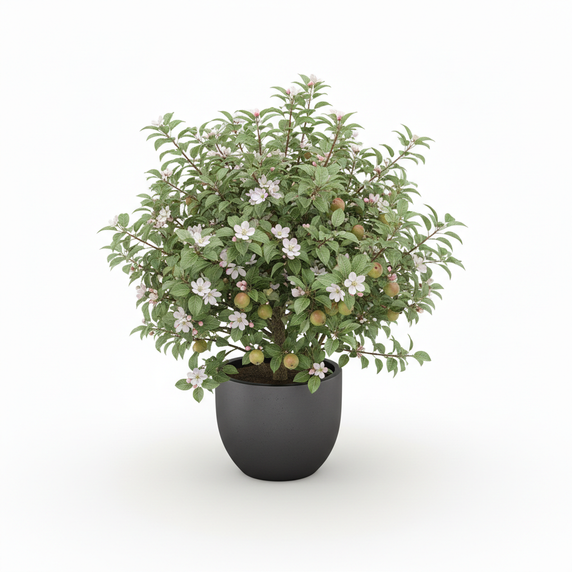
The tree features a compact, bushy structure with oval, serrated green leaves. In spring, it is covered in fragrant, five-petaled white to pale pink blossoms. These are followed by full-sized, juicy apples (typically red or green depending on the specific cultivar) that appear disproportionately large for the tree's small stature.
5. Size & Dimensions
As a dwarf variety, this tree typically reaches a height and spread of 1.5 to 2.5 meters (5 to 8 feet), making it ideal for large pots or small garden patches.
6. Light Requirements
Requires full sun to thrive and produce fruit. It should receive at least 6 to 8 hours of direct sunlight daily. Lack of sun will lead to poor fruit quality and increased disease susceptibility.
7. Watering Needs
Needs regular watering to keep the soil consistently moist, especially during the flowering and fruiting stages. Potted dwarf trees dry out faster than those in the ground and may require daily watering during peak summer heat.
8. Soil & Potting
Prefers rich, loamy, well-draining soil with a pH between 6.0 and 7.0. For container growing, use a high-quality potting mix and a large pot (at least 15-20 gallons) with adequate drainage holes.
9. Temperature & Humidity
Best suited for temperate climates. Most apple trees require a certain number of "chill hours" (temperatures between 0°C and 7°C) during winter to break dormancy and set fruit properly. It is moderately tolerant of humidity but prefers well-ventilated areas.
10. Fertilization
Apply a balanced organic fertilizer (such as 10-10-10) in early spring before new growth begins. Avoid high-nitrogen fertilizers late in the season, as this can encourage soft growth that is susceptible to winter damage.
11. Maintenance & Care Level
Maintenance level is moderate. Annual pruning in late winter is necessary to maintain shape, remove dead wood, and encourage air circulation. Thinning the fruit (removing excess small apples) ensures the remaining fruit grows to full size and prevents branches from breaking.
12. Growth & Propagation
Dwarf trees are created by grafting a standard apple variety onto a specific "dwarfing rootstock" (such as M9 or M26). They grow slower than standard trees but produce fruit much earlier, often within 1-3 years of planting.
13. Common Problems
Susceptible to common orchard pests like aphids, spider mites, and codling moths. Fungal issues such as apple scab or powdery mildew can occur if there is poor air circulation or excessive leaf wetness.
14. Benefits & Uses
Primarily used for fresh fruit production in small spaces. It serves as an ornamental specimen during spring flowering and provides an educational experience for children to learn about food sources. Ideal for balconies, patios, and rooftop gardens.
15. Toxicity & Safety
The fruit itself is safe and healthy for humans and most pets. However, apple seeds contain amygdalin, which can release cyanide if chewed and swallowed in large quantities. The leaves and stems are considered mildly toxic to dogs and cats if ingested.
Dwarf Apple Tree 'Dwarf'
Your Orchard on a Balcony! Imagine stepping outside to pick a crisp, juicy apple from your very own tree. With our Dwarf Apple Tree, that dream is a reality, no matter the size of your space. This compact tree delivers the full-size flavor and spring beauty of a traditional orchard, perfectly scaled for modern living. It’s more than a plant; it's a source of fresh food, natural beauty, and the simple joy of growing something wonderful. Order yours today and taste the difference of homegrown.
1. Basic Identification
Common Name: Dwarf Apple Tree / تفاح قزم
Botanical Name: Malus domestica
Variant: Dwarf
Color: Natural
Family: Rosaceae
Origin: Netherlands
2. Taxonomy & Classification
Kingdom: Plantae
Clade: Tracheophytes
Order: Rosales
Family: Rosaceae
Genus: Malus
Species: Malus domestica
3. Origin & Distribution
While the ancestor of the modern apple tree, Malus sieversii, is native to Central Asia, this specific dwarf cultivation originates from horticultural developments in the Netherlands. These varieties are now distributed globally for high-density commercial orchards and home gardening in temperate climates.
4. Visual Characteristics
The tree features a compact, bushy structure with oval, serrated green leaves. In spring, it is covered in fragrant, five-petaled white to pale pink blossoms. These are followed by full-sized, juicy apples (typically red or green depending on the specific cultivar) that appear disproportionately large for the tree's small stature.
5. Size & Dimensions
As a dwarf variety, this tree typically reaches a height and spread of 1.5 to 2.5 meters (5 to 8 feet), making it ideal for large pots or small garden patches.
6. Light Requirements
Requires full sun to thrive and produce fruit. It should receive at least 6 to 8 hours of direct sunlight daily. Lack of sun will lead to poor fruit quality and increased disease susceptibility.
7. Watering Needs
Needs regular watering to keep the soil consistently moist, especially during the flowering and fruiting stages. Potted dwarf trees dry out faster than those in the ground and may require daily watering during peak summer heat.
8. Soil & Potting
Prefers rich, loamy, well-draining soil with a pH between 6.0 and 7.0. For container growing, use a high-quality potting mix and a large pot (at least 15-20 gallons) with adequate drainage holes.
9. Temperature & Humidity
Best suited for temperate climates. Most apple trees require a certain number of "chill hours" (temperatures between 0°C and 7°C) during winter to break dormancy and set fruit properly. It is moderately tolerant of humidity but prefers well-ventilated areas.
10. Fertilization
Apply a balanced organic fertilizer (such as 10-10-10) in early spring before new growth begins. Avoid high-nitrogen fertilizers late in the season, as this can encourage soft growth that is susceptible to winter damage.
11. Maintenance & Care Level
Maintenance level is moderate. Annual pruning in late winter is necessary to maintain shape, remove dead wood, and encourage air circulation. Thinning the fruit (removing excess small apples) ensures the remaining fruit grows to full size and prevents branches from breaking.
12. Growth & Propagation
Dwarf trees are created by grafting a standard apple variety onto a specific "dwarfing rootstock" (such as M9 or M26). They grow slower than standard trees but produce fruit much earlier, often within 1-3 years of planting.
13. Common Problems
Susceptible to common orchard pests like aphids, spider mites, and codling moths. Fungal issues such as apple scab or powdery mildew can occur if there is poor air circulation or excessive leaf wetness.
14. Benefits & Uses
Primarily used for fresh fruit production in small spaces. It serves as an ornamental specimen during spring flowering and provides an educational experience for children to learn about food sources. Ideal for balconies, patios, and rooftop gardens.
15. Toxicity & Safety
The fruit itself is safe and healthy for humans and most pets. However, apple seeds contain amygdalin, which can release cyanide if chewed and swallowed in large quantities. The leaves and stems are considered mildly toxic to dogs and cats if ingested.