


Echeveria pulvinata
Add a touch of vibrant texture to your collection with the Echeveria Pulvinata 'Ruby', affectionately known as the Plush Plant. Its unique, velvety leaves are soft to the touch, and its edges blush a stunning ruby red in the sun. This easy-care succulent is perfect for beginners and thrives on bright light and minimal water, making it an ideal companion for a sunny desk or windowsill. Bring home this desert gem and watch its brilliant colors transform your space.
1. Basic Identification
Common Name: Plush Plant
Botanical Name: Echeveria pulvinata 'Ruby'
Former Name: Not available
Plant Type: Succulent
Plant Code / SKU: PLT-1832
Alternative Names:
Chenille Plant
Ruby Blush
Red Velvet Echeveria
خد العروس
2. Taxonomy & Classification
Order: Saxifragales
Family: Crassulaceae
Genus: Echeveria
3. Origin & Distribution
Native Range: The species Echeveria pulvinata is native to Oaxaca, Mexico. The 'Ruby' cultivar was developed in cultivation.
Geographic Distribution: Cultivated worldwide as an ornamental plant.
Habitat: Thrives in rocky outcrops and arid, hilly regions.
4. Visual Characteristics
Foliage: Fleshy, paddle-shaped, silvery-green leaves covered in fine, velvety white hairs (trichomes). The margins and tips of the leaves develop a vibrant ruby-red blush in response to bright sunlight or cool temperatures.
Flowers: Bell-shaped, yellow-orange flowers with red tips appear on tall, arching stems in the late winter or spring.
Stem & Form: Forms a small, branching shrub with thick, fuzzy stems that become woody with age. Rosettes of leaves form at the tips of the branches.
5. Size & Dimensions
Mature Height: Up to 30 cm (12 inches)
Mature Spread: Up to 30 cm (12 inches)
Growth Rate: Slow to moderate.
6. Light Requirements
Light Needs: Full sun to bright, indirect light.
Optimal Conditions: At least 6 hours of direct sunlight per day is needed to maintain the compact shape and vibrant red coloring. A south-facing window is ideal for indoor cultivation.
Light Stress Indicators: Leggy, stretched growth (etiolation) indicates insufficient light. Pale green color and loss of red edges also signal a lack of light. Sunburn may appear as brown or bleached spots if moved into intense sun too quickly.
7. Watering Needs
Watering Frequency: Water thoroughly when the soil is completely dry. Allow the soil to dry out between waterings. Reduce watering frequency significantly during the dormant winter months.
Watering Technique: Use the "soak and dry" method. Water the soil directly, avoiding the leaves to prevent rot. Ensure the pot has drainage holes.
Signs of Over/Under-watering: Overwatering results in yellow, translucent, mushy leaves and is the leading cause of root rot. Underwatering will cause the lower leaves to wrinkle, feel soft, and eventually dry up.
8. Soil & Potting
Soil Type: A fast-draining cactus or succulent mix is essential to prevent root rot.
Potting Mix Recipe: A standard mix can be made with 2 parts potting soil, 1 part perlite or pumice, and 1 part coarse sand.
Repotting Schedule: Repot every 2-3 years, or when the plant becomes root-bound. The best time to repot is in the spring at the start of the growing season.
9. Temperature & Humidity
Optimal Temperature Range: Prefers temperatures between 18°C and 27°C (65°F to 80°F).
Humidity Preferences: Low humidity is ideal. Tolerates average household humidity levels well.
Hardiness Zones: USDA Zones 9b to 11b. It is not frost-tolerant and must be protected from freezing temperatures.
10. Fertilization
Fertilizer Type: Use a balanced, water-soluble fertilizer formulated for cacti and succulents, diluted to half-strength.
Feeding Schedule: Fertilize once during the active growing season (spring or summer). Do not fertilize in fall or winter.
Signs of Nutrient Deficiency/Excess: Deficiency can lead to stunted growth. Excess fertilizer can cause root burn and weak, leggy growth.
11. Maintenance & Care Level
Care Level: Easy. Great for beginners.
Pruning/Grooming: Gently remove dead or dying leaves from the base of the plant to improve air circulation and prevent pests. Can be pruned to encourage branching or maintain a desired shape.
Seasonal Care Adjustments: Reduce watering in the winter. Provide as much light as possible during shorter winter days. Protect from frost if grown outdoors.
12. Growth & Propagation
Propagation Methods: Easily propagated from stem cuttings or individual leaves.
Propagation Steps (e.g., for cuttings): Take a stem or leaf cutting and allow the cut end to dry and form a callus for several days. Place the calloused end on top of well-draining soil. Mist sparingly until roots develop.
Time to Root/Establish: Roots and new plantlets typically form within 2 to 4 weeks.
13. Common Problems
Pests: Susceptible to mealybugs, which hide in the dense leaf rosettes, and occasionally aphids.
Diseases: Root rot caused by overwatering is the most common disease. Powdery mildew can occur in conditions with high humidity and poor air circulation.
Common Issues: Stretching (etiolation) from low light, loss of red color without sufficient sun stress, and leaf drop from overwatering.
14. Benefits & Uses
Aesthetic Uses: Excellent as a houseplant, in succulent arrangements, container gardens, rock gardens, and as a groundcover in frost-free climates.
Environmental Benefits: Like other succulents, it uses CAM photosynthesis to absorb carbon dioxide at night, which can help purify indoor air.
Other Uses: Popular in xeriscaping and drought-tolerant landscaping due to its low water needs.
15. Toxicity & Safety
Toxicity to Humans: Generally considered non-toxic to humans, but it is not intended for consumption.
Toxicity to Pets (Cats, Dogs): The genus Echeveria is listed as non-toxic to cats and dogs by the ASPCA.
Safety Precautions: No specific safety precautions are required, but it is always wise to keep plants away from curious pets and small children.

Echeveria pulvinata
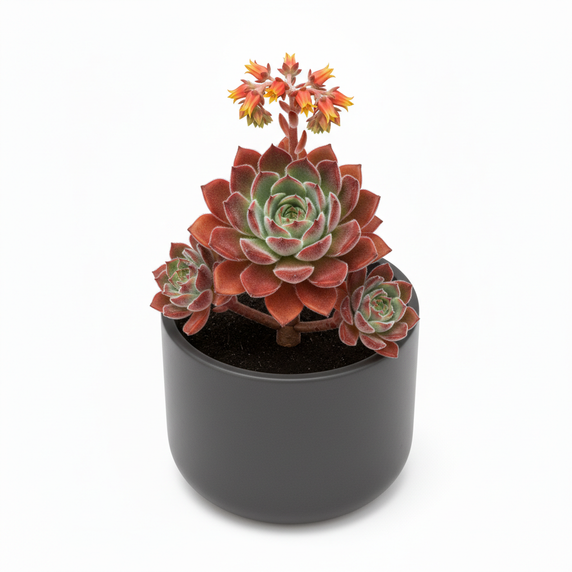
Add a touch of vibrant texture to your collection with the Echeveria Pulvinata 'Ruby', affectionately known as the Plush Plant. Its unique, velvety leaves are soft to the touch, and its edges blush a stunning ruby red in the sun. This easy-care succulent is perfect for beginners and thrives on bright light and minimal water, making it an ideal companion for a sunny desk or windowsill. Bring home this desert gem and watch its brilliant colors transform your space.
1. Basic Identification
Common Name: Plush Plant
Botanical Name: Echeveria pulvinata 'Ruby'
Former Name: Not available
Plant Type: Succulent
Plant Code / SKU: PLT-1832
Alternative Names:
Chenille Plant
Ruby Blush
Red Velvet Echeveria
خد العروس
2. Taxonomy & Classification
Order: Saxifragales
Family: Crassulaceae
Genus: Echeveria
3. Origin & Distribution
Native Range: The species Echeveria pulvinata is native to Oaxaca, Mexico. The 'Ruby' cultivar was developed in cultivation.
Geographic Distribution: Cultivated worldwide as an ornamental plant.
Habitat: Thrives in rocky outcrops and arid, hilly regions.
4. Visual Characteristics
Foliage: Fleshy, paddle-shaped, silvery-green leaves covered in fine, velvety white hairs (trichomes). The margins and tips of the leaves develop a vibrant ruby-red blush in response to bright sunlight or cool temperatures.
Flowers: Bell-shaped, yellow-orange flowers with red tips appear on tall, arching stems in the late winter or spring.
Stem & Form: Forms a small, branching shrub with thick, fuzzy stems that become woody with age. Rosettes of leaves form at the tips of the branches.
5. Size & Dimensions
Mature Height: Up to 30 cm (12 inches)
Mature Spread: Up to 30 cm (12 inches)
Growth Rate: Slow to moderate.
6. Light Requirements
Light Needs: Full sun to bright, indirect light.
Optimal Conditions: At least 6 hours of direct sunlight per day is needed to maintain the compact shape and vibrant red coloring. A south-facing window is ideal for indoor cultivation.
Light Stress Indicators: Leggy, stretched growth (etiolation) indicates insufficient light. Pale green color and loss of red edges also signal a lack of light. Sunburn may appear as brown or bleached spots if moved into intense sun too quickly.
7. Watering Needs
Watering Frequency: Water thoroughly when the soil is completely dry. Allow the soil to dry out between waterings. Reduce watering frequency significantly during the dormant winter months.
Watering Technique: Use the "soak and dry" method. Water the soil directly, avoiding the leaves to prevent rot. Ensure the pot has drainage holes.
Signs of Over/Under-watering: Overwatering results in yellow, translucent, mushy leaves and is the leading cause of root rot. Underwatering will cause the lower leaves to wrinkle, feel soft, and eventually dry up.
8. Soil & Potting
Soil Type: A fast-draining cactus or succulent mix is essential to prevent root rot.
Potting Mix Recipe: A standard mix can be made with 2 parts potting soil, 1 part perlite or pumice, and 1 part coarse sand.
Repotting Schedule: Repot every 2-3 years, or when the plant becomes root-bound. The best time to repot is in the spring at the start of the growing season.
9. Temperature & Humidity
Optimal Temperature Range: Prefers temperatures between 18°C and 27°C (65°F to 80°F).
Humidity Preferences: Low humidity is ideal. Tolerates average household humidity levels well.
Hardiness Zones: USDA Zones 9b to 11b. It is not frost-tolerant and must be protected from freezing temperatures.
10. Fertilization
Fertilizer Type: Use a balanced, water-soluble fertilizer formulated for cacti and succulents, diluted to half-strength.
Feeding Schedule: Fertilize once during the active growing season (spring or summer). Do not fertilize in fall or winter.
Signs of Nutrient Deficiency/Excess: Deficiency can lead to stunted growth. Excess fertilizer can cause root burn and weak, leggy growth.
11. Maintenance & Care Level
Care Level: Easy. Great for beginners.
Pruning/Grooming: Gently remove dead or dying leaves from the base of the plant to improve air circulation and prevent pests. Can be pruned to encourage branching or maintain a desired shape.
Seasonal Care Adjustments: Reduce watering in the winter. Provide as much light as possible during shorter winter days. Protect from frost if grown outdoors.
12. Growth & Propagation
Propagation Methods: Easily propagated from stem cuttings or individual leaves.
Propagation Steps (e.g., for cuttings): Take a stem or leaf cutting and allow the cut end to dry and form a callus for several days. Place the calloused end on top of well-draining soil. Mist sparingly until roots develop.
Time to Root/Establish: Roots and new plantlets typically form within 2 to 4 weeks.
13. Common Problems
Pests: Susceptible to mealybugs, which hide in the dense leaf rosettes, and occasionally aphids.
Diseases: Root rot caused by overwatering is the most common disease. Powdery mildew can occur in conditions with high humidity and poor air circulation.
Common Issues: Stretching (etiolation) from low light, loss of red color without sufficient sun stress, and leaf drop from overwatering.
14. Benefits & Uses
Aesthetic Uses: Excellent as a houseplant, in succulent arrangements, container gardens, rock gardens, and as a groundcover in frost-free climates.
Environmental Benefits: Like other succulents, it uses CAM photosynthesis to absorb carbon dioxide at night, which can help purify indoor air.
Other Uses: Popular in xeriscaping and drought-tolerant landscaping due to its low water needs.
15. Toxicity & Safety
Toxicity to Humans: Generally considered non-toxic to humans, but it is not intended for consumption.
Toxicity to Pets (Cats, Dogs): The genus Echeveria is listed as non-toxic to cats and dogs by the ASPCA.
Safety Precautions: No specific safety precautions are required, but it is always wise to keep plants away from curious pets and small children.