


Elephant Bush Bonsai
Transform your space with the art of nature. Our Elephant Bush Bonsai is more than a plant; it's a living sculpture. With its charming miniature tree form and vibrant green leaves, this succulent is the epitome of elegance and resilience. Forget the fuss—this bonsai thrives on neglect, asking only for a sunny spot and an occasional drink. It's the perfect, pet-safe gift for a loved one or a sophisticated, stress-relieving addition to your own desk or home. Order yours today and start your journey with a plant that grows with you.
1. Basic Identification
Common Name: Elephant Bush, Dwarf Jade, Porkbush
Botanical Name: Portulacaria afra
Arabic Name: دمعة طفل
Variant: Standard
Color: Green
Country of Origin: Netherlands
Stems: Single or multi-stemmed bonsai form
2. Taxonomy & Classification
Kingdom: Plantae
Order: Caryophyllales
Family: Didiereaceae
Genus: Portulacaria
Species: Portulacaria afra
3. Origin & Distribution
Native to the dry, rocky regions of South Africa, specifically the Eastern Cape. It is widely distributed across arid areas where it serves as a primary food source for elephants and other wildlife.
4. Visual Characteristics
Features small, round, fleshy succulent leaves that are a vibrant emerald green. The stems are distinctive, starting out reddish-pink and maturing into a textured, woody brown appearance resembling a miniature tree trunk.
5. Size & Dimensions
As a cultivated indoor bonsai, it typically reaches heights of 6 to 18 inches (15–45 cm). In its natural habitat, it can grow into a large shrub or small tree reaching up to 15 feet tall.
6. Light Requirements
Thrives in bright light. It prefers direct sunlight for several hours a day but can adapt to very bright, indirect light. Insufficient light may cause the leaves to drop or growth to become leggy.
7. Watering Needs
Drought-tolerant succulent. Allow the soil to dry out completely between waterings. In the summer, water thoroughly once the soil is dry; in the winter, significantly reduce watering frequency as the plant goes semi-dormant.
8. Soil & Potting
Requires a very well-draining cactus or succulent potting mix. A blend containing perlite, sand, or pumice is ideal to prevent water retention around the roots. Bonsai-specific soil is also highly recommended.
9. Temperature & Humidity
Prefers warm temperatures between 65°F and 85°F (18°C – 29°C). It is not frost-tolerant and should be protected from temperatures below 40°F (4°C). It thrives in low to average indoor humidity.
10. Fertilization
Feed with a balanced, water-soluble fertilizer diluted to half-strength once every month during the active growing season (spring and summer). Do not fertilize during the winter months.
11. Maintenance & Care Level
Care Level: Easy. It is a low-maintenance plant perfect for beginners. Pruning is required only to maintain the desired bonsai shape and encourage denser leaf growth.
12. Growth & Propagation
Relatively fast-growing for a succulent. It is exceptionally easy to propagate from stem cuttings; simply let the cutting callous for a few days before placing it in well-draining soil.
13. Common Problems
The most common issue is overwatering, which leads to root rot. It may also experience leaf drop if moved to a location with significantly different light or temperature levels. Watch for pests like mealybugs and spider mites.
14. Benefits & Uses
Known for its incredible ability to sequester carbon, absorbing more CO2 from the atmosphere than many other plants. It is commonly used as an ornamental bonsai, a hardy houseplant, and is edible in its native South Africa.
15. Toxicity & Safety
Non-toxic to humans, cats, and dogs. It is considered pet-safe and safe for households with small children.

Elephant Bush Bonsai
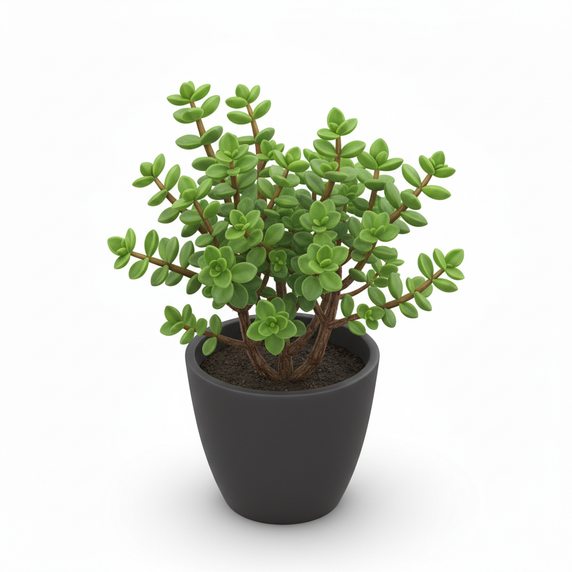
Transform your space with the art of nature. Our Elephant Bush Bonsai is more than a plant; it's a living sculpture. With its charming miniature tree form and vibrant green leaves, this succulent is the epitome of elegance and resilience. Forget the fuss—this bonsai thrives on neglect, asking only for a sunny spot and an occasional drink. It's the perfect, pet-safe gift for a loved one or a sophisticated, stress-relieving addition to your own desk or home. Order yours today and start your journey with a plant that grows with you.
1. Basic Identification
Common Name: Elephant Bush, Dwarf Jade, Porkbush
Botanical Name: Portulacaria afra
Arabic Name: دمعة طفل
Variant: Standard
Color: Green
Country of Origin: Netherlands
Stems: Single or multi-stemmed bonsai form
2. Taxonomy & Classification
Kingdom: Plantae
Order: Caryophyllales
Family: Didiereaceae
Genus: Portulacaria
Species: Portulacaria afra
3. Origin & Distribution
Native to the dry, rocky regions of South Africa, specifically the Eastern Cape. It is widely distributed across arid areas where it serves as a primary food source for elephants and other wildlife.
4. Visual Characteristics
Features small, round, fleshy succulent leaves that are a vibrant emerald green. The stems are distinctive, starting out reddish-pink and maturing into a textured, woody brown appearance resembling a miniature tree trunk.
5. Size & Dimensions
As a cultivated indoor bonsai, it typically reaches heights of 6 to 18 inches (15–45 cm). In its natural habitat, it can grow into a large shrub or small tree reaching up to 15 feet tall.
6. Light Requirements
Thrives in bright light. It prefers direct sunlight for several hours a day but can adapt to very bright, indirect light. Insufficient light may cause the leaves to drop or growth to become leggy.
7. Watering Needs
Drought-tolerant succulent. Allow the soil to dry out completely between waterings. In the summer, water thoroughly once the soil is dry; in the winter, significantly reduce watering frequency as the plant goes semi-dormant.
8. Soil & Potting
Requires a very well-draining cactus or succulent potting mix. A blend containing perlite, sand, or pumice is ideal to prevent water retention around the roots. Bonsai-specific soil is also highly recommended.
9. Temperature & Humidity
Prefers warm temperatures between 65°F and 85°F (18°C – 29°C). It is not frost-tolerant and should be protected from temperatures below 40°F (4°C). It thrives in low to average indoor humidity.
10. Fertilization
Feed with a balanced, water-soluble fertilizer diluted to half-strength once every month during the active growing season (spring and summer). Do not fertilize during the winter months.
11. Maintenance & Care Level
Care Level: Easy. It is a low-maintenance plant perfect for beginners. Pruning is required only to maintain the desired bonsai shape and encourage denser leaf growth.
12. Growth & Propagation
Relatively fast-growing for a succulent. It is exceptionally easy to propagate from stem cuttings; simply let the cutting callous for a few days before placing it in well-draining soil.
13. Common Problems
The most common issue is overwatering, which leads to root rot. It may also experience leaf drop if moved to a location with significantly different light or temperature levels. Watch for pests like mealybugs and spider mites.
14. Benefits & Uses
Known for its incredible ability to sequester carbon, absorbing more CO2 from the atmosphere than many other plants. It is commonly used as an ornamental bonsai, a hardy houseplant, and is edible in its native South Africa.
15. Toxicity & Safety
Non-toxic to humans, cats, and dogs. It is considered pet-safe and safe for households with small children.