


Euphorbiaceae
Euphorbia trigona
Bring instant structure to your space with Euphorbia trigona—a dramatic, vertical succulent that looks like a designer cactus and stays impressive with minimal care. Place it in bright light, water sparingly, and enjoy a clean, modern statement plant for homes, studios, and offices. (Handle with care: the milky sap is irritating and toxic if ingested.)
1. Basic Identification
Common Name: African Milk Tree, Cathedral Cactus, Abyssinian Euphorbia
Botanical Name: Euphorbia trigona
Arabic Name: دراسينا
Family: Euphorbiaceae
Color: Green
Stems: 2
2. Taxonomy & Classification
Kingdom: Plantae
Order: Malpighiales
Family: Euphorbiaceae
Genus: Euphorbia
Species: E. trigona
3. Origin & Distribution
Euphorbia trigona is native to Central and West Africa, specifically found in regions such as Gabon, Angola, and Malawi, where it thrives in dry, tropical environments.
4. Visual Characteristics
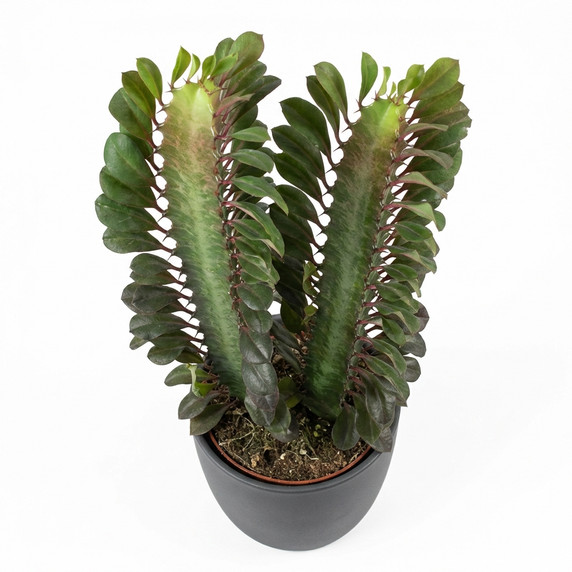
This plant features upright, succulent stems that are distinctly three-sided (triangular). The stems are deep green with light green or silver marbling and are lined with short, sharp thorns. Small, teardrop-shaped leaves sprout from the ridges between the thorns during the growing season.
5. Size & Dimensions
When grown indoors, the African Milk Tree typically reaches a height of 3 to 6 feet. In its natural outdoor habitat, it can grow significantly larger, sometimes exceeding 8 to 9 feet in height.
6. Light Requirements
Requires bright, indirect light or full sun. It performs best near a south-facing window. Insufficient light can cause the plant to become leggy or lose its vibrant green color.
7. Watering Needs
Low watering needs. It is highly drought-tolerant. Allow the soil to dry out completely before watering again. Reduce watering significantly during the winter months.
8. Soil & Potting
Needs a well-draining cactus or succulent potting mix. Use a heavy pot (like terracotta or ceramic) because the plant can become top-heavy as it grows taller.
9. Temperature & Humidity
Prefers warm temperatures between 18°C and 27°C (65°F–80°F). It is not frost-hardy and should be kept away from cold drafts. It thrives in low to average indoor humidity.
10. Fertilization
Apply a balanced liquid fertilizer diluted to half-strength once a month during the spring and summer growing seasons. Do not fertilize in autumn or winter.
11. Maintenance & Care Level
Low maintenance and very easy to care for, making it ideal for beginners. Maintenance mainly involves occasional dusting of the stems and pruning if it becomes too tall.
12. Growth & Propagation
It is a relatively fast grower for a succulent. Propagation is easily done via stem cuttings; however, the cuttings must be allowed to dry and callus for several days before planting to prevent rot.
13. Common Problems
The most common issue is root rot caused by overwatering. It can also be susceptible to mealybugs or spider mites. If the plant is moved too quickly into direct sun, it may suffer from "sunburn" or scorched patches.
14. Benefits & Uses
Primarily used as an architectural ornamental plant for modern interior design. Its tall, vertical growth makes it perfect for narrow corners. It provides a unique "cactus" aesthetic without the high-maintenance requirements of true desert cacti.
15. Toxicity & Safety
Highly toxic. Like many Euphorbias, it contains a milky white latex sap that is caustic. This sap causes severe skin irritation, eye pain, and is toxic if ingested by humans or pets. Always wear gloves when handling or pruning.
Euphorbia trigona
Bring instant structure to your space with Euphorbia trigona—a dramatic, vertical succulent that looks like a designer cactus and stays impressive with minimal care. Place it in bright light, water sparingly, and enjoy a clean, modern statement plant for homes, studios, and offices. (Handle with care: the milky sap is irritating and toxic if ingested.)
1. Basic Identification
Common Name: African Milk Tree, Cathedral Cactus, Abyssinian Euphorbia
Botanical Name: Euphorbia trigona
Arabic Name: دراسينا
Family: Euphorbiaceae
Color: Green
Stems: 2
2. Taxonomy & Classification
Kingdom: Plantae
Order: Malpighiales
Family: Euphorbiaceae
Genus: Euphorbia
Species: E. trigona
3. Origin & Distribution
Euphorbia trigona is native to Central and West Africa, specifically found in regions such as Gabon, Angola, and Malawi, where it thrives in dry, tropical environments.
4. Visual Characteristics
This plant features upright, succulent stems that are distinctly three-sided (triangular). The stems are deep green with light green or silver marbling and are lined with short, sharp thorns. Small, teardrop-shaped leaves sprout from the ridges between the thorns during the growing season.
5. Size & Dimensions
When grown indoors, the African Milk Tree typically reaches a height of 3 to 6 feet. In its natural outdoor habitat, it can grow significantly larger, sometimes exceeding 8 to 9 feet in height.
6. Light Requirements
Requires bright, indirect light or full sun. It performs best near a south-facing window. Insufficient light can cause the plant to become leggy or lose its vibrant green color.
7. Watering Needs
Low watering needs. It is highly drought-tolerant. Allow the soil to dry out completely before watering again. Reduce watering significantly during the winter months.
8. Soil & Potting
Needs a well-draining cactus or succulent potting mix. Use a heavy pot (like terracotta or ceramic) because the plant can become top-heavy as it grows taller.
9. Temperature & Humidity
Prefers warm temperatures between 18°C and 27°C (65°F–80°F). It is not frost-hardy and should be kept away from cold drafts. It thrives in low to average indoor humidity.
10. Fertilization
Apply a balanced liquid fertilizer diluted to half-strength once a month during the spring and summer growing seasons. Do not fertilize in autumn or winter.
11. Maintenance & Care Level
Low maintenance and very easy to care for, making it ideal for beginners. Maintenance mainly involves occasional dusting of the stems and pruning if it becomes too tall.
12. Growth & Propagation
It is a relatively fast grower for a succulent. Propagation is easily done via stem cuttings; however, the cuttings must be allowed to dry and callus for several days before planting to prevent rot.
13. Common Problems
The most common issue is root rot caused by overwatering. It can also be susceptible to mealybugs or spider mites. If the plant is moved too quickly into direct sun, it may suffer from "sunburn" or scorched patches.
14. Benefits & Uses
Primarily used as an architectural ornamental plant for modern interior design. Its tall, vertical growth makes it perfect for narrow corners. It provides a unique "cactus" aesthetic without the high-maintenance requirements of true desert cacti.
15. Toxicity & Safety
Highly toxic. Like many Euphorbias, it contains a milky white latex sap that is caustic. This sap causes severe skin irritation, eye pain, and is toxic if ingested by humans or pets. Always wear gloves when handling or pruning.