


Euryops pectinatus
Bring instant sunshine to your outdoor space with Euryops pectinatus. Its elegant silver-green foliage and vibrant yellow daisy flowers create a fresh, high-contrast look that suits modern patios and Mediterranean gardens alike. Give it full sun and good drainage, and it rewards you with long-lasting color and a naturally tidy mound—an easy, impactful choice for pots, borders, and entryways.
1. Basic Identification
Common Name: African Bush Daisy
Botanical Name: Euryops pectinatus
Former Name: Not available
Plant Type: Evergreen perennial shrub (flowering)
Plant Code / SKU: PLT-0642
Alternative Names:
Yellow Euryops
African Daisy Bush
Golden Daisy
2. Taxonomy & Classification
Order: Asterales
Family: Asteraceae
Genus: Euryops
Species: Euryops pectinatus
3. Origin & Distribution
Native to the Western Cape region of South Africa. Widely cultivated in Mediterranean climates and other warm temperate regions worldwide. Naturalized in parts of California, Australia, and southern Europe.
4. Visual Characteristics
Foliage: Pinnate, deeply lobed, silvery-green leaves 5–15 cm long; aromatic when crushed.
Flowers: Bright yellow, daisy-like blooms 4–6 cm in diameter; numerous florets with a golden central disk.
Habit: Mounded, bushy form with a tidy, uniform canopy; maintains shape without heavy pruning.
5. Size & Dimensions
Height: 30–45 cm at maturity.
Spread: 45–60 cm wide.
Growth Rate: Moderate; reaches mature size within one growing season.
6. Light Requirements
Full sun for best flowering and compact habit. Will tolerate light afternoon shade in very hot climates but may become leggy and produce fewer blooms.
7. Watering Needs
Moderate drought tolerance once established. Water regularly during the first season to establish a strong root system. Thereafter, water when the top 2–3 cm of soil is dry. Avoid waterlogged conditions to prevent root rot.
8. Soil & Potting
Prefers well-draining soils such as sandy loam or gritty mixes. pH neutral to slightly alkaline (6.5–7.5). Tolerates lean soils; does not require high fertility. In containers, use a premium potting mix amended with perlite or coarse sand for drainage.
9. Temperature & Humidity
Hardy in USDA zones 8–11. Optimal growth between 15–25 °C. Tolerates light frosts to –2 °C for short periods. Prefers low to moderate humidity; high humidity may encourage fungal issues.
10. Fertilization
Apply a balanced, slow-release granular fertilizer in early spring. Supplement with a liquid feed (10-10-10 NPK) every 6–8 weeks during active growth and flowering. Avoid excessive nitrogen to prevent lush foliage at the expense of blooms.
11. Maintenance & Care Level
Low maintenance. Deadhead spent flowers continuously to promote rebloom. Lightly trim back after main flowering flush to maintain shape and encourage late-season blooms. No major pruning required.
12. Growth & Propagation
Propagation by semi-ripe cuttings in late spring to early summer: take 5–8 cm tip cuttings, remove lower leaves, root in a free-draining medium under mist or high humidity.
Seeds can be sown in spring but cultivars may not come true to type. Division of mature clumps is possible but less common.
13. Common Problems
Overwatering can lead to root rot (Phytophthora). Powdery mildew may develop in humid conditions. Occasional infestations of aphids or whiteflies; treat with insecticidal soap or horticultural oil. Leaf yellowing can indicate poor drainage or nutrient deficiency.
14. Benefits & Uses
Provides long-lasting color in borders, rock gardens, containers, and mass plantings. Attracts bees and butterflies. Ideal for low-water landscapes and Mediterranean-style gardens. Forms an effective groundcover or edging plant.
15. Toxicity & Safety
No known toxicity to humans or common pets. Safe for family and pollinator-friendly.

Euryops pectinatus
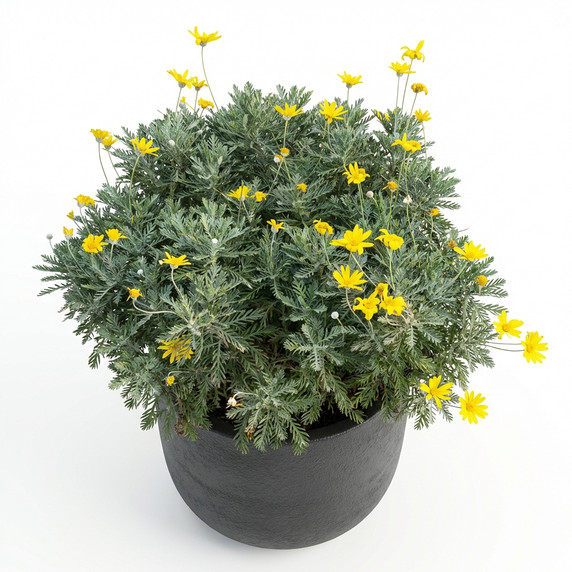
Bring instant sunshine to your outdoor space with Euryops pectinatus. Its elegant silver-green foliage and vibrant yellow daisy flowers create a fresh, high-contrast look that suits modern patios and Mediterranean gardens alike. Give it full sun and good drainage, and it rewards you with long-lasting color and a naturally tidy mound—an easy, impactful choice for pots, borders, and entryways.
1. Basic Identification
Common Name: African Bush Daisy
Botanical Name: Euryops pectinatus
Former Name: Not available
Plant Type: Evergreen perennial shrub (flowering)
Plant Code / SKU: PLT-0642
Alternative Names:
Yellow Euryops
African Daisy Bush
Golden Daisy
2. Taxonomy & Classification
Order: Asterales
Family: Asteraceae
Genus: Euryops
Species: Euryops pectinatus
3. Origin & Distribution
Native to the Western Cape region of South Africa. Widely cultivated in Mediterranean climates and other warm temperate regions worldwide. Naturalized in parts of California, Australia, and southern Europe.
4. Visual Characteristics
Foliage: Pinnate, deeply lobed, silvery-green leaves 5–15 cm long; aromatic when crushed.
Flowers: Bright yellow, daisy-like blooms 4–6 cm in diameter; numerous florets with a golden central disk.
Habit: Mounded, bushy form with a tidy, uniform canopy; maintains shape without heavy pruning.
5. Size & Dimensions
Height: 30–45 cm at maturity.
Spread: 45–60 cm wide.
Growth Rate: Moderate; reaches mature size within one growing season.
6. Light Requirements
Full sun for best flowering and compact habit. Will tolerate light afternoon shade in very hot climates but may become leggy and produce fewer blooms.
7. Watering Needs
Moderate drought tolerance once established. Water regularly during the first season to establish a strong root system. Thereafter, water when the top 2–3 cm of soil is dry. Avoid waterlogged conditions to prevent root rot.
8. Soil & Potting
Prefers well-draining soils such as sandy loam or gritty mixes. pH neutral to slightly alkaline (6.5–7.5). Tolerates lean soils; does not require high fertility. In containers, use a premium potting mix amended with perlite or coarse sand for drainage.
9. Temperature & Humidity
Hardy in USDA zones 8–11. Optimal growth between 15–25 °C. Tolerates light frosts to –2 °C for short periods. Prefers low to moderate humidity; high humidity may encourage fungal issues.
10. Fertilization
Apply a balanced, slow-release granular fertilizer in early spring. Supplement with a liquid feed (10-10-10 NPK) every 6–8 weeks during active growth and flowering. Avoid excessive nitrogen to prevent lush foliage at the expense of blooms.
11. Maintenance & Care Level
Low maintenance. Deadhead spent flowers continuously to promote rebloom. Lightly trim back after main flowering flush to maintain shape and encourage late-season blooms. No major pruning required.
12. Growth & Propagation
Propagation by semi-ripe cuttings in late spring to early summer: take 5–8 cm tip cuttings, remove lower leaves, root in a free-draining medium under mist or high humidity.
Seeds can be sown in spring but cultivars may not come true to type. Division of mature clumps is possible but less common.
13. Common Problems
Overwatering can lead to root rot (Phytophthora). Powdery mildew may develop in humid conditions. Occasional infestations of aphids or whiteflies; treat with insecticidal soap or horticultural oil. Leaf yellowing can indicate poor drainage or nutrient deficiency.
14. Benefits & Uses
Provides long-lasting color in borders, rock gardens, containers, and mass plantings. Attracts bees and butterflies. Ideal for low-water landscapes and Mediterranean-style gardens. Forms an effective groundcover or edging plant.
15. Toxicity & Safety
No known toxicity to humans or common pets. Safe for family and pollinator-friendly.