


Moraceae
Ficus benjamina 'Round Topiary'
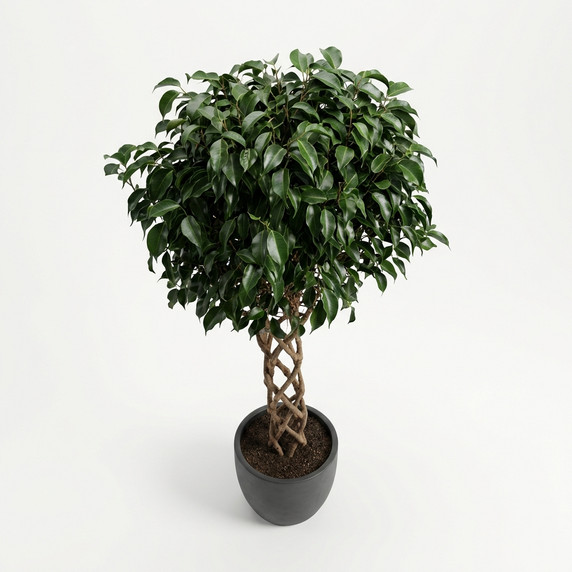
Upgrade your space instantly with the sculpted elegance of a round-top Ficus benjamina. The dense crown and braided trunk deliver a premium, hotel-lobby look at home or in the office. Place it in bright filtered light, water consistently, and enjoy a timeless green statement that stays stylish all year.
1. Basic Identification
Common Name: Weeping Fig / Ficus Benjamin
Arabic Name: فكس بنجامين
Botanical Name: Ficus benjamina
Variant: Round Topiary
Plant Color: Natural
Plant Country: Not mentioned
Family: Moraceae
2. Taxonomy & Classification
The Ficus benjamina belongs to the genus Ficus within the family Moraceae (the mulberry or fig family). It is a species of vascular plant that is widely recognized for its graceful growth habit and versatility as an ornamental plant.
3. Origin & Distribution
Native to South and Southeast Asia, as well as Australia. In its natural habitat, it can grow into a massive tree, but it has been naturalized in various tropical and subtropical regions globally and is a staple in indoor horticulture worldwide.
4. Visual Characteristics
This variant features a "Round Topiary" shape, where the foliage is meticulously pruned into a dense, spherical crown. The leaves are small, glossy, and ovate with a pointed tip. The trunk is often braided or straight with a smooth, light-gray bark texture.
5. Size & Dimensions
When maintained as an indoor topiary, it typically stands between 3 to 6 feet tall. The spread of the round crown is usually controlled through regular pruning to maintain its architectural symmetry.
6. Light Requirements
Requires bright, indirect light or filtered sunlight. While it can tolerate some medium light, it thrives best near a large window. It is sensitive to sudden changes in light levels, which can trigger leaf drop.
7. Watering Needs
Water when the top inch of the soil feels dry to the touch. It requires consistent moisture but is sensitive to overwatering; ensure the pot has excellent drainage. Reduce watering slightly during the winter months.
8. Soil & Potting
Thrives in a well-draining, nutrient-rich potting mix. A soil based on peat moss with added perlite or sand for drainage is ideal. It prefers to be slightly pot-bound and does not require frequent repotting.
9. Temperature & Humidity
Prefers warm temperatures between 65°F and 85°F (18°C - 29°C). It is sensitive to cold drafts and temperatures below 50°F. High humidity is beneficial; misting the leaves or using a humidifier helps prevent leaf loss in dry environments.
10. Fertilization
Feed with a balanced liquid fertilizer every 4-6 weeks during the active growing season (spring and summer). Do not fertilize in the winter when the plant's growth slows down.
11. Maintenance & Care Level
Moderate care level. The plant is famous for "complaining" by dropping leaves if it is moved or if environmental conditions change abruptly. Regular pruning is necessary to maintain the topiary's round shape.
12. Growth & Propagation
A relatively fast grower under optimal conditions. Propagation is most commonly achieved through stem cuttings or air layering, though it requires patience and warmth to root successfully.
13. Common Problems
The most common issue is leaf drop caused by environmental stress (changes in light, temperature, or watering). It is also susceptible to pests such as scale insects, spider mites, and mealybugs.
14. Benefits & Uses
Highly valued as an air-purifying plant; it is known to filter indoor toxins such as formaldehyde, xylene, and toluene. Its topiary form makes it a preferred choice for formal interior design, office lobbies, and entryways.
15. Toxicity & Safety
Toxic to pets and humans. The sap contains latex and furocoumarins which can cause skin irritation (dermatitis) upon contact and gastrointestinal distress (nausea, vomiting) if leaves are ingested.

Ficus benjamina 'Round Topiary'
Upgrade your space instantly with the sculpted elegance of a round-top Ficus benjamina. The dense crown and braided trunk deliver a premium, hotel-lobby look at home or in the office. Place it in bright filtered light, water consistently, and enjoy a timeless green statement that stays stylish all year.
1. Basic Identification
Common Name: Weeping Fig / Ficus Benjamin
Arabic Name: فكس بنجامين
Botanical Name: Ficus benjamina
Variant: Round Topiary
Plant Color: Natural
Plant Country: Not mentioned
Family: Moraceae
2. Taxonomy & Classification
The Ficus benjamina belongs to the genus Ficus within the family Moraceae (the mulberry or fig family). It is a species of vascular plant that is widely recognized for its graceful growth habit and versatility as an ornamental plant.
3. Origin & Distribution
Native to South and Southeast Asia, as well as Australia. In its natural habitat, it can grow into a massive tree, but it has been naturalized in various tropical and subtropical regions globally and is a staple in indoor horticulture worldwide.
4. Visual Characteristics
This variant features a "Round Topiary" shape, where the foliage is meticulously pruned into a dense, spherical crown. The leaves are small, glossy, and ovate with a pointed tip. The trunk is often braided or straight with a smooth, light-gray bark texture.
5. Size & Dimensions
When maintained as an indoor topiary, it typically stands between 3 to 6 feet tall. The spread of the round crown is usually controlled through regular pruning to maintain its architectural symmetry.
6. Light Requirements
Requires bright, indirect light or filtered sunlight. While it can tolerate some medium light, it thrives best near a large window. It is sensitive to sudden changes in light levels, which can trigger leaf drop.
7. Watering Needs
Water when the top inch of the soil feels dry to the touch. It requires consistent moisture but is sensitive to overwatering; ensure the pot has excellent drainage. Reduce watering slightly during the winter months.
8. Soil & Potting
Thrives in a well-draining, nutrient-rich potting mix. A soil based on peat moss with added perlite or sand for drainage is ideal. It prefers to be slightly pot-bound and does not require frequent repotting.
9. Temperature & Humidity
Prefers warm temperatures between 65°F and 85°F (18°C - 29°C). It is sensitive to cold drafts and temperatures below 50°F. High humidity is beneficial; misting the leaves or using a humidifier helps prevent leaf loss in dry environments.
10. Fertilization
Feed with a balanced liquid fertilizer every 4-6 weeks during the active growing season (spring and summer). Do not fertilize in the winter when the plant's growth slows down.
11. Maintenance & Care Level
Moderate care level. The plant is famous for "complaining" by dropping leaves if it is moved or if environmental conditions change abruptly. Regular pruning is necessary to maintain the topiary's round shape.
12. Growth & Propagation
A relatively fast grower under optimal conditions. Propagation is most commonly achieved through stem cuttings or air layering, though it requires patience and warmth to root successfully.
13. Common Problems
The most common issue is leaf drop caused by environmental stress (changes in light, temperature, or watering). It is also susceptible to pests such as scale insects, spider mites, and mealybugs.
14. Benefits & Uses
Highly valued as an air-purifying plant; it is known to filter indoor toxins such as formaldehyde, xylene, and toluene. Its topiary form makes it a preferred choice for formal interior design, office lobbies, and entryways.
15. Toxicity & Safety
Toxic to pets and humans. The sap contains latex and furocoumarins which can cause skin irritation (dermatitis) upon contact and gastrointestinal distress (nausea, vomiting) if leaves are ingested.