


Moraceae
Ficus elastica 'Burgundy'
Bring instant, high-end greenery to your space with the Black Rubber Plant. Its thick, glossy dark leaves look dramatic in modern interiors and require minimal upkeep—just bright indirect light and sensible watering. Perfect for receptions, living rooms, and offices where you want a strong statement plant that stays elegant year-round.
1. Basic Identification
Common Name: Black Rubber Plant / Rubber Tree
Botanical Name: Ficus elastica
Arabic Name: مطاط
Plant Variant: Burgundy
Plant Color: Natural
Family: Moraceae
2. Taxonomy & Classification
Kingdom: Plantae
Order: Rosales
Family: Moraceae
Genus: Ficus
Species: Ficus elastica
Cultivar: 'Burgundy'
3. Origin & Distribution
The Ficus elastica is native to South and Southeast Asia, specifically regions including India, Nepal, Bhutan, Myanmar, Malaysia, and Indonesia.
4. Visual Characteristics
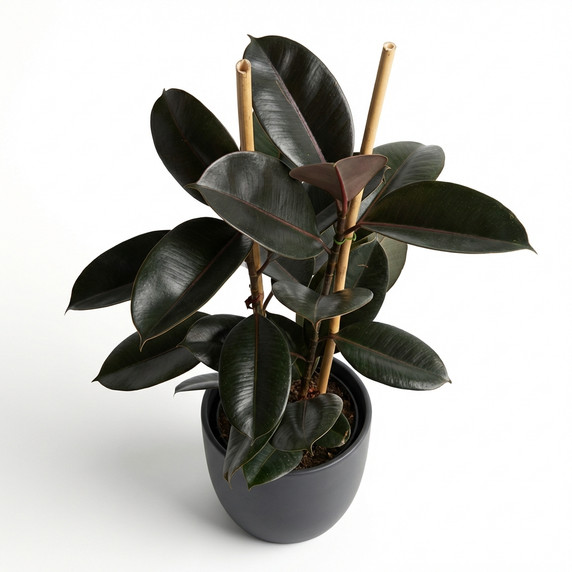
The 'Burgundy' variant is known for its large, leathery, and highly glossy leaves that are a deep, dark green to near-black color. The new leaves emerge from a vibrant red protective sheath, and the undersides of the leaves often feature a reddish-burgundy hue with a prominent red midrib.
5. Size & Dimensions
Indoors, the Black Rubber Plant typically reaches heights of 6 to 10 feet, though it can grow taller if ceiling height allows. The leaves themselves can grow up to 8–12 inches long and 4–6 inches wide.
6. Light Requirements
Thrives in bright, indirect light. While it can tolerate some direct morning sun, harsh afternoon sun may scorch the leaves. Low light conditions will slow growth and may cause the dark foliage to lose its intensity and turn more green.
7. Watering Needs
Water when the top 50-75% of the soil is dry. Ensure thorough watering until it drains from the bottom, then discard excess water. Avoid overwatering as this species is susceptible to root rot; reduce watering frequency during the winter months.
8. Soil & Potting
Requires a well-draining, aerated potting mix. A combination of high-quality potting soil with perlite or pine bark is ideal to ensure proper drainage while retaining some moisture.
9. Temperature & Humidity
Ideal temperatures range between 65°F and 80°F (18°C–27°C). It prefers moderate to high humidity but adapts well to standard indoor humidity levels. Avoid placing it near cold drafts or heating vents.
10. Fertilization
Feed with a balanced, water-soluble fertilizer every 4–6 weeks during the active growing season (spring and summer). No fertilization is needed during the dormant winter period.
11. Maintenance & Care Level
Easy to moderate maintenance. It is important to wipe the large leaves regularly with a damp cloth to remove dust, which allows the plant to photosynthesize efficiently and keeps it looking glossy.
12. Growth & Propagation
It is a relatively fast grower under the right conditions. Propagation is most successful via stem cuttings or air layering, though it requires patience as rooting can take several weeks.
13. Common Problems
Common issues include leaf drop caused by sudden changes in temperature or light, and root rot from overwatering. Pests such as mealybugs, scale, and spider mites can occasionally appear but are manageable with neem oil or insecticidal soap.
14. Benefits & Uses
Recognized by NASA for its air-purifying qualities, it is excellent at removing toxins like formaldehyde from indoor air. Due to its architectural shape and dramatic color, it is a favorite for interior design in homes and corporate offices.
15. Toxicity & Safety
Toxicity: High. The plant produces a milky white sap (latex) that is irritating to the skin and eyes of humans. It is toxic to cats and dogs if ingested, causing oral irritation, drooling, and vomiting.
Ficus elastica 'Burgundy'
Bring instant, high-end greenery to your space with the Black Rubber Plant. Its thick, glossy dark leaves look dramatic in modern interiors and require minimal upkeep—just bright indirect light and sensible watering. Perfect for receptions, living rooms, and offices where you want a strong statement plant that stays elegant year-round.
1. Basic Identification
Common Name: Black Rubber Plant / Rubber Tree
Botanical Name: Ficus elastica
Arabic Name: مطاط
Plant Variant: Burgundy
Plant Color: Natural
Family: Moraceae
2. Taxonomy & Classification
Kingdom: Plantae
Order: Rosales
Family: Moraceae
Genus: Ficus
Species: Ficus elastica
Cultivar: 'Burgundy'
3. Origin & Distribution
The Ficus elastica is native to South and Southeast Asia, specifically regions including India, Nepal, Bhutan, Myanmar, Malaysia, and Indonesia.
4. Visual Characteristics
The 'Burgundy' variant is known for its large, leathery, and highly glossy leaves that are a deep, dark green to near-black color. The new leaves emerge from a vibrant red protective sheath, and the undersides of the leaves often feature a reddish-burgundy hue with a prominent red midrib.
5. Size & Dimensions
Indoors, the Black Rubber Plant typically reaches heights of 6 to 10 feet, though it can grow taller if ceiling height allows. The leaves themselves can grow up to 8–12 inches long and 4–6 inches wide.
6. Light Requirements
Thrives in bright, indirect light. While it can tolerate some direct morning sun, harsh afternoon sun may scorch the leaves. Low light conditions will slow growth and may cause the dark foliage to lose its intensity and turn more green.
7. Watering Needs
Water when the top 50-75% of the soil is dry. Ensure thorough watering until it drains from the bottom, then discard excess water. Avoid overwatering as this species is susceptible to root rot; reduce watering frequency during the winter months.
8. Soil & Potting
Requires a well-draining, aerated potting mix. A combination of high-quality potting soil with perlite or pine bark is ideal to ensure proper drainage while retaining some moisture.
9. Temperature & Humidity
Ideal temperatures range between 65°F and 80°F (18°C–27°C). It prefers moderate to high humidity but adapts well to standard indoor humidity levels. Avoid placing it near cold drafts or heating vents.
10. Fertilization
Feed with a balanced, water-soluble fertilizer every 4–6 weeks during the active growing season (spring and summer). No fertilization is needed during the dormant winter period.
11. Maintenance & Care Level
Easy to moderate maintenance. It is important to wipe the large leaves regularly with a damp cloth to remove dust, which allows the plant to photosynthesize efficiently and keeps it looking glossy.
12. Growth & Propagation
It is a relatively fast grower under the right conditions. Propagation is most successful via stem cuttings or air layering, though it requires patience as rooting can take several weeks.
13. Common Problems
Common issues include leaf drop caused by sudden changes in temperature or light, and root rot from overwatering. Pests such as mealybugs, scale, and spider mites can occasionally appear but are manageable with neem oil or insecticidal soap.
14. Benefits & Uses
Recognized by NASA for its air-purifying qualities, it is excellent at removing toxins like formaldehyde from indoor air. Due to its architectural shape and dramatic color, it is a favorite for interior design in homes and corporate offices.
15. Toxicity & Safety
Toxicity: High. The plant produces a milky white sap (latex) that is irritating to the skin and eyes of humans. It is toxic to cats and dogs if ingested, causing oral irritation, drooling, and vomiting.