


Ficus Microcarpa Bonsai
Transform Your Space with Living Art. The Ficus Microcarpa Bonsai isn't just a plant; it's a statement of elegance and tranquility. With its powerful, sculpted trunk and vibrant green canopy, this miniature tree brings a sense of calm and sophistication to your desk, living room, or reception area. Perfect as a prestigious gift or a personal wellness companion, this bonsai is a low-effort way to make a high-impact style statement. Cultivate peace and purify your air—add this timeless masterpiece to your cart today.
1. Basic Identification
Common Name: Bonsai, Chinese Banyan, Malayan Banyan
Botanical Name: Ficus microcarpa
Variant: Standard
Plant Color: Green
Arabic Name: بونزاي
2. Taxonomy & Classification
Kingdom: Plantae
Order: Rosales
Family: Moraceae
Genus: Ficus
Species: Ficus microcarpa
3. Origin & Distribution
Native to Southeast Asia, Southern China, and Australia, often found in tropical and subtropical regions. It is widely cultivated globally as an ornamental bonsai tree.
4. Visual Characteristics
Features a thick, greyish, woody trunk that often forms aerial roots. Its leaves are small, oval-shaped, dark green, and leathery, forming a dense, rounded canopy.
5. Size & Dimensions
When grown as a bonsai, it typically reaches heights of 1 to 3 feet (30 to 90 cm), depending on the size of the container and pruning practices.
6. Light Requirements
Thrives in bright, indirect light. It can tolerate some direct morning sunlight but should be protected from harsh afternoon sun which can scorch the leaves.
7. Watering Needs
Requires moderate watering; keep the soil consistently moist but never waterlogged. Allow the top inch of soil to dry out slightly before watering again.
8. Soil & Potting
Needs a well-draining potting medium, such as a dedicated bonsai mix consisting of peat, pine bark, and pumice or perlite to ensure aeration.
9. Temperature & Humidity
Prefers warm temperatures between 15°C and 24°C (60°F - 75°F). It enjoys high humidity; misting the foliage regularly or using a humidity tray is recommended.
10. Fertilization
Feed every two weeks during the growing season (spring and summer) with a balanced liquid fertilizer diluted to half strength. Reduce feeding in winter.
11. Maintenance & Care Level
Care Level: Moderate. It requires regular pruning to maintain its bonsai shape and encouragement of new growth, as well as consistent environmental conditions.
12. Growth & Propagation
Growth is slow to moderate. Propagation is most commonly achieved through stem cuttings or air layering during the warmer months.
13. Common Problems
Leaf drop can occur due to sudden changes in temperature or light. It is also susceptible to common pests like spider mites, scale insects, and mealybugs.
14. Benefits & Uses
Highly effective as an air-purifying plant that filters indoor toxins. It is primarily used for aesthetic decoration, stress relief, and the artistic practice of bonsai.
15. Toxicity & Safety
Toxicity: Yes. The sap contains latex which can be irritating to the skin and eyes. It is toxic to dogs, cats, and humans if ingested, causing gastrointestinal distress.

Ficus Microcarpa Bonsai
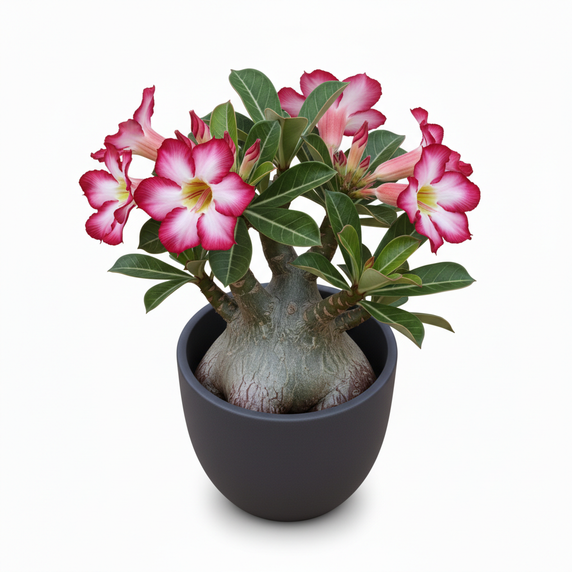
Transform Your Space with Living Art. The Ficus Microcarpa Bonsai isn't just a plant; it's a statement of elegance and tranquility. With its powerful, sculpted trunk and vibrant green canopy, this miniature tree brings a sense of calm and sophistication to your desk, living room, or reception area. Perfect as a prestigious gift or a personal wellness companion, this bonsai is a low-effort way to make a high-impact style statement. Cultivate peace and purify your air—add this timeless masterpiece to your cart today.
1. Basic Identification
Common Name: Bonsai, Chinese Banyan, Malayan Banyan
Botanical Name: Ficus microcarpa
Variant: Standard
Plant Color: Green
Arabic Name: بونزاي
2. Taxonomy & Classification
Kingdom: Plantae
Order: Rosales
Family: Moraceae
Genus: Ficus
Species: Ficus microcarpa
3. Origin & Distribution
Native to Southeast Asia, Southern China, and Australia, often found in tropical and subtropical regions. It is widely cultivated globally as an ornamental bonsai tree.
4. Visual Characteristics
Features a thick, greyish, woody trunk that often forms aerial roots. Its leaves are small, oval-shaped, dark green, and leathery, forming a dense, rounded canopy.
5. Size & Dimensions
When grown as a bonsai, it typically reaches heights of 1 to 3 feet (30 to 90 cm), depending on the size of the container and pruning practices.
6. Light Requirements
Thrives in bright, indirect light. It can tolerate some direct morning sunlight but should be protected from harsh afternoon sun which can scorch the leaves.
7. Watering Needs
Requires moderate watering; keep the soil consistently moist but never waterlogged. Allow the top inch of soil to dry out slightly before watering again.
8. Soil & Potting
Needs a well-draining potting medium, such as a dedicated bonsai mix consisting of peat, pine bark, and pumice or perlite to ensure aeration.
9. Temperature & Humidity
Prefers warm temperatures between 15°C and 24°C (60°F - 75°F). It enjoys high humidity; misting the foliage regularly or using a humidity tray is recommended.
10. Fertilization
Feed every two weeks during the growing season (spring and summer) with a balanced liquid fertilizer diluted to half strength. Reduce feeding in winter.
11. Maintenance & Care Level
Care Level: Moderate. It requires regular pruning to maintain its bonsai shape and encouragement of new growth, as well as consistent environmental conditions.
12. Growth & Propagation
Growth is slow to moderate. Propagation is most commonly achieved through stem cuttings or air layering during the warmer months.
13. Common Problems
Leaf drop can occur due to sudden changes in temperature or light. It is also susceptible to common pests like spider mites, scale insects, and mealybugs.
14. Benefits & Uses
Highly effective as an air-purifying plant that filters indoor toxins. It is primarily used for aesthetic decoration, stress relief, and the artistic practice of bonsai.
15. Toxicity & Safety
Toxicity: Yes. The sap contains latex which can be irritating to the skin and eyes. It is toxic to dogs, cats, and humans if ingested, causing gastrointestinal distress.