


Flamingo Flower
Transform your space with the exotic allure of the Flamingo Flower! With its brilliant, heart-shaped flowers and glossy green leaves, the Anthurium is a true showstopper. Not just a pretty face, it's a hardworking air purifier that blooms almost year-round, bringing endless color and tropical vibes to your life. It's the perfect gift and the ultimate statement piece for any modern interior.
1. Basic Identification
Common Name: Flamingo Flower, Laceleaf, Tailflower
Botanical Name: Anthurium andraeanum
Arabic Name: انتيكوما
Family: Araceae
Location: Indoor
2. Taxonomy & Classification
Kingdom: Plantae
Order: Alismatales
Family: Araceae
Genus: Anthurium
Species: Anthurium andraeanum
3. Origin & Distribution
The Anthurium andraeanum is native to the tropical rainforests of Colombia and Ecuador. It has since been naturalized in various tropical regions across the Caribbean and Southeast Asia and is widely cultivated globally as a popular ornamental houseplant.
4. Visual Characteristics
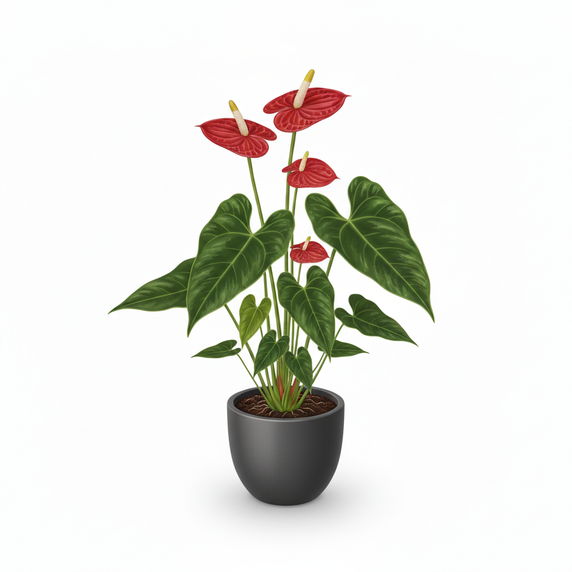
Characterized by glossy, dark green, heart-shaped leaves. Its most striking feature is the heart-shaped spathe (a modified leaf), typically found in bright red, though also occurring in shades of pink, white, and orange. From the spathe emerges a spadix, a spike-like structure covered in tiny, true flowers.
5. Size & Dimensions
When grown indoors, it typically reaches a height and spread of 12 to 18 inches (30–45 cm). The leaves can grow up to 8 inches in length, and the plant maintains a compact, bushy appearance.
6. Light Requirements
Prefers bright, indirect sunlight. Direct sunlight can scorch the leaves and spathes, while low light conditions may cause the plant to stop blooming and grow more slowly.
7. Watering Needs
Water thoroughly when the top inch of soil feels dry to the touch. It prefers to stay consistently moist but is highly susceptible to root rot if left in standing water or overwatered.
8. Soil & Potting
Requires a well-drained, airy potting mix. An orchid-based mix or a blend of peat moss, perlite, and pine bark is ideal to mimic its natural epiphytic growing conditions.
9. Temperature & Humidity
Thrives in warm temperatures between 65°F and 80°F (18°C to 27°C). As a tropical plant, it requires high humidity levels (60% or higher). Misting or using a humidifier is recommended in dry environments.
10. Fertilization
Feed with a balanced liquid fertilizer high in phosphorus during the growing season (spring and summer) every 6 to 8 weeks to encourage consistent blooming.
11. Maintenance & Care Level
Moderate. While not overly demanding, it requires consistent humidity and light to flower. Regular wiping of the leaves with a damp cloth helps maintain their shine and prevents dust buildup.
12. Growth & Propagation
Growth is moderate. Propagation is most successful through stem cuttings with aerial roots or by dividing the root clump of a mature plant during repotting.
13. Common Problems
Common issues include yellowing leaves (often due to overwatering or low humidity), brown leaf tips (dry air), and pests such as spider mites, aphids, and mealybugs.
14. Benefits & Uses
Listed by NASA as an effective air-purifying plant, it helps remove toxins like formaldehyde, ammonia, and xylene from the air. Its long-lasting "flowers" make it an exceptional choice for home décor and gift-giving.
15. Toxicity & Safety
Toxic to both humans and pets. The plant contains calcium oxalate crystals which, if ingested, can cause severe irritation of the mouth, throat, and digestive tract, as well as swelling and difficulty swallowing.

Flamingo Flower
Transform your space with the exotic allure of the Flamingo Flower! With its brilliant, heart-shaped flowers and glossy green leaves, the Anthurium is a true showstopper. Not just a pretty face, it's a hardworking air purifier that blooms almost year-round, bringing endless color and tropical vibes to your life. It's the perfect gift and the ultimate statement piece for any modern interior.
1. Basic Identification
Common Name: Flamingo Flower, Laceleaf, Tailflower
Botanical Name: Anthurium andraeanum
Arabic Name: انتيكوما
Family: Araceae
Location: Indoor
2. Taxonomy & Classification
Kingdom: Plantae
Order: Alismatales
Family: Araceae
Genus: Anthurium
Species: Anthurium andraeanum
3. Origin & Distribution
The Anthurium andraeanum is native to the tropical rainforests of Colombia and Ecuador. It has since been naturalized in various tropical regions across the Caribbean and Southeast Asia and is widely cultivated globally as a popular ornamental houseplant.
4. Visual Characteristics
Characterized by glossy, dark green, heart-shaped leaves. Its most striking feature is the heart-shaped spathe (a modified leaf), typically found in bright red, though also occurring in shades of pink, white, and orange. From the spathe emerges a spadix, a spike-like structure covered in tiny, true flowers.
5. Size & Dimensions
When grown indoors, it typically reaches a height and spread of 12 to 18 inches (30–45 cm). The leaves can grow up to 8 inches in length, and the plant maintains a compact, bushy appearance.
6. Light Requirements
Prefers bright, indirect sunlight. Direct sunlight can scorch the leaves and spathes, while low light conditions may cause the plant to stop blooming and grow more slowly.
7. Watering Needs
Water thoroughly when the top inch of soil feels dry to the touch. It prefers to stay consistently moist but is highly susceptible to root rot if left in standing water or overwatered.
8. Soil & Potting
Requires a well-drained, airy potting mix. An orchid-based mix or a blend of peat moss, perlite, and pine bark is ideal to mimic its natural epiphytic growing conditions.
9. Temperature & Humidity
Thrives in warm temperatures between 65°F and 80°F (18°C to 27°C). As a tropical plant, it requires high humidity levels (60% or higher). Misting or using a humidifier is recommended in dry environments.
10. Fertilization
Feed with a balanced liquid fertilizer high in phosphorus during the growing season (spring and summer) every 6 to 8 weeks to encourage consistent blooming.
11. Maintenance & Care Level
Moderate. While not overly demanding, it requires consistent humidity and light to flower. Regular wiping of the leaves with a damp cloth helps maintain their shine and prevents dust buildup.
12. Growth & Propagation
Growth is moderate. Propagation is most successful through stem cuttings with aerial roots or by dividing the root clump of a mature plant during repotting.
13. Common Problems
Common issues include yellowing leaves (often due to overwatering or low humidity), brown leaf tips (dry air), and pests such as spider mites, aphids, and mealybugs.
14. Benefits & Uses
Listed by NASA as an effective air-purifying plant, it helps remove toxins like formaldehyde, ammonia, and xylene from the air. Its long-lasting "flowers" make it an exceptional choice for home décor and gift-giving.
15. Toxicity & Safety
Toxic to both humans and pets. The plant contains calcium oxalate crystals which, if ingested, can cause severe irritation of the mouth, throat, and digestive tract, as well as swelling and difficulty swallowing.