


Florist's Azalea
Bring instant, luxurious color to any space with a Florist’s Azalea. Its full, ruffled blooms and glossy evergreen leaves make it a standout gift and a premium décor piece for living rooms, entryways, and receptions. Give it bright filtered light, steady moisture, and a touch of humidity—and enjoy a beautifully refined flowering display that feels like a curated floral arrangement, but alive.
1. Basic Identification
Common Name: Florist's Azalea, Azalea
Botanical Name: Rhododendron simsii
Arabic Name: أزاليا
Family: Ericaceae
2. Taxonomy & Classification
Kingdom: Plantae
Order: Ericales
Genus: Rhododendron
Species: Rhododendron simsii
3. Origin & Distribution
Rhododendron simsii is native to East Asia, predominantly southern China, Taiwan, and Thailand. It has been extensively cultivated globally as a popular indoor ornamental plant.
4. Visual Characteristics
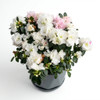
This evergreen shrub features small, leathery, dark green elliptical leaves. Its most striking feature is the large, funnel-shaped flowers that appear in clusters. Blooms can be single or double, with ruffled petals in shades of pink, red, white, or variegated patterns.
5. Size & Dimensions
Typically reaches a height and spread of 12 to 18 inches (30–45 cm) when grown in containers. In natural environments, it can grow larger, but it is primarily maintained as a compact indoor specimen.
6. Light Requirements
Prefers bright, indirect light or filtered sunlight. Direct afternoon sun can scorch the leaves and wilt the flowers, while too little light will prevent re-blooming.
7. Watering Needs
Keep the soil consistently moist but not waterlogged. Azaleas are sensitive to drying out; if the root ball becomes completely dry, the plant may drop its leaves and buds. Using lime-free water or rainwater is recommended.
8. Soil & Potting
Requires an acidic soil medium (pH 4.5 to 5.5). A peat-based potting mix or a specialized ericaceous compost is essential for healthy growth.
9. Temperature & Humidity
Prefers cool to moderate temperatures, ideally between 15°C and 18°C. High humidity is crucial for maintaining bloom health; use a humidity tray or a room humidifier to prevent the air from becoming too dry.
10. Fertilization
Apply a liquid fertilizer designed for acid-loving plants every two weeks during the growing season (spring and summer). Reduce feeding during the winter dormant period.
11. Maintenance & Care Level
Care Level: Moderate. It requires careful attention to watering schedules and humidity levels. Deadheading (removing spent flowers) is necessary to keep the plant looking tidy and to encourage further blooming.
12. Growth & Propagation
Growth rate is slow to moderate. Propagation is typically achieved through semi-ripe stem cuttings taken in late summer or by air layering.
13. Common Problems
Susceptible to leaf drop caused by underwatering or low humidity. Common pests include spider mites, aphids, and lace bugs. Overwatering can lead to root rot.
14. Benefits & Uses
Widely used as a decorative indoor plant and a popular choice for floral gifting. Its dense flowering habit makes it an excellent centerpiece for interior design.
15. Toxicity & Safety
Highly Toxic. All parts of the Rhododendron simsii contain grayanotoxins, which are poisonous to cats, dogs, and horses if ingested. It can also be harmful to humans if consumed. Keep out of reach of children and pets.
Florist's Azalea

Bring instant, luxurious color to any space with a Florist’s Azalea. Its full, ruffled blooms and glossy evergreen leaves make it a standout gift and a premium décor piece for living rooms, entryways, and receptions. Give it bright filtered light, steady moisture, and a touch of humidity—and enjoy a beautifully refined flowering display that feels like a curated floral arrangement, but alive.
1. Basic Identification
Common Name: Florist's Azalea, Azalea
Botanical Name: Rhododendron simsii
Arabic Name: أزاليا
Family: Ericaceae
2. Taxonomy & Classification
Kingdom: Plantae
Order: Ericales
Genus: Rhododendron
Species: Rhododendron simsii
3. Origin & Distribution
Rhododendron simsii is native to East Asia, predominantly southern China, Taiwan, and Thailand. It has been extensively cultivated globally as a popular indoor ornamental plant.
4. Visual Characteristics
This evergreen shrub features small, leathery, dark green elliptical leaves. Its most striking feature is the large, funnel-shaped flowers that appear in clusters. Blooms can be single or double, with ruffled petals in shades of pink, red, white, or variegated patterns.
5. Size & Dimensions
Typically reaches a height and spread of 12 to 18 inches (30–45 cm) when grown in containers. In natural environments, it can grow larger, but it is primarily maintained as a compact indoor specimen.
6. Light Requirements
Prefers bright, indirect light or filtered sunlight. Direct afternoon sun can scorch the leaves and wilt the flowers, while too little light will prevent re-blooming.
7. Watering Needs
Keep the soil consistently moist but not waterlogged. Azaleas are sensitive to drying out; if the root ball becomes completely dry, the plant may drop its leaves and buds. Using lime-free water or rainwater is recommended.
8. Soil & Potting
Requires an acidic soil medium (pH 4.5 to 5.5). A peat-based potting mix or a specialized ericaceous compost is essential for healthy growth.
9. Temperature & Humidity
Prefers cool to moderate temperatures, ideally between 15°C and 18°C. High humidity is crucial for maintaining bloom health; use a humidity tray or a room humidifier to prevent the air from becoming too dry.
10. Fertilization
Apply a liquid fertilizer designed for acid-loving plants every two weeks during the growing season (spring and summer). Reduce feeding during the winter dormant period.
11. Maintenance & Care Level
Care Level: Moderate. It requires careful attention to watering schedules and humidity levels. Deadheading (removing spent flowers) is necessary to keep the plant looking tidy and to encourage further blooming.
12. Growth & Propagation
Growth rate is slow to moderate. Propagation is typically achieved through semi-ripe stem cuttings taken in late summer or by air layering.
13. Common Problems
Susceptible to leaf drop caused by underwatering or low humidity. Common pests include spider mites, aphids, and lace bugs. Overwatering can lead to root rot.
14. Benefits & Uses
Widely used as a decorative indoor plant and a popular choice for floral gifting. Its dense flowering habit makes it an excellent centerpiece for interior design.
15. Toxicity & Safety
Highly Toxic. All parts of the Rhododendron simsii contain grayanotoxins, which are poisonous to cats, dogs, and horses if ingested. It can also be harmful to humans if consumed. Keep out of reach of children and pets.