


Ericaceae
Gaultheria procumbens
Add instant seasonal charm to your outdoor space with American Wintergreen—an elegant, compact evergreen that stays neat and glossy while showcasing vivid red berries. Perfect for balcony planters, shaded entrances, and mixed patio arrangements. Simply provide acidic soil, gentle light, and consistent moisture for a premium look that lasts for weeks.
1. Basic Identification
Common Name: American Wintergreen
Botanical Name: Gaultheria procumbens
Arabic Name: كرز سندانه
Plant Variant: Standard
Plant Color: Natural
Plant Country: هولندا
Stems: 1
Family: Ericaceae
2. Taxonomy & Classification
Kingdom: Plantae
Clade: Tracheophytes
Order: Ericales
Family: Ericaceae
Genus: Gaultheria
Species: Gaultheria procumbens
3. Origin & Distribution
Native to North America, primarily in the northeastern United States and southeastern Canada, where it thrives in the understory of acidic woodlands.
4. Visual Characteristics
A low-growing, creeping evergreen shrub with leathery, oval-shaped leaves that are glossy dark green in summer and turn a rich reddish-bronze in winter. It produces small, white, nodding, bell-shaped flowers followed by vibrant, aromatic red berries that persist through the winter months.
5. Size & Dimensions
A compact plant that typically reaches a height of 10–15 cm (4–6 inches) and spreads slowly to about 30 cm (12 inches) wide through underground runners.
6. Light Requirements
Prefers partial shade to full shade. While it can tolerate some morning sun in cooler climates, it should be protected from harsh, direct afternoon sunlight which can scorch the foliage.
7. Watering Needs
Requires consistent moisture. The soil should be kept damp but never soggy. It does not tolerate drought well, especially when grown in containers.
8. Soil & Potting
Strictly requires acidic soil (pH 4.5 to 6.0). Use a mixture of peat moss and sand or a potting mix designed for acid-loving plants like azaleas or blueberries.
9. Temperature & Humidity
Extremely hardy and cold-tolerant. It thrives in cool, temperate climates and prefers moderate to high humidity. It may struggle in regions with intense dry heat.
10. Fertilization
Light feeder. Apply a balanced, water-soluble acidic fertilizer once in early spring to support new growth. Avoid over-fertilizing.
11. Maintenance & Care Level
Low maintenance. Requires minimal pruning other than the removal of dead or damaged leaves. Ensure it stays well-mulched to retain moisture and keep roots cool.
12. Growth & Propagation
Slow-growing. It can be propagated by dividing the rooted underground stems (rhizomes) in the spring or by taking semi-hardwood cuttings in summer.
13. Common Problems
Relatively pest-free, but may occasionally suffer from leaf spot or powdery mildew if air circulation is poor. Overwatering in poorly drained soil can lead to root rot.
14. Benefits & Uses
Widely used as an ornamental groundcover and in seasonal winter displays. The leaves and berries have a distinct wintergreen scent and flavor, historically used for making tea and extracting wintergreen oil.
15. Toxicity & Safety
Safe for humans in small amounts, but the oil (methyl salicylate) is toxic in large doses. It is generally considered non-toxic to pets, though ingestion of large quantities may cause mild stomach upset.
Gaultheria procumbens
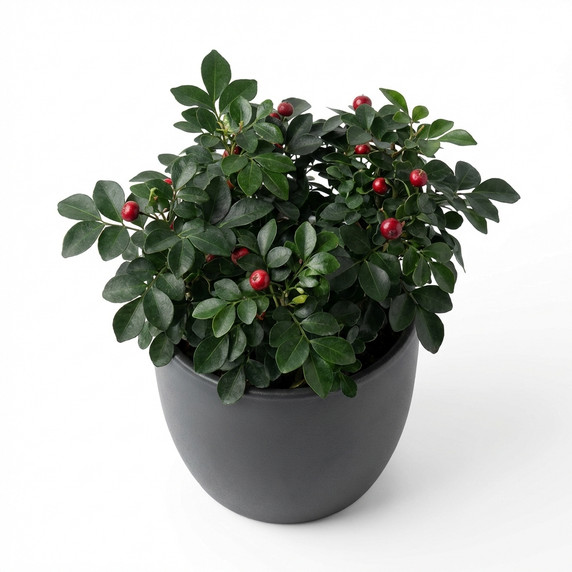
Add instant seasonal charm to your outdoor space with American Wintergreen—an elegant, compact evergreen that stays neat and glossy while showcasing vivid red berries. Perfect for balcony planters, shaded entrances, and mixed patio arrangements. Simply provide acidic soil, gentle light, and consistent moisture for a premium look that lasts for weeks.
1. Basic Identification
Common Name: American Wintergreen
Botanical Name: Gaultheria procumbens
Arabic Name: كرز سندانه
Plant Variant: Standard
Plant Color: Natural
Plant Country: هولندا
Stems: 1
Family: Ericaceae
2. Taxonomy & Classification
Kingdom: Plantae
Clade: Tracheophytes
Order: Ericales
Family: Ericaceae
Genus: Gaultheria
Species: Gaultheria procumbens
3. Origin & Distribution
Native to North America, primarily in the northeastern United States and southeastern Canada, where it thrives in the understory of acidic woodlands.
4. Visual Characteristics
A low-growing, creeping evergreen shrub with leathery, oval-shaped leaves that are glossy dark green in summer and turn a rich reddish-bronze in winter. It produces small, white, nodding, bell-shaped flowers followed by vibrant, aromatic red berries that persist through the winter months.
5. Size & Dimensions
A compact plant that typically reaches a height of 10–15 cm (4–6 inches) and spreads slowly to about 30 cm (12 inches) wide through underground runners.
6. Light Requirements
Prefers partial shade to full shade. While it can tolerate some morning sun in cooler climates, it should be protected from harsh, direct afternoon sunlight which can scorch the foliage.
7. Watering Needs
Requires consistent moisture. The soil should be kept damp but never soggy. It does not tolerate drought well, especially when grown in containers.
8. Soil & Potting
Strictly requires acidic soil (pH 4.5 to 6.0). Use a mixture of peat moss and sand or a potting mix designed for acid-loving plants like azaleas or blueberries.
9. Temperature & Humidity
Extremely hardy and cold-tolerant. It thrives in cool, temperate climates and prefers moderate to high humidity. It may struggle in regions with intense dry heat.
10. Fertilization
Light feeder. Apply a balanced, water-soluble acidic fertilizer once in early spring to support new growth. Avoid over-fertilizing.
11. Maintenance & Care Level
Low maintenance. Requires minimal pruning other than the removal of dead or damaged leaves. Ensure it stays well-mulched to retain moisture and keep roots cool.
12. Growth & Propagation
Slow-growing. It can be propagated by dividing the rooted underground stems (rhizomes) in the spring or by taking semi-hardwood cuttings in summer.
13. Common Problems
Relatively pest-free, but may occasionally suffer from leaf spot or powdery mildew if air circulation is poor. Overwatering in poorly drained soil can lead to root rot.
14. Benefits & Uses
Widely used as an ornamental groundcover and in seasonal winter displays. The leaves and berries have a distinct wintergreen scent and flavor, historically used for making tea and extracting wintergreen oil.
15. Toxicity & Safety
Safe for humans in small amounts, but the oil (methyl salicylate) is toxic in large doses. It is generally considered non-toxic to pets, though ingestion of large quantities may cause mild stomach upset.