

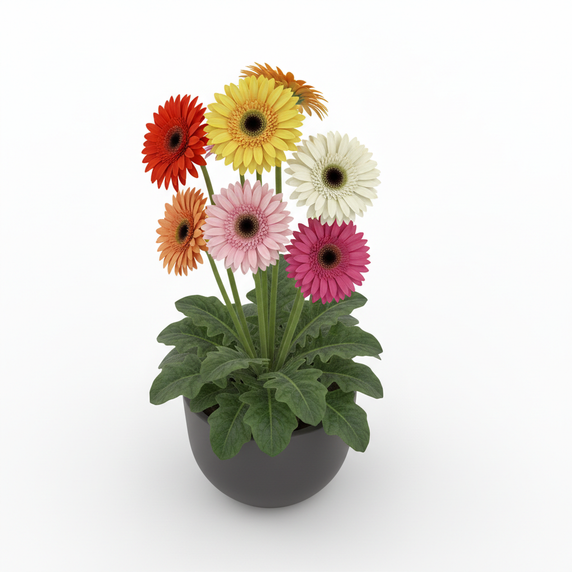



Instantly brighten any room with the radiant charm of the Gerbera Daisy! Famous for its large, intensely colored flowers, this plant is a living bouquet that works hard to purify your air. It’s the perfect, pet-safe choice for a thoughtful gift or a personal mood-booster. Easy to care for and rewarding with continuous blooms, the Gerbera Daisy brings a burst of joyful energy to your home or office.
Common Name: Gerbera Daisy, Transvaal Daisy
Botanical Name: Gerbera jamesonii
Family: Asteraceae
Arabic Name: جربرا
Plant Variant: Standard
Plant Color: Multicolor
Country of Origin: Netherlands
Gerbera jamesonii belongs to the family Asteraceae (the daisy or sunflower family). It is part of the Mutisieae tribe and the genus Gerbera, which includes about 30 species of perennial flowering plants native to Africa, Madagascar, and tropical Asia.
The Gerbera Daisy is native to the Transvaal and Natal provinces of South Africa. Since its discovery, it has been widely distributed globally and is one of the most commercially significant ornamental flowers used in the florist trade and as a potted houseplant.
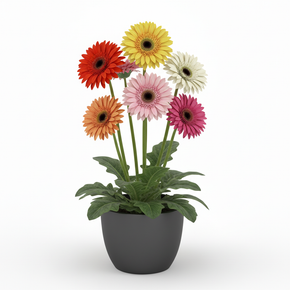
This plant features a basal rosette of deeply lobed, felt-like green leaves. Its most striking feature is the large, composite flower head (capitulum) held on a sturdy, leafless stem. The flowers come in a vast array of colors including red, yellow, pink, orange, and white, with centers that can be dark or light-colored.
Typically, the plant grows to a height of 30 to 45 cm (12–18 inches) with a similar spread. The flower heads generally measure between 7 and 12 cm (3–5 inches) in diameter.
Gerbera Daisies require bright, indirect light to thrive and produce blooms. While they enjoy some morning sun, harsh afternoon sunlight can scorch the leaves. Indoors, a south or west-facing window with filtered light is ideal.
Water the plant when the top inch of the soil feels dry to the touch. It is important to water at the base of the plant and avoid getting the crown or foliage wet, as this can lead to fungal diseases and crown rot. Ensure the pot has excellent drainage.
Use a well-draining, high-quality potting mix rich in organic matter. A mixture containing peat moss, perlite, and vermiculite works well to maintain moisture while allowing excess water to escape.
These plants prefer moderate temperatures between 15°C and 24°C (60-75°F). They enjoy moderate humidity levels. Protect them from extreme heat and dry, cold drafts from air conditioners or heaters.
Feed with a balanced, water-soluble fertilizer every two weeks during the growing and flowering season (spring through summer). Reduce feeding during the winter months when growth slows.
The care level is moderate. The most critical maintenance task is "deadheading" or removing spent flower stalks at the base to encourage the plant to produce new blooms and prevent energy waste.
They are relatively fast growers under optimal conditions. Propagation is most commonly achieved through seeds or by dividing the crown of mature plants during the spring.
Gerbera Daisies are susceptible to powdery mildew and grey mold (Botrytis) if humidity is too high or air circulation is poor. Pests such as aphids, whiteflies, and spider mites can occasionally be an issue. Crown rot is a common result of overwatering.
Beyond its aesthetic appeal, the Gerbera Daisy is a powerful air purifier, known for removing toxins like benzene and trichloroethylene from the air. It is widely used for home décor, gifting, and as a natural mood enhancer.
Gerbera jamesonii is classified as non-toxic to humans, cats, and dogs by the ASPCA, making it a safe and vibrant addition to any pet-friendly household.
Instantly brighten any room with the radiant charm of the Gerbera Daisy! Famous for its large, intensely colored flowers, this plant is a living bouquet that works hard to purify your air. It’s the perfect, pet-safe choice for a thoughtful gift or a personal mood-booster. Easy to care for and rewarding with continuous blooms, the Gerbera Daisy brings a burst of joyful energy to your home or office.
Common Name: Gerbera Daisy, Transvaal Daisy
Botanical Name: Gerbera jamesonii
Family: Asteraceae
Arabic Name: جربرا
Plant Variant: Standard
Plant Color: Multicolor
Country of Origin: Netherlands
Gerbera jamesonii belongs to the family Asteraceae (the daisy or sunflower family). It is part of the Mutisieae tribe and the genus Gerbera, which includes about 30 species of perennial flowering plants native to Africa, Madagascar, and tropical Asia.
The Gerbera Daisy is native to the Transvaal and Natal provinces of South Africa. Since its discovery, it has been widely distributed globally and is one of the most commercially significant ornamental flowers used in the florist trade and as a potted houseplant.
This plant features a basal rosette of deeply lobed, felt-like green leaves. Its most striking feature is the large, composite flower head (capitulum) held on a sturdy, leafless stem. The flowers come in a vast array of colors including red, yellow, pink, orange, and white, with centers that can be dark or light-colored.
Typically, the plant grows to a height of 30 to 45 cm (12–18 inches) with a similar spread. The flower heads generally measure between 7 and 12 cm (3–5 inches) in diameter.
Gerbera Daisies require bright, indirect light to thrive and produce blooms. While they enjoy some morning sun, harsh afternoon sunlight can scorch the leaves. Indoors, a south or west-facing window with filtered light is ideal.
Water the plant when the top inch of the soil feels dry to the touch. It is important to water at the base of the plant and avoid getting the crown or foliage wet, as this can lead to fungal diseases and crown rot. Ensure the pot has excellent drainage.
Use a well-draining, high-quality potting mix rich in organic matter. A mixture containing peat moss, perlite, and vermiculite works well to maintain moisture while allowing excess water to escape.
These plants prefer moderate temperatures between 15°C and 24°C (60-75°F). They enjoy moderate humidity levels. Protect them from extreme heat and dry, cold drafts from air conditioners or heaters.
Feed with a balanced, water-soluble fertilizer every two weeks during the growing and flowering season (spring through summer). Reduce feeding during the winter months when growth slows.
The care level is moderate. The most critical maintenance task is "deadheading" or removing spent flower stalks at the base to encourage the plant to produce new blooms and prevent energy waste.
They are relatively fast growers under optimal conditions. Propagation is most commonly achieved through seeds or by dividing the crown of mature plants during the spring.
Gerbera Daisies are susceptible to powdery mildew and grey mold (Botrytis) if humidity is too high or air circulation is poor. Pests such as aphids, whiteflies, and spider mites can occasionally be an issue. Crown rot is a common result of overwatering.
Beyond its aesthetic appeal, the Gerbera Daisy is a powerful air purifier, known for removing toxins like benzene and trichloroethylene from the air. It is widely used for home décor, gifting, and as a natural mood enhancer.
Gerbera jamesonii is classified as non-toxic to humans, cats, and dogs by the ASPCA, making it a safe and vibrant addition to any pet-friendly household.
Take 20% off your first order
Enter the code below at checkout to get 20% off your first order