


German Primrose
Instantly elevate your indoor space with the cheerful, vibrant blooms of the German Primrose! This compact beauty delivers a stunning, long-lasting floral display, making it a perfect centerpiece for your desk, living room, or a thoughtful gift that keeps on giving. Its lush foliage and dazzling colors are a guaranteed mood-booster. Please handle with care and place out of reach of pets and children. Order yours today for a spectacular burst of indoor color!
1. Basic Identification
Common Name: German Primrose / Poison Primrose
Botanical Name: Primula obconica
Arabic Name: برموله
Variant: Standard
Color: Multicolor
Country: Netherlands
2. Taxonomy & Classification
Kingdom: Plantae
Order: Ericales
Family: Primulaceae
Genus: Primula
Species: P. obconica
3. Origin & Distribution
Primula obconica is native to temperate and subtropical regions of China and Southeast Asia, particularly Thailand. It has been extensively naturalized and cultivated in the Netherlands and throughout Europe as a popular ornamental houseplant.
4. Visual Characteristics
This plant features a rosette of large, rounded, heart-shaped leaves that are heart-shaped at the base and slightly hairy. The flowers rise above the foliage in dense, umbrella-like clusters (umbels). Blooms come in a wide range of colors including shades of lilac, pink, red, white, and blue, often with a yellow or green "eye" at the center.
5. Size & Dimensions
Height: 20–30 cm (8–12 inches)
Spread: 20–25 cm (8–10 inches)
It maintains a compact, mounding growth habit ideal for indoor pots and tabletops.
6. Light Requirements
Requires bright, indirect light. It thrives in north- or east-facing windows. Direct afternoon sun can scorch the leaves and cause the flowers to fade prematurely, while too little light will stop flower production.
7. Watering Needs
Keep the soil consistently moist but never waterlogged. Water from the base or carefully around the edges to avoid getting moisture in the central crown, which can lead to rot. Never allow the soil to dry out completely.
8. Soil & Potting
Requires a rich, loamy, and well-draining potting soil. A mix high in organic matter with a slightly acidic to neutral pH is ideal. Ensure the pot has adequate drainage holes.
9. Temperature & Humidity
Prefers cool environments, ideally between 10°C and 18°C (50–65°F). Higher temperatures will shorten the blooming period. It appreciates moderate humidity; placing the pot on a pebble tray with water can help in dry indoor environments.
10. Fertilization
Feed every two weeks during the active blooming season with a balanced liquid fertilizer diluted to half-strength. Do not fertilize when the plant is not in flower.
11. Maintenance & Care Level
Care Level: Moderate. Regular "deadheading" (removing spent flower stalks) is necessary to encourage continuous blooming and prevent fungal issues.
12. Growth & Propagation
Primula obconica is usually grown from seeds sown in late spring for winter blooms. It can also be propagated by crown division, though it is often treated as an annual or short-lived perennial indoors.
13. Common Problems
Susceptible to aphids and spider mites. Overwatering can lead to Botrytis (gray mold) or root rot. Yellowing leaves (chlorosis) often indicates that the water is too hard or the soil pH is too high.
14. Benefits & Uses
Highly valued for its intense winter and spring color. It is an excellent choice for brightening up office desks, reception areas, and living rooms. Its vibrant colors serve as a natural mood enhancer.
15. Toxicity & Safety
Toxicity: High. The plant contains primulin, which can cause contact dermatitis (skin rash and itching) in sensitive individuals; it is recommended to wear gloves when handling. It is toxic to cats, dogs, and horses if ingested.
German Primrose
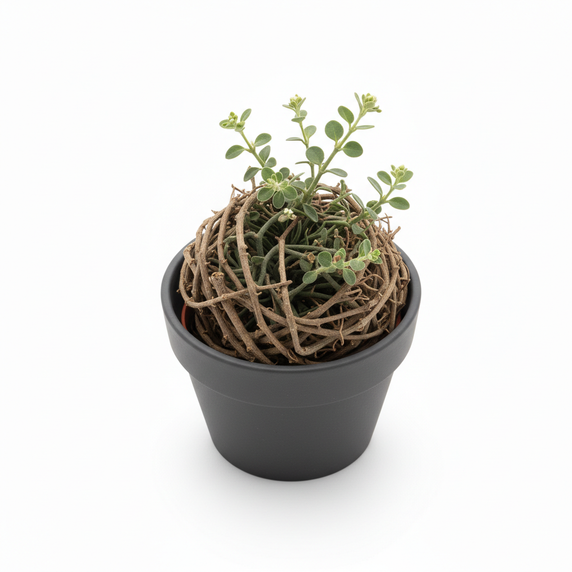
Instantly elevate your indoor space with the cheerful, vibrant blooms of the German Primrose! This compact beauty delivers a stunning, long-lasting floral display, making it a perfect centerpiece for your desk, living room, or a thoughtful gift that keeps on giving. Its lush foliage and dazzling colors are a guaranteed mood-booster. Please handle with care and place out of reach of pets and children. Order yours today for a spectacular burst of indoor color!
1. Basic Identification
Common Name: German Primrose / Poison Primrose
Botanical Name: Primula obconica
Arabic Name: برموله
Variant: Standard
Color: Multicolor
Country: Netherlands
2. Taxonomy & Classification
Kingdom: Plantae
Order: Ericales
Family: Primulaceae
Genus: Primula
Species: P. obconica
3. Origin & Distribution
Primula obconica is native to temperate and subtropical regions of China and Southeast Asia, particularly Thailand. It has been extensively naturalized and cultivated in the Netherlands and throughout Europe as a popular ornamental houseplant.
4. Visual Characteristics
This plant features a rosette of large, rounded, heart-shaped leaves that are heart-shaped at the base and slightly hairy. The flowers rise above the foliage in dense, umbrella-like clusters (umbels). Blooms come in a wide range of colors including shades of lilac, pink, red, white, and blue, often with a yellow or green "eye" at the center.
5. Size & Dimensions
Height: 20–30 cm (8–12 inches)
Spread: 20–25 cm (8–10 inches)
It maintains a compact, mounding growth habit ideal for indoor pots and tabletops.
6. Light Requirements
Requires bright, indirect light. It thrives in north- or east-facing windows. Direct afternoon sun can scorch the leaves and cause the flowers to fade prematurely, while too little light will stop flower production.
7. Watering Needs
Keep the soil consistently moist but never waterlogged. Water from the base or carefully around the edges to avoid getting moisture in the central crown, which can lead to rot. Never allow the soil to dry out completely.
8. Soil & Potting
Requires a rich, loamy, and well-draining potting soil. A mix high in organic matter with a slightly acidic to neutral pH is ideal. Ensure the pot has adequate drainage holes.
9. Temperature & Humidity
Prefers cool environments, ideally between 10°C and 18°C (50–65°F). Higher temperatures will shorten the blooming period. It appreciates moderate humidity; placing the pot on a pebble tray with water can help in dry indoor environments.
10. Fertilization
Feed every two weeks during the active blooming season with a balanced liquid fertilizer diluted to half-strength. Do not fertilize when the plant is not in flower.
11. Maintenance & Care Level
Care Level: Moderate. Regular "deadheading" (removing spent flower stalks) is necessary to encourage continuous blooming and prevent fungal issues.
12. Growth & Propagation
Primula obconica is usually grown from seeds sown in late spring for winter blooms. It can also be propagated by crown division, though it is often treated as an annual or short-lived perennial indoors.
13. Common Problems
Susceptible to aphids and spider mites. Overwatering can lead to Botrytis (gray mold) or root rot. Yellowing leaves (chlorosis) often indicates that the water is too hard or the soil pH is too high.
14. Benefits & Uses
Highly valued for its intense winter and spring color. It is an excellent choice for brightening up office desks, reception areas, and living rooms. Its vibrant colors serve as a natural mood enhancer.
15. Toxicity & Safety
Toxicity: High. The plant contains primulin, which can cause contact dermatitis (skin rash and itching) in sensitive individuals; it is recommended to wear gloves when handling. It is toxic to cats, dogs, and horses if ingested.