


Giant White Bird of Paradise
Turn any corner into a bright, modern jungle. Giant White Bird of Paradise brings instant height, bold leaves, and a premium designer look—ideal for living rooms, entrances, and workspaces. Easy-care, fast-growing in bright light, and always photo-ready with its dramatic tropical silhouette.
1. Basic Identification
Common Name: Giant White Bird of Paradise
Botanical Name: Strelitzia nicolai
Arabic Name: كلاثيا
Variant: Standard
Plant Color: Natural
Plant Country: Unknown
Stems: 1
Family: Strelitziaceae
2. Taxonomy & Classification
Kingdom: Plantae
Clade: Tracheophytes
Order: Zingiberales
Family: Strelitziaceae
Genus: Strelitzia
Species: S. nicolai
3. Origin & Distribution
The Giant White Bird of Paradise is native to the coastal forests and thickets of Southern Africa, specifically ranging from the Eastern Cape to KwaZulu-Natal, and northwards into Mozambique and Zimbabwe.
4. Visual Characteristics
This species features massive, thick, glossy green leaves that resemble banana leaves, arranged in a fan-like crown. The leaves are evergreen and leathery. While it rarely flowers indoors, its blooms are spectacular, consisting of white sepals and blue petals held within a dark purple bract.
5. Size & Dimensions
In its natural outdoor habitat, it can reach heights of 20 to 30 feet. When grown as an indoor container plant, it typically reaches a height of 6 to 10 feet with a spread of 3 to 5 feet, depending on the pot size and pruning.
6. Light Requirements
It thrives in bright, indirect light. It can tolerate some direct morning or late afternoon sun, which encourages faster growth. If kept in light that is too low, growth will slow significantly and leaves may become leggy.
7. Watering Needs
Keep the soil consistently moist but never waterlogged. Allow the top 1–2 inches of soil to dry out between waterings. During the winter dormancy period, reduce the frequency of watering.
8. Soil & Potting
Use a rich, well-draining potting mix high in organic matter. A mixture of peat moss, perlite, and pine bark is ideal to ensure drainage while retaining necessary moisture.
9. Temperature & Humidity
Preferred temperatures range between 65°F and 80°F (18°C–27°C). It is not frost-tolerant and should be kept away from cold drafts. It enjoys high humidity levels; misting or using a humidifier is beneficial in dry indoor environments.
10. Fertilization
Feed with a balanced, water-soluble fertilizer every two to four weeks during the active growing season (spring and summer). Reduce fertilization to once every two months during fall and winter.
11. Maintenance & Care Level
The care level is considered easy to moderate. Maintenance involves wiping the large leaves with a damp cloth to remove dust and maintain photosynthesis. Spent or damaged leaves can be trimmed at the base.
12. Growth & Propagation
It is a relatively fast grower under optimal light. Propagation is most successful through division of the root clumps or offsets (pups) during repotting. It can also be grown from seed, though this is a very slow process.
13. Common Problems
Leaf splitting is a common and natural occurrence as the plant ages, allowing wind to pass through the leaves in the wild. Potential pests include mealybugs, scale, and spider mites. Overwatering can lead to root rot.
14. Benefits & Uses
This plant is primarily used for its dramatic architectural value in interior design. It is also recognized for its air-purifying qualities, helping to filter common indoor toxins while adding a lush, tropical feel to large spaces.
15. Toxicity & Safety
The Giant White Bird of Paradise is considered mildly toxic to cats, dogs, and horses if ingested. The sap and seeds contain tannins that can cause gastrointestinal upset, including vomiting and drowsiness.
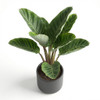
Giant White Bird of Paradise

Turn any corner into a bright, modern jungle. Giant White Bird of Paradise brings instant height, bold leaves, and a premium designer look—ideal for living rooms, entrances, and workspaces. Easy-care, fast-growing in bright light, and always photo-ready with its dramatic tropical silhouette.
1. Basic Identification
Common Name: Giant White Bird of Paradise
Botanical Name: Strelitzia nicolai
Arabic Name: كلاثيا
Variant: Standard
Plant Color: Natural
Plant Country: Unknown
Stems: 1
Family: Strelitziaceae
2. Taxonomy & Classification
Kingdom: Plantae
Clade: Tracheophytes
Order: Zingiberales
Family: Strelitziaceae
Genus: Strelitzia
Species: S. nicolai
3. Origin & Distribution
The Giant White Bird of Paradise is native to the coastal forests and thickets of Southern Africa, specifically ranging from the Eastern Cape to KwaZulu-Natal, and northwards into Mozambique and Zimbabwe.
4. Visual Characteristics
This species features massive, thick, glossy green leaves that resemble banana leaves, arranged in a fan-like crown. The leaves are evergreen and leathery. While it rarely flowers indoors, its blooms are spectacular, consisting of white sepals and blue petals held within a dark purple bract.
5. Size & Dimensions
In its natural outdoor habitat, it can reach heights of 20 to 30 feet. When grown as an indoor container plant, it typically reaches a height of 6 to 10 feet with a spread of 3 to 5 feet, depending on the pot size and pruning.
6. Light Requirements
It thrives in bright, indirect light. It can tolerate some direct morning or late afternoon sun, which encourages faster growth. If kept in light that is too low, growth will slow significantly and leaves may become leggy.
7. Watering Needs
Keep the soil consistently moist but never waterlogged. Allow the top 1–2 inches of soil to dry out between waterings. During the winter dormancy period, reduce the frequency of watering.
8. Soil & Potting
Use a rich, well-draining potting mix high in organic matter. A mixture of peat moss, perlite, and pine bark is ideal to ensure drainage while retaining necessary moisture.
9. Temperature & Humidity
Preferred temperatures range between 65°F and 80°F (18°C–27°C). It is not frost-tolerant and should be kept away from cold drafts. It enjoys high humidity levels; misting or using a humidifier is beneficial in dry indoor environments.
10. Fertilization
Feed with a balanced, water-soluble fertilizer every two to four weeks during the active growing season (spring and summer). Reduce fertilization to once every two months during fall and winter.
11. Maintenance & Care Level
The care level is considered easy to moderate. Maintenance involves wiping the large leaves with a damp cloth to remove dust and maintain photosynthesis. Spent or damaged leaves can be trimmed at the base.
12. Growth & Propagation
It is a relatively fast grower under optimal light. Propagation is most successful through division of the root clumps or offsets (pups) during repotting. It can also be grown from seed, though this is a very slow process.
13. Common Problems
Leaf splitting is a common and natural occurrence as the plant ages, allowing wind to pass through the leaves in the wild. Potential pests include mealybugs, scale, and spider mites. Overwatering can lead to root rot.
14. Benefits & Uses
This plant is primarily used for its dramatic architectural value in interior design. It is also recognized for its air-purifying qualities, helping to filter common indoor toxins while adding a lush, tropical feel to large spaces.
15. Toxicity & Safety
The Giant White Bird of Paradise is considered mildly toxic to cats, dogs, and horses if ingested. The sap and seeds contain tannins that can cause gastrointestinal upset, including vomiting and drowsiness.