


Tired of dark, empty corners in your home? The Gold Dust Aucuba is your answer. This isn't just a plant; it's a living piece of art that thrives where others fail. With its dazzling gold-flecked leaves, the Aucuba brings a burst of light and luxury to any room, demanding almost nothing in return. Forget complicated care routines—this hardy survivor practically takes care of itself. Perfect for busy professionals, new plant parents, and anyone looking to add effortless elegance to their space. Add the indestructible Gold Dust Aucuba to your cart and transform your home's most challenging spots into statements of style.
Common Name: Gold Dust Aucuba
Botanical Name: Aucuba japonica 'Variegata'
Arabic Name: اكوبا
Family: Garryaceae
Plant Variant: Gold Dust
Color: Multicolor
The Gold Dust Aucuba belongs to the kingdom Plantae, order Garryales, and the family Garryaceae. It is a cultivar of the species Aucuba japonica, which is known for its durable, evergreen nature and distinctive foliage.
Native to the moist woodland areas, thickets, and valleys of East Asia, specifically Japan, China, and Korea. It was introduced to Western horticulture in the late 18th century and has since become a staple in temperate gardens and indoor plant collections globally.
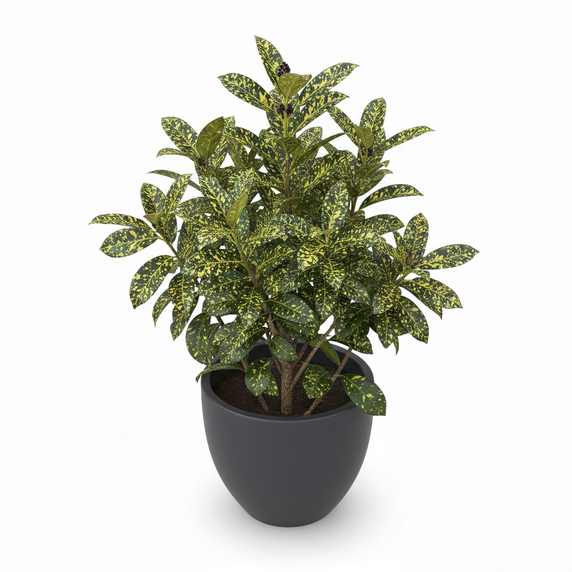
This plant is celebrated for its thick, leathery, and glossy evergreen leaves. The 'Variegata' cultivar features deep green foliage heavily speckled or "dusted" with bright yellow or gold spots. It is a dioecious shrub, meaning individual plants are either male or female; female plants may produce bright red, berry-like drupes in winter if a male plant is nearby for pollination.
When grown as an indoor container plant, it typically reaches a height of 3 to 5 feet and a similar spread. In outdoor garden settings, it can mature into a large shrub up to 6-10 feet tall. It has a slow to moderate growth rate.
The Gold Dust Aucuba is famous for its ability to thrive in low-light conditions. It prefers full shade to partial shade (bright indirect light). Direct afternoon sunlight should be avoided as it can scorch the leaves and cause the vibrant gold variegation to fade or bleach.
Keep the soil consistently moist but never waterlogged. It is best to water when the top inch of soil feels dry to the touch. While it can tolerate brief periods of drought once established, it performs best with regular, even moisture.
It prefers rich, well-draining soil with plenty of organic matter. A high-quality potting mix with added perlite or peat moss works well. It is adaptable to various soil pH levels but thrives in slightly acidic to neutral soil.
This plant prefers cooler environments, ideally between 50°F and 75°F (10°C to 24°C). It is exceptionally hardy and can tolerate temperatures down to 0°F in outdoor settings. It adapts well to average indoor humidity but appreciates occasional misting in very dry air.
Apply a balanced, water-soluble fertilizer once a month during the active growing season (spring and summer). Do not fertilize during the fall and winter when the plant's growth slows down.
Maintenance is very low. Pruning is rarely necessary except to maintain a desired shape or size, which should be done in early spring. Wiping the large leaves with a damp cloth periodically will keep them free of dust and looking their best.
Propagation is most commonly achieved through semi-hardwood cuttings taken in the summer. It can also be grown from seeds (found in the red berries), though this process is much slower and requires both male and female plants to produce viable seeds.
While generally pest-resistant, it can occasionally be affected by scale insects, mealybugs, or spider mites. The most common cultural issue is root rot caused by overwatering or poor drainage. Leaf browning may occur if the plant is exposed to excessive heat or dry winds.
Primary used as an ornamental plant to brighten dark corners of homes and offices. Its tolerance for deep shade and pollution makes it an excellent choice for urban gardens, entryways, and reception areas. It provides year-round visual interest with its variegated evergreen foliage.
The Gold Dust Aucuba is considered toxic to both humans and pets (dogs and cats) if ingested. It contains the glycoside aucubin, which can cause nausea, vomiting, and diarrhea. It should be kept out of reach of small children and animals.
Tired of dark, empty corners in your home? The Gold Dust Aucuba is your answer. This isn't just a plant; it's a living piece of art that thrives where others fail. With its dazzling gold-flecked leaves, the Aucuba brings a burst of light and luxury to any room, demanding almost nothing in return. Forget complicated care routines—this hardy survivor practically takes care of itself. Perfect for busy professionals, new plant parents, and anyone looking to add effortless elegance to their space. Add the indestructible Gold Dust Aucuba to your cart and transform your home's most challenging spots into statements of style.
Common Name: Gold Dust Aucuba
Botanical Name: Aucuba japonica 'Variegata'
Arabic Name: اكوبا
Family: Garryaceae
Plant Variant: Gold Dust
Color: Multicolor
The Gold Dust Aucuba belongs to the kingdom Plantae, order Garryales, and the family Garryaceae. It is a cultivar of the species Aucuba japonica, which is known for its durable, evergreen nature and distinctive foliage.
Native to the moist woodland areas, thickets, and valleys of East Asia, specifically Japan, China, and Korea. It was introduced to Western horticulture in the late 18th century and has since become a staple in temperate gardens and indoor plant collections globally.
This plant is celebrated for its thick, leathery, and glossy evergreen leaves. The 'Variegata' cultivar features deep green foliage heavily speckled or "dusted" with bright yellow or gold spots. It is a dioecious shrub, meaning individual plants are either male or female; female plants may produce bright red, berry-like drupes in winter if a male plant is nearby for pollination.
When grown as an indoor container plant, it typically reaches a height of 3 to 5 feet and a similar spread. In outdoor garden settings, it can mature into a large shrub up to 6-10 feet tall. It has a slow to moderate growth rate.
The Gold Dust Aucuba is famous for its ability to thrive in low-light conditions. It prefers full shade to partial shade (bright indirect light). Direct afternoon sunlight should be avoided as it can scorch the leaves and cause the vibrant gold variegation to fade or bleach.
Keep the soil consistently moist but never waterlogged. It is best to water when the top inch of soil feels dry to the touch. While it can tolerate brief periods of drought once established, it performs best with regular, even moisture.
It prefers rich, well-draining soil with plenty of organic matter. A high-quality potting mix with added perlite or peat moss works well. It is adaptable to various soil pH levels but thrives in slightly acidic to neutral soil.
This plant prefers cooler environments, ideally between 50°F and 75°F (10°C to 24°C). It is exceptionally hardy and can tolerate temperatures down to 0°F in outdoor settings. It adapts well to average indoor humidity but appreciates occasional misting in very dry air.
Apply a balanced, water-soluble fertilizer once a month during the active growing season (spring and summer). Do not fertilize during the fall and winter when the plant's growth slows down.
Maintenance is very low. Pruning is rarely necessary except to maintain a desired shape or size, which should be done in early spring. Wiping the large leaves with a damp cloth periodically will keep them free of dust and looking their best.
Propagation is most commonly achieved through semi-hardwood cuttings taken in the summer. It can also be grown from seeds (found in the red berries), though this process is much slower and requires both male and female plants to produce viable seeds.
While generally pest-resistant, it can occasionally be affected by scale insects, mealybugs, or spider mites. The most common cultural issue is root rot caused by overwatering or poor drainage. Leaf browning may occur if the plant is exposed to excessive heat or dry winds.
Primary used as an ornamental plant to brighten dark corners of homes and offices. Its tolerance for deep shade and pollution makes it an excellent choice for urban gardens, entryways, and reception areas. It provides year-round visual interest with its variegated evergreen foliage.
The Gold Dust Aucuba is considered toxic to both humans and pets (dogs and cats) if ingested. It contains the glycoside aucubin, which can cause nausea, vomiting, and diarrhea. It should be kept out of reach of small children and animals.
Take 20% off your first order
Enter the code below at checkout to get 20% off your first order