


Gold Dust Dracaena 'Florida Beauty'
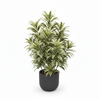
Brighten your space with the celestial charm of the Gold Dust Dracaena! Its deep green leaves are sprinkled with a constellation of creamy-yellow spots, creating a stunning visual impact. Not just a pretty face, this plant is a low-maintenance powerhouse, thriving in a variety of indoor settings and actively purifying your air. Perfect for busy plant parents and beginners alike, the 'Florida Beauty' adds a touch of the exotic without the fuss. Bring home this living work of art and watch your decor come alive.
1. Basic Identification
Common Name: Gold Dust Dracaena, Spotted Dracaena
Botanical Name: Dracaena surculosa
Plant Variant: 'Florida Beauty'
Plant Color: Multicolor (Deep Green with Creamy-Yellow spots)
Country of Origin: Netherlands
Arabic Name: دراسينيا بامبروس
2. Taxonomy & Classification
Kingdom: Plantae
Clade: Angiosperms
Order: Asparagales
Family: Asparagaceae
Genus: Dracaena
Species: D. surculosa
3. Origin & Distribution
Dracaena surculosa is native to the tropical rainforest regions of Western and Central Africa, specifically ranging from Guinea to Ethiopia. The 'Florida Beauty' cultivar is a widely distributed ornamental variety known for its exceptional variegation.
4. Visual Characteristics
This plant features a shrub-like growth habit with thin, bamboo-like upright stems. The leaves are elliptical, glossy, and arranged in whorls. They are characterized by a deep green base heavily speckled with irregular creamy-white or yellow blotches and spots, giving it a "starry" appearance.
5. Size & Dimensions
In indoor environments, the Gold Dust Dracaena typically reaches a height of 1 to 3 feet (30–90 cm). It is a slow-growing plant that maintains a compact and bushy silhouette, making it ideal for tabletop or desk placement.
6. Light Requirements
It performs best in bright, indirect light but is highly adaptable and can tolerate low-light conditions better than many other variegated plants. Direct sunlight should be avoided as it can burn the delicate foliage.
7. Watering Needs
Water the plant when the top 1 to 2 inches of soil feel dry to the touch. While it prefers consistent moisture, it is relatively drought-tolerant. Ensure the pot has proper drainage to prevent waterlogged soil and root rot.
8. Soil & Potting
Requires a well-draining, high-quality potting mix. A peat-based mix or a standard houseplant soil amended with perlite or sand works well to ensure adequate aeration for the roots.
9. Temperature & Humidity
Thrives in standard indoor temperatures ranging from 18°C to 27°C (65°F–80°F). It enjoys moderate to high humidity; if the air is very dry, occasional misting or the use of a humidity tray can prevent leaf tip browning.
10. Fertilization
Apply a balanced, water-soluble liquid fertilizer every 4–6 weeks during the active growing season (spring and summer). Fertilization should be reduced or stopped during the winter months.
11. Maintenance & Care Level
Low Maintenance. Maintenance involves occasionally wiping the leaves with a damp cloth to remove dust and pruning any leggy or old stems to encourage fuller, bushier growth.
12. Growth & Propagation
This species is a slow grower. Propagation is most successful via stem cuttings taken during the spring, which can be rooted in either water or moist soil.
13. Common Problems
Relatively pest-resistant but can occasionally attract mealybugs, scale, or spider mites. Brown leaf tips may occur due to low humidity, underwatering, or sensitivity to fluoride and chlorine found in some tap water.
14. Benefits & Uses
Known for its air-purifying qualities, it helps remove common indoor toxins such as formaldehyde and benzene. Its striking variegated foliage makes it a popular choice for home décor, office desks, and entryway accents.
15. Toxicity & Safety
Toxic to pets. Like other Dracaena species, it contains saponins, which can cause vomiting, drooling, and dilated pupils in cats and dogs if ingested. It should be kept out of reach of small children and pets.
Gold Dust Dracaena 'Florida Beauty'

Brighten your space with the celestial charm of the Gold Dust Dracaena! Its deep green leaves are sprinkled with a constellation of creamy-yellow spots, creating a stunning visual impact. Not just a pretty face, this plant is a low-maintenance powerhouse, thriving in a variety of indoor settings and actively purifying your air. Perfect for busy plant parents and beginners alike, the 'Florida Beauty' adds a touch of the exotic without the fuss. Bring home this living work of art and watch your decor come alive.
1. Basic Identification
Common Name: Gold Dust Dracaena, Spotted Dracaena
Botanical Name: Dracaena surculosa
Plant Variant: 'Florida Beauty'
Plant Color: Multicolor (Deep Green with Creamy-Yellow spots)
Country of Origin: Netherlands
Arabic Name: دراسينيا بامبروس
2. Taxonomy & Classification
Kingdom: Plantae
Clade: Angiosperms
Order: Asparagales
Family: Asparagaceae
Genus: Dracaena
Species: D. surculosa
3. Origin & Distribution
Dracaena surculosa is native to the tropical rainforest regions of Western and Central Africa, specifically ranging from Guinea to Ethiopia. The 'Florida Beauty' cultivar is a widely distributed ornamental variety known for its exceptional variegation.
4. Visual Characteristics
This plant features a shrub-like growth habit with thin, bamboo-like upright stems. The leaves are elliptical, glossy, and arranged in whorls. They are characterized by a deep green base heavily speckled with irregular creamy-white or yellow blotches and spots, giving it a "starry" appearance.
5. Size & Dimensions
In indoor environments, the Gold Dust Dracaena typically reaches a height of 1 to 3 feet (30–90 cm). It is a slow-growing plant that maintains a compact and bushy silhouette, making it ideal for tabletop or desk placement.
6. Light Requirements
It performs best in bright, indirect light but is highly adaptable and can tolerate low-light conditions better than many other variegated plants. Direct sunlight should be avoided as it can burn the delicate foliage.
7. Watering Needs
Water the plant when the top 1 to 2 inches of soil feel dry to the touch. While it prefers consistent moisture, it is relatively drought-tolerant. Ensure the pot has proper drainage to prevent waterlogged soil and root rot.
8. Soil & Potting
Requires a well-draining, high-quality potting mix. A peat-based mix or a standard houseplant soil amended with perlite or sand works well to ensure adequate aeration for the roots.
9. Temperature & Humidity
Thrives in standard indoor temperatures ranging from 18°C to 27°C (65°F–80°F). It enjoys moderate to high humidity; if the air is very dry, occasional misting or the use of a humidity tray can prevent leaf tip browning.
10. Fertilization
Apply a balanced, water-soluble liquid fertilizer every 4–6 weeks during the active growing season (spring and summer). Fertilization should be reduced or stopped during the winter months.
11. Maintenance & Care Level
Low Maintenance. Maintenance involves occasionally wiping the leaves with a damp cloth to remove dust and pruning any leggy or old stems to encourage fuller, bushier growth.
12. Growth & Propagation
This species is a slow grower. Propagation is most successful via stem cuttings taken during the spring, which can be rooted in either water or moist soil.
13. Common Problems
Relatively pest-resistant but can occasionally attract mealybugs, scale, or spider mites. Brown leaf tips may occur due to low humidity, underwatering, or sensitivity to fluoride and chlorine found in some tap water.
14. Benefits & Uses
Known for its air-purifying qualities, it helps remove common indoor toxins such as formaldehyde and benzene. Its striking variegated foliage makes it a popular choice for home décor, office desks, and entryway accents.
15. Toxicity & Safety
Toxic to pets. Like other Dracaena species, it contains saponins, which can cause vomiting, drooling, and dilated pupils in cats and dogs if ingested. It should be kept out of reach of small children and pets.