


Golden Pothos 'Variegated (Marble Queen type)'
Add instant greenery with Golden Pothos—one of the most reliable indoor plants you can own. Its lush variegated leaves brighten any corner, it thrives in typical indoor light, and it looks stunning trailing from a shelf or hanging basket. Perfect for beginners, busy offices, and anyone who wants a beautiful plant that keeps growing with minimal effort.
1. Basic Identification
Common Name: Golden Pothos / Marble Queen Pothos
Botanical Name: Epipremnum aureum
Arabic Name: بوتس
Variant: Variegated (Marble Queen type)
Color: Multicolor
Stems: 18
2. Taxonomy & Classification
Kingdom: Plantae
Clade: Tracheophytes
Order: Alismatales
Family: Araceae
Genus: Epipremnum
Species: E. aureum
3. Origin & Distribution
Originally native to the Island of Mo'orea in French Polynesia, this species has become naturalized in tropical and sub-tropical forests worldwide, including northern Australia, Southeast Asia, and the West Indies.
4. Visual Characteristics
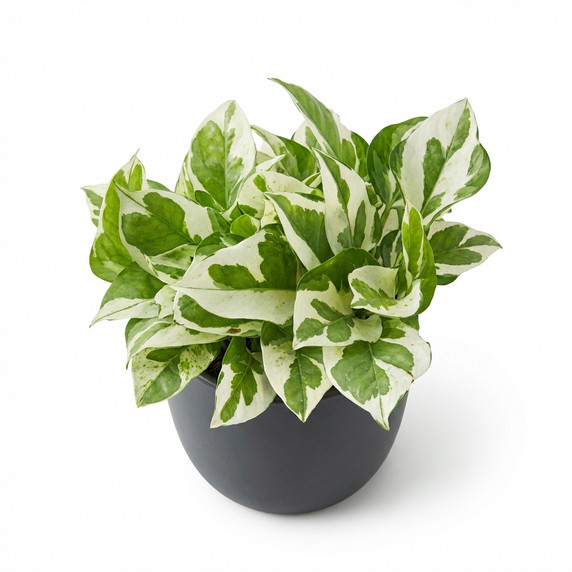
The Marble Queen variant is characterized by its heart-shaped leaves heavily splashed and marbled with creamy white and pale green. As a climbing or trailing vine, it produces adventitious roots that allow it to cling to surfaces or spill elegantly over the sides of containers.
5. Size & Dimensions
In indoor environments, the vines typically reach lengths of 6 to 10 feet (2-3 meters). The individual leaves usually grow to between 3 and 4 inches in length, though they can grow much larger in their natural tropical habitat.
6. Light Requirements
Thrives in bright, indirect light which helps maintain its vibrant variegation. While it is highly adaptable and can survive in low-light conditions, the white marbling may turn more green if light levels are too low.
7. Watering Needs
Water when the top 1–2 inches of soil feel dry to the touch. This plant is relatively drought-tolerant; however, it prefers consistent moisture. Avoid overwatering as it is susceptible to root rot.
8. Soil & Potting
Requires a well-draining, nutrient-rich potting mix. A standard indoor potting soil amended with perlite or orchid bark is ideal to ensure proper aeration and drainage.
9. Temperature & Humidity
Prefers temperatures between 65°F and 85°F (18°C–29°C). It enjoys moderate to high humidity but is remarkably resilient and adapts well to the typical dry air found in most homes and offices.
10. Fertilization
Apply a balanced, water-soluble liquid fertilizer once a month during the active growing season (spring and summer). Fertilization should be reduced or stopped during the fall and winter months.
11. Maintenance & Care Level
Easy/Low Maintenance. Regular pruning can help control the vine length and encourage a bushier growth habit. Wiping the leaves occasionally with a damp cloth helps remove dust and keeps the plant healthy.
12. Growth & Propagation
A fast-growing species that is exceptionally easy to propagate. Stem cuttings with at least one node can be rooted easily in either water or moist potting soil.
13. Common Problems
The most common issues include root rot from overwatering and yellowing leaves. It can occasionally attract pests such as mealybugs or spider mites, which can be treated with insecticidal soap or neem oil.
14. Benefits & Uses
Renowned for its air-purifying qualities, it helps remove indoor toxins such as formaldehyde, benzene, and xylene. It is widely used in home décor, office settings, and as a mood-boosting element in indoor landscaping.
15. Toxicity & Safety
Toxic to both humans and pets (cats and dogs). The plant contains calcium oxalate crystals which can cause oral irritation, swelling of the mouth and throat, and digestive upset if ingested.

Golden Pothos 'Variegated (Marble Queen type)'
Add instant greenery with Golden Pothos—one of the most reliable indoor plants you can own. Its lush variegated leaves brighten any corner, it thrives in typical indoor light, and it looks stunning trailing from a shelf or hanging basket. Perfect for beginners, busy offices, and anyone who wants a beautiful plant that keeps growing with minimal effort.
1. Basic Identification
Common Name: Golden Pothos / Marble Queen Pothos
Botanical Name: Epipremnum aureum
Arabic Name: بوتس
Variant: Variegated (Marble Queen type)
Color: Multicolor
Stems: 18
2. Taxonomy & Classification
Kingdom: Plantae
Clade: Tracheophytes
Order: Alismatales
Family: Araceae
Genus: Epipremnum
Species: E. aureum
3. Origin & Distribution
Originally native to the Island of Mo'orea in French Polynesia, this species has become naturalized in tropical and sub-tropical forests worldwide, including northern Australia, Southeast Asia, and the West Indies.
4. Visual Characteristics
The Marble Queen variant is characterized by its heart-shaped leaves heavily splashed and marbled with creamy white and pale green. As a climbing or trailing vine, it produces adventitious roots that allow it to cling to surfaces or spill elegantly over the sides of containers.
5. Size & Dimensions
In indoor environments, the vines typically reach lengths of 6 to 10 feet (2-3 meters). The individual leaves usually grow to between 3 and 4 inches in length, though they can grow much larger in their natural tropical habitat.
6. Light Requirements
Thrives in bright, indirect light which helps maintain its vibrant variegation. While it is highly adaptable and can survive in low-light conditions, the white marbling may turn more green if light levels are too low.
7. Watering Needs
Water when the top 1–2 inches of soil feel dry to the touch. This plant is relatively drought-tolerant; however, it prefers consistent moisture. Avoid overwatering as it is susceptible to root rot.
8. Soil & Potting
Requires a well-draining, nutrient-rich potting mix. A standard indoor potting soil amended with perlite or orchid bark is ideal to ensure proper aeration and drainage.
9. Temperature & Humidity
Prefers temperatures between 65°F and 85°F (18°C–29°C). It enjoys moderate to high humidity but is remarkably resilient and adapts well to the typical dry air found in most homes and offices.
10. Fertilization
Apply a balanced, water-soluble liquid fertilizer once a month during the active growing season (spring and summer). Fertilization should be reduced or stopped during the fall and winter months.
11. Maintenance & Care Level
Easy/Low Maintenance. Regular pruning can help control the vine length and encourage a bushier growth habit. Wiping the leaves occasionally with a damp cloth helps remove dust and keeps the plant healthy.
12. Growth & Propagation
A fast-growing species that is exceptionally easy to propagate. Stem cuttings with at least one node can be rooted easily in either water or moist potting soil.
13. Common Problems
The most common issues include root rot from overwatering and yellowing leaves. It can occasionally attract pests such as mealybugs or spider mites, which can be treated with insecticidal soap or neem oil.
14. Benefits & Uses
Renowned for its air-purifying qualities, it helps remove indoor toxins such as formaldehyde, benzene, and xylene. It is widely used in home décor, office settings, and as a mood-boosting element in indoor landscaping.
15. Toxicity & Safety
Toxic to both humans and pets (cats and dogs). The plant contains calcium oxalate crystals which can cause oral irritation, swelling of the mouth and throat, and digestive upset if ingested.