


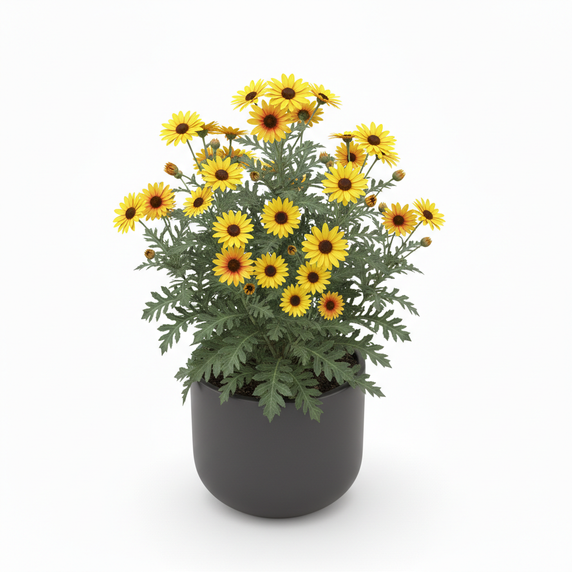




Transform your garden into a year-round spectacle of color with the Grey-Leaved Euryops! This stunning shrub boasts a profusion of bright, sun-like yellow daisies that stand out beautifully against its unique silvery-grey, ferny foliage. Exceptionally hardy and drought-tolerant, it’s the perfect low-maintenance choice for busy gardeners who still want a high-impact display. Ideal for sunny borders, patios, or as a vibrant container plant, the Euryops attracts pollinators and brings life to any outdoor space. Add a touch of Mediterranean sunshine to your home today!
Common Name: Grey-Leaved Euryops, Yellow Daisy Bush
Botanical Name: Euryops pectinatus
Arabic Name: ايروبس
Plant Variant: Standard
Plant Color: Natural
Plant Country: Turkey
Stems: Multi-stemmed woody shrub
Family: Asteraceae
The Euryops pectinatus belongs to the Asteraceae (daisy) family. It is part of the genus Euryops, which contains approximately 100 species of flowering plants primarily native to southern Africa.
Native to the rocky sandstone slopes of the Western Cape in South Africa. Due to its ornamental appeal and hardiness, it has been widely distributed and naturalized in Mediterranean climates globally, including parts of Europe and the Americas.
This evergreen shrub is distinguished by its soft, deeply indented, fern-like foliage that possesses a striking silvery-grey or glaucous-green hue. It produces numerous bright yellow daisy-like flower heads, approximately 5 cm in diameter, which emerge on long pedicels above the foliage.
A fast-growing shrub that typically reaches a height and spread of 1 to 1.5 meters (3 to 5 feet), maintaining a rounded and bushy growth habit.
Requires full sun to thrive and bloom profusely. It should receive at least 6 hours of direct sunlight daily. In very hot climates, it can tolerate light afternoon shade but may produce fewer flowers.
Moderate watering needs. While it is notably drought-tolerant once established, it prefers regular watering during the first growing season. Ensure the soil dries out slightly between waterings to prevent root issues.
Requires well-draining soil. It is adaptable to various soil types, including sandy or loamy soils, and prefers a slightly acidic to neutral pH. For container planting, use a high-quality potting mix with added perlite for drainage.
Thrives in warm, Mediterranean-style climates. It is hardy to roughly -5°C (23°F) and can tolerate light frosts. It prefers low to moderate humidity and performs best in open, well-ventilated areas.
Apply a balanced, slow-release fertilizer in early spring as new growth begins. A liquid fertilizer can be applied monthly during the peak flowering season to support continuous blooming.
Low maintenance. It is recommended to deadhead spent flowers to encourage further blooming and maintain a tidy appearance. A light pruning after the main flowering flush helps prevent the plant from becoming leggy.
The Grey-Leaved Euryops is a rapid grower. Propagation is most successful via softwood or semi-hardwood cuttings taken in summer or autumn. It can also be grown from seed, though cuttings are faster for establishing mature shrubs.
Generally pest-resistant, but can occasionally be affected by aphids or snails. Overwatering or planting in heavy, poorly drained soil may lead to root rot. Verticillium wilt can occur in rare cases.
Excellent for xeriscaping, coastal gardens, and rockeries. Its silvery foliage provides year-round contrast in landscapes. It is highly effective at attracting beneficial pollinators like bees and butterflies.
Generally considered non-toxic to humans and pets. However, like many plants in the Asteraceae family, the sap may cause mild skin irritation or allergic dermatitis in sensitive individuals upon contact.
Transform your garden into a year-round spectacle of color with the Grey-Leaved Euryops! This stunning shrub boasts a profusion of bright, sun-like yellow daisies that stand out beautifully against its unique silvery-grey, ferny foliage. Exceptionally hardy and drought-tolerant, it’s the perfect low-maintenance choice for busy gardeners who still want a high-impact display. Ideal for sunny borders, patios, or as a vibrant container plant, the Euryops attracts pollinators and brings life to any outdoor space. Add a touch of Mediterranean sunshine to your home today!
Common Name: Grey-Leaved Euryops, Yellow Daisy Bush
Botanical Name: Euryops pectinatus
Arabic Name: ايروبس
Plant Variant: Standard
Plant Color: Natural
Plant Country: Turkey
Stems: Multi-stemmed woody shrub
Family: Asteraceae
The Euryops pectinatus belongs to the Asteraceae (daisy) family. It is part of the genus Euryops, which contains approximately 100 species of flowering plants primarily native to southern Africa.
Native to the rocky sandstone slopes of the Western Cape in South Africa. Due to its ornamental appeal and hardiness, it has been widely distributed and naturalized in Mediterranean climates globally, including parts of Europe and the Americas.
This evergreen shrub is distinguished by its soft, deeply indented, fern-like foliage that possesses a striking silvery-grey or glaucous-green hue. It produces numerous bright yellow daisy-like flower heads, approximately 5 cm in diameter, which emerge on long pedicels above the foliage.
A fast-growing shrub that typically reaches a height and spread of 1 to 1.5 meters (3 to 5 feet), maintaining a rounded and bushy growth habit.
Requires full sun to thrive and bloom profusely. It should receive at least 6 hours of direct sunlight daily. In very hot climates, it can tolerate light afternoon shade but may produce fewer flowers.
Moderate watering needs. While it is notably drought-tolerant once established, it prefers regular watering during the first growing season. Ensure the soil dries out slightly between waterings to prevent root issues.
Requires well-draining soil. It is adaptable to various soil types, including sandy or loamy soils, and prefers a slightly acidic to neutral pH. For container planting, use a high-quality potting mix with added perlite for drainage.
Thrives in warm, Mediterranean-style climates. It is hardy to roughly -5°C (23°F) and can tolerate light frosts. It prefers low to moderate humidity and performs best in open, well-ventilated areas.
Apply a balanced, slow-release fertilizer in early spring as new growth begins. A liquid fertilizer can be applied monthly during the peak flowering season to support continuous blooming.
Low maintenance. It is recommended to deadhead spent flowers to encourage further blooming and maintain a tidy appearance. A light pruning after the main flowering flush helps prevent the plant from becoming leggy.
The Grey-Leaved Euryops is a rapid grower. Propagation is most successful via softwood or semi-hardwood cuttings taken in summer or autumn. It can also be grown from seed, though cuttings are faster for establishing mature shrubs.
Generally pest-resistant, but can occasionally be affected by aphids or snails. Overwatering or planting in heavy, poorly drained soil may lead to root rot. Verticillium wilt can occur in rare cases.
Excellent for xeriscaping, coastal gardens, and rockeries. Its silvery foliage provides year-round contrast in landscapes. It is highly effective at attracting beneficial pollinators like bees and butterflies.
Generally considered non-toxic to humans and pets. However, like many plants in the Asteraceae family, the sap may cause mild skin irritation or allergic dermatitis in sensitive individuals upon contact.
Take 20% off your first order
Enter the code below at checkout to get 20% off your first order