


Hakea laurina
Transform your garden with the breathtaking Pincushion Hakea! A true masterpiece of nature, this Australian native captivates with its unique, globe-like crimson and cream flowers that bloom when little else does. Not just a pretty face, it’s incredibly tough, drought-tolerant, and a magnet for beautiful nectar-feeding birds. Add a touch of the Australian bush to your landscape and enjoy spectacular, low-maintenance color year after year.
1. Basic Identification
Common Name: Pincushion Hakea
Botanical Name: Hakea laurina
Former Name: Not available
Plant Type: Evergreen shrub or small tree
Plant Code / SKU: PLT-1745
Alternative Names:
Kodjet
Pincushion Bush
Emu Bush
جاي استرالي
2. Taxonomy & Classification
Order: Proteales
Family: Proteaceae
Genus: Hakea
3. Origin & Distribution
Native Range: Southwest region of Western Australia.
Natural Habitat: Grows in sandy or gravelly soils in mallee-heath and woodland communities, often near the coast.
4. Visual Characteristics
Foliage: Simple, lance-shaped leaves that are blue-green to grey-green in color. They are thick, leathery, and have a prominent central vein.
Flowers: Distinctive globular, pincushion-like flowerheads that appear in autumn and winter. The base is a deep crimson-red with long, protruding, pale cream or white styles.
Stems/Trunk: Typically develops a single trunk with smooth, grey bark.
Fruit/Seeds: Produces hard, woody, egg-shaped fruits (follicles) that contain two winged seeds. The fruits remain on the plant for long periods, often only opening after a fire or stress event.
5. Size & Dimensions
Mature Height: 2.5 to 6 meters (8 to 20 feet).
Mature Spread/Width: 2 to 5 meters (6 to 16 feet).
6. Light Requirements
Optimal Light: Full sun is required for best growth and prolific flowering.
Tolerated Light: Can tolerate light partial shade, but this may result in fewer flowers and a more open habit.
7. Watering Needs
Watering Frequency: Extremely drought-tolerant once established. Water regularly during its first year to establish a strong root system. Mature plants require little to no supplemental watering except during extended periods of drought.
Drainage: Excellent drainage is essential. Does not tolerate waterlogged soil.
8. Soil & Potting
Soil Type: Prefers well-drained, sandy, or loamy soils. It is adaptable to various soil types as long as drainage is good.
pH: Thrives in acidic to neutral soil (pH 6.0 to 7.0).
Potting Mix: If grown in a container, use a specific native plant potting mix that is low in phosphorus and provides excellent drainage.
9. Temperature & Humidity
Temperature Tolerance: Tolerates light frosts, typically down to -4°C (25°F). It is best suited to Mediterranean climates with warm, dry summers and mild, wet winters.
Humidity: Prefers low to moderate humidity. May struggle in climates with high summer humidity and rainfall.
10. Fertilization
Fertilizer Type: Highly sensitive to phosphorus. If fertilizing is necessary, use a specially formulated low-phosphorus native plant fertilizer. Often, no fertilizer is required.
Frequency: Apply sparingly once a year in spring if the plant shows signs of deficiency.
11. Maintenance & Care Level
Care Level: Low. This is a very hardy and low-maintenance plant once established.
Pruning: Light pruning after flowering can help maintain a compact shape and encourage denser growth. Avoid cutting into old, leafless wood.
Deadheading: Not necessary; the woody seed pods are a feature of the plant.
12. Growth & Propagation
Growth Rate: Moderate.
Propagation Methods: Primarily propagated from seed. Seeds should be collected from the woody fruits, which can be encouraged to open by gentle heating. Cuttings can be taken but are generally difficult to root successfully.
13. Common Problems
Pests: Generally pest-resistant. May occasionally attract scale insects.
Diseases: The most significant issue is root rot (such as Phytophthora) caused by poor drainage or overwatering. Phosphorus toxicity from incorrect fertilizer application can cause leaf yellowing and plant death.
14. Benefits & Uses
Ornamental Value: A spectacular feature plant for its unique winter flowers. Ideal as a specimen shrub or small tree.
Wildlife Attraction: The nectar-rich flowers are a major food source for honeyeaters, parrots, and other nectar-feeding birds, as well as bees and insects.
Other Uses: Can be used as a screening plant, in a windbreak, or as a cut flower for arrangements.
15. Toxicity & Safety
Toxicity to Humans: Not considered toxic, but ingestion of any part of the plant is not recommended.
Toxicity to Pets: Generally considered non-toxic to cats, dogs, and horses.
Safety Notes: The leaves are stiff and can have sharp points, so care should be taken when planting near walkways or when handling the plant.

Hakea laurina
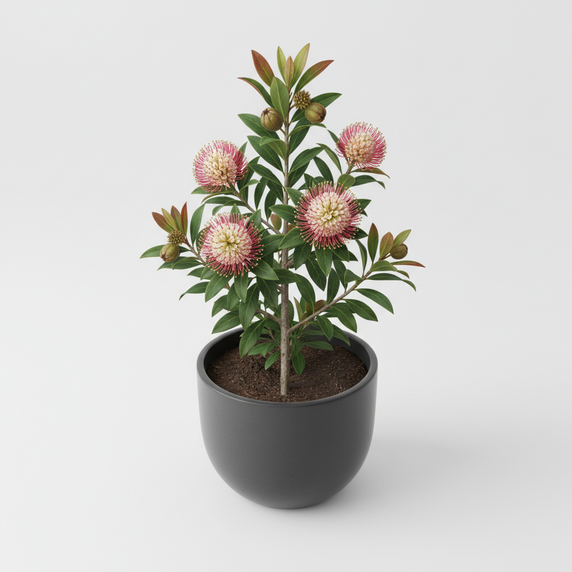
Transform your garden with the breathtaking Pincushion Hakea! A true masterpiece of nature, this Australian native captivates with its unique, globe-like crimson and cream flowers that bloom when little else does. Not just a pretty face, it’s incredibly tough, drought-tolerant, and a magnet for beautiful nectar-feeding birds. Add a touch of the Australian bush to your landscape and enjoy spectacular, low-maintenance color year after year.
1. Basic Identification
Common Name: Pincushion Hakea
Botanical Name: Hakea laurina
Former Name: Not available
Plant Type: Evergreen shrub or small tree
Plant Code / SKU: PLT-1745
Alternative Names:
Kodjet
Pincushion Bush
Emu Bush
جاي استرالي
2. Taxonomy & Classification
Order: Proteales
Family: Proteaceae
Genus: Hakea
3. Origin & Distribution
Native Range: Southwest region of Western Australia.
Natural Habitat: Grows in sandy or gravelly soils in mallee-heath and woodland communities, often near the coast.
4. Visual Characteristics
Foliage: Simple, lance-shaped leaves that are blue-green to grey-green in color. They are thick, leathery, and have a prominent central vein.
Flowers: Distinctive globular, pincushion-like flowerheads that appear in autumn and winter. The base is a deep crimson-red with long, protruding, pale cream or white styles.
Stems/Trunk: Typically develops a single trunk with smooth, grey bark.
Fruit/Seeds: Produces hard, woody, egg-shaped fruits (follicles) that contain two winged seeds. The fruits remain on the plant for long periods, often only opening after a fire or stress event.
5. Size & Dimensions
Mature Height: 2.5 to 6 meters (8 to 20 feet).
Mature Spread/Width: 2 to 5 meters (6 to 16 feet).
6. Light Requirements
Optimal Light: Full sun is required for best growth and prolific flowering.
Tolerated Light: Can tolerate light partial shade, but this may result in fewer flowers and a more open habit.
7. Watering Needs
Watering Frequency: Extremely drought-tolerant once established. Water regularly during its first year to establish a strong root system. Mature plants require little to no supplemental watering except during extended periods of drought.
Drainage: Excellent drainage is essential. Does not tolerate waterlogged soil.
8. Soil & Potting
Soil Type: Prefers well-drained, sandy, or loamy soils. It is adaptable to various soil types as long as drainage is good.
pH: Thrives in acidic to neutral soil (pH 6.0 to 7.0).
Potting Mix: If grown in a container, use a specific native plant potting mix that is low in phosphorus and provides excellent drainage.
9. Temperature & Humidity
Temperature Tolerance: Tolerates light frosts, typically down to -4°C (25°F). It is best suited to Mediterranean climates with warm, dry summers and mild, wet winters.
Humidity: Prefers low to moderate humidity. May struggle in climates with high summer humidity and rainfall.
10. Fertilization
Fertilizer Type: Highly sensitive to phosphorus. If fertilizing is necessary, use a specially formulated low-phosphorus native plant fertilizer. Often, no fertilizer is required.
Frequency: Apply sparingly once a year in spring if the plant shows signs of deficiency.
11. Maintenance & Care Level
Care Level: Low. This is a very hardy and low-maintenance plant once established.
Pruning: Light pruning after flowering can help maintain a compact shape and encourage denser growth. Avoid cutting into old, leafless wood.
Deadheading: Not necessary; the woody seed pods are a feature of the plant.
12. Growth & Propagation
Growth Rate: Moderate.
Propagation Methods: Primarily propagated from seed. Seeds should be collected from the woody fruits, which can be encouraged to open by gentle heating. Cuttings can be taken but are generally difficult to root successfully.
13. Common Problems
Pests: Generally pest-resistant. May occasionally attract scale insects.
Diseases: The most significant issue is root rot (such as Phytophthora) caused by poor drainage or overwatering. Phosphorus toxicity from incorrect fertilizer application can cause leaf yellowing and plant death.
14. Benefits & Uses
Ornamental Value: A spectacular feature plant for its unique winter flowers. Ideal as a specimen shrub or small tree.
Wildlife Attraction: The nectar-rich flowers are a major food source for honeyeaters, parrots, and other nectar-feeding birds, as well as bees and insects.
Other Uses: Can be used as a screening plant, in a windbreak, or as a cut flower for arrangements.
15. Toxicity & Safety
Toxicity to Humans: Not considered toxic, but ingestion of any part of the plant is not recommended.
Toxicity to Pets: Generally considered non-toxic to cats, dogs, and horses.
Safety Notes: The leaves are stiff and can have sharp points, so care should be taken when planting near walkways or when handling the plant.