

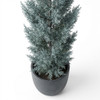

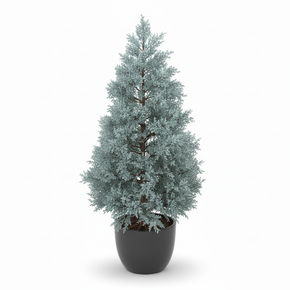




Create instant structure and premium curb appeal with a silver, columnar Arizona cypress. Its cool blue tone and upright form deliver a clean, modern look while providing dependable year-round screening. Sun-loving, tough, and easy to maintain—perfect for homes, villas, and commercial entrances.
Common Name: Arizona Cypress
Botanical Name: Hesperocyparis arizonica
Plant Variant: Columnar blue form (cultivar varies by nursery)
Plant Color: Silver
Plant Country: Turkey
Arabic Name: سرو
Stems: Single trunk, upright columnar branching
Location: Both (Indoor/Outdoor)
Kingdom: Plantae
Division: Pinophyta
Class: Pinopsida
Order: Pinales
Family: Cupressaceae
Genus: Hesperocyparis (formerly Cupressus)
The Arizona Cypress is native to the southwestern United States and northern Mexico. It has been widely introduced and cultivated across the Mediterranean region, including Turkey, where it is a staple in landscape architecture due to its resilience and aesthetic appeal.
This variety features a distinct columnar or conical shape with dense, scale-like foliage. The leaves are noted for their striking glaucous-blue or silver-gray color. The bark is reddish-brown and tends to peel in thin strips on older specimens, adding textural interest.
In landscape settings, it can reach heights of 10 to 15 meters, though columnar cultivars are specifically selected to maintain a narrow spread of approximately 2 to 4 meters. Growth is relatively fast when young.
Full sun is essential. This plant requires at least 6 to 8 hours of direct sunlight daily to maintain its dense foliage structure and vibrant silver coloration. It does not perform well in shaded areas.
Very drought-tolerant once established. For young plants, water regularly until the root system is deep. Once mature, it requires minimal supplemental watering except during periods of extreme drought. Avoid overwatering to prevent root issues.
Prefers well-draining, dry to medium moisture soils. It is highly adaptable to various soil types including sandy, loamy, or clay soils, provided drainage is excellent. It thrives in slightly acidic to alkaline pH levels.
Highly hardy and heat-tolerant. It can withstand significant cold (USDA zones 7-9). It prefers low to moderate humidity and is well-suited for arid or semi-arid climates.
Generally low maintenance regarding feeding. A balanced, slow-release fertilizer can be applied in early spring to encourage healthy growth, though it is often not necessary in nutrient-rich soils.
Low Maintenance. Its natural columnar shape requires very little pruning. Occasional trimming can be done to maintain a specific height or to remove dead interior foliage.
Moderate growth rate. It is typically propagated through seeds or by semi-hardwood cuttings taken in late summer or autumn.
Generally pest-resistant. However, it can occasionally be affected by cypress canker or bagworms. The most significant threat is root rot caused by poorly drained soil or excessive watering.
Primarily used for vertical interest in landscaping, privacy screens, and windbreaks. Its silver-blue foliage provides an excellent color contrast against traditional green plants. It is also favored for xeriscaping and commercial entrance focal points.
Non-toxic to humans and most pets. However, the dense foliage and pollen may act as an allergen for sensitive individuals. Ingestion of the foliage by livestock or pets in large quantities may cause mild gastrointestinal upset.
Create instant structure and premium curb appeal with a silver, columnar Arizona cypress. Its cool blue tone and upright form deliver a clean, modern look while providing dependable year-round screening. Sun-loving, tough, and easy to maintain—perfect for homes, villas, and commercial entrances.
Common Name: Arizona Cypress
Botanical Name: Hesperocyparis arizonica
Plant Variant: Columnar blue form (cultivar varies by nursery)
Plant Color: Silver
Plant Country: Turkey
Arabic Name: سرو
Stems: Single trunk, upright columnar branching
Location: Both (Indoor/Outdoor)
Kingdom: Plantae
Division: Pinophyta
Class: Pinopsida
Order: Pinales
Family: Cupressaceae
Genus: Hesperocyparis (formerly Cupressus)
The Arizona Cypress is native to the southwestern United States and northern Mexico. It has been widely introduced and cultivated across the Mediterranean region, including Turkey, where it is a staple in landscape architecture due to its resilience and aesthetic appeal.
This variety features a distinct columnar or conical shape with dense, scale-like foliage. The leaves are noted for their striking glaucous-blue or silver-gray color. The bark is reddish-brown and tends to peel in thin strips on older specimens, adding textural interest.
In landscape settings, it can reach heights of 10 to 15 meters, though columnar cultivars are specifically selected to maintain a narrow spread of approximately 2 to 4 meters. Growth is relatively fast when young.
Full sun is essential. This plant requires at least 6 to 8 hours of direct sunlight daily to maintain its dense foliage structure and vibrant silver coloration. It does not perform well in shaded areas.
Very drought-tolerant once established. For young plants, water regularly until the root system is deep. Once mature, it requires minimal supplemental watering except during periods of extreme drought. Avoid overwatering to prevent root issues.
Prefers well-draining, dry to medium moisture soils. It is highly adaptable to various soil types including sandy, loamy, or clay soils, provided drainage is excellent. It thrives in slightly acidic to alkaline pH levels.
Highly hardy and heat-tolerant. It can withstand significant cold (USDA zones 7-9). It prefers low to moderate humidity and is well-suited for arid or semi-arid climates.
Generally low maintenance regarding feeding. A balanced, slow-release fertilizer can be applied in early spring to encourage healthy growth, though it is often not necessary in nutrient-rich soils.
Low Maintenance. Its natural columnar shape requires very little pruning. Occasional trimming can be done to maintain a specific height or to remove dead interior foliage.
Moderate growth rate. It is typically propagated through seeds or by semi-hardwood cuttings taken in late summer or autumn.
Generally pest-resistant. However, it can occasionally be affected by cypress canker or bagworms. The most significant threat is root rot caused by poorly drained soil or excessive watering.
Primarily used for vertical interest in landscaping, privacy screens, and windbreaks. Its silver-blue foliage provides an excellent color contrast against traditional green plants. It is also favored for xeriscaping and commercial entrance focal points.
Non-toxic to humans and most pets. However, the dense foliage and pollen may act as an allergen for sensitive individuals. Ingestion of the foliage by livestock or pets in large quantities may cause mild gastrointestinal upset.
Take 20% off your first order
Enter the code below at checkout to get 20% off your first order