


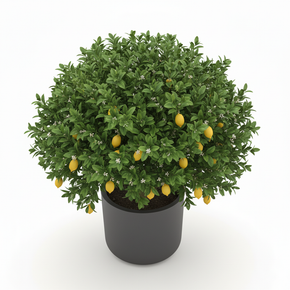
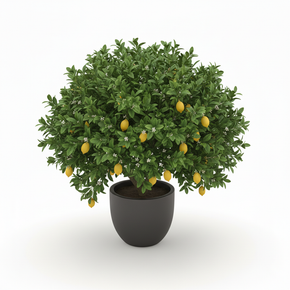



Experience the charm of the Amalfi Coast in your own home with our premium Italian Citrus Tree. This elegant plant not only serves as a stunning decorative piece with its lush, glossy leaves but also delights the senses with its intoxicatingly fragrant white blossoms. With proper care, you can enjoy the satisfaction of growing your own zesty, sun-ripened lemons. Ideal for a sunny spot on your balcony or in a bright room, it's a living piece of art that brings freshness, fragrance, and a touch of Mediterranean luxury to your space.
Common Name: Italian Citrus Tree (Lemon)
Botanical Name: Citrus limon
Variant: Standard
Color: Natural
Country of Origin: Italy
Arabic Name: حمضيات
Kingdom: Plantae
Order: Sapindales
Family: Rutaceae
Genus: Citrus
Species: Citrus limon
Native to South Asia, the lemon tree was introduced to the Mediterranean around the 2nd century AD. It is now cultivated worldwide in subtropical and Mediterranean climates, with Italy being famous for high-quality varieties like the Femminello St. Teresa and Sfusato Amalfitano.
The tree features evergreen, oval-shaped leaves that are a vibrant, glossy green. Its blossoms are small, five-petaled, and white, often showing a delicate purple hue on the underside. The fruit is characteristic yellow, oval, and has a distinctively textured rind filled with fragrant oils.
As a standard variant, when grown in containers, it typically reaches a height of 3 to 6 feet. If planted in the ground in suitable climates, it can eventually reach heights of 10 to 20 feet with a similar spread.
This plant requires high light levels to thrive and produce fruit. It needs at least 6 to 8 hours of direct sunlight per day. If kept indoors, place it in the brightest possible spot, such as a south-facing window, or use supplemental grow lights.
Lemon trees prefer soil that is consistently moist but never waterlogged. Water thoroughly when the top 1 to 2 inches of soil feel dry to the touch. Ensure the pot has excellent drainage to prevent root rot.
Use a well-draining, slightly acidic potting mix. A blend specifically formulated for citrus or cacti, or a mix of potting soil with added perlite and bark, works best for container-grown trees.
Ideal temperatures range between 15°C and 28°C. The plant is sensitive to frost and should be brought indoors or protected if temperatures drop below 10°C. It appreciates moderate humidity; if indoor air is dry, consider using a humidifier or a pebble tray.
Feed with a specialized citrus fertilizer that is high in nitrogen during the active growing season (spring through summer) every 4 to 6 weeks. Reduce fertilization during the autumn and winter months.
Moderate. Regular attention to light, watering, and feeding is required. Pruning should be performed in late winter to remove dead wood, improve air circulation, and maintain the desired shape.
Growth is slow to moderate. While they can be grown from seeds, standard nursery trees are usually propagated through stem cuttings or grafting onto specific rootstocks to ensure disease resistance and fruit quality.
Watch for common pests such as spider mites, aphids, and scale insects. Yellowing leaves may indicate overwatering, poor drainage, or a nutrient deficiency (often iron or nitrogen).
In addition to providing fresh, organic fruit, the tree serves as a natural air freshener due to its fragrant blooms. It is highly ornamental, adding a sophisticated Mediterranean aesthetic to home décor, offices, or patios.
While the fruit is safe for human consumption, the leaves, stems, and peel contain essential oils (limonene and linalool) and psoralens that are toxic to cats, dogs, and horses if ingested.
Experience the charm of the Amalfi Coast in your own home with our premium Italian Citrus Tree. This elegant plant not only serves as a stunning decorative piece with its lush, glossy leaves but also delights the senses with its intoxicatingly fragrant white blossoms. With proper care, you can enjoy the satisfaction of growing your own zesty, sun-ripened lemons. Ideal for a sunny spot on your balcony or in a bright room, it's a living piece of art that brings freshness, fragrance, and a touch of Mediterranean luxury to your space.
Common Name: Italian Citrus Tree (Lemon)
Botanical Name: Citrus limon
Variant: Standard
Color: Natural
Country of Origin: Italy
Arabic Name: حمضيات
Kingdom: Plantae
Order: Sapindales
Family: Rutaceae
Genus: Citrus
Species: Citrus limon
Native to South Asia, the lemon tree was introduced to the Mediterranean around the 2nd century AD. It is now cultivated worldwide in subtropical and Mediterranean climates, with Italy being famous for high-quality varieties like the Femminello St. Teresa and Sfusato Amalfitano.
The tree features evergreen, oval-shaped leaves that are a vibrant, glossy green. Its blossoms are small, five-petaled, and white, often showing a delicate purple hue on the underside. The fruit is characteristic yellow, oval, and has a distinctively textured rind filled with fragrant oils.
As a standard variant, when grown in containers, it typically reaches a height of 3 to 6 feet. If planted in the ground in suitable climates, it can eventually reach heights of 10 to 20 feet with a similar spread.
This plant requires high light levels to thrive and produce fruit. It needs at least 6 to 8 hours of direct sunlight per day. If kept indoors, place it in the brightest possible spot, such as a south-facing window, or use supplemental grow lights.
Lemon trees prefer soil that is consistently moist but never waterlogged. Water thoroughly when the top 1 to 2 inches of soil feel dry to the touch. Ensure the pot has excellent drainage to prevent root rot.
Use a well-draining, slightly acidic potting mix. A blend specifically formulated for citrus or cacti, or a mix of potting soil with added perlite and bark, works best for container-grown trees.
Ideal temperatures range between 15°C and 28°C. The plant is sensitive to frost and should be brought indoors or protected if temperatures drop below 10°C. It appreciates moderate humidity; if indoor air is dry, consider using a humidifier or a pebble tray.
Feed with a specialized citrus fertilizer that is high in nitrogen during the active growing season (spring through summer) every 4 to 6 weeks. Reduce fertilization during the autumn and winter months.
Moderate. Regular attention to light, watering, and feeding is required. Pruning should be performed in late winter to remove dead wood, improve air circulation, and maintain the desired shape.
Growth is slow to moderate. While they can be grown from seeds, standard nursery trees are usually propagated through stem cuttings or grafting onto specific rootstocks to ensure disease resistance and fruit quality.
Watch for common pests such as spider mites, aphids, and scale insects. Yellowing leaves may indicate overwatering, poor drainage, or a nutrient deficiency (often iron or nitrogen).
In addition to providing fresh, organic fruit, the tree serves as a natural air freshener due to its fragrant blooms. It is highly ornamental, adding a sophisticated Mediterranean aesthetic to home décor, offices, or patios.
While the fruit is safe for human consumption, the leaves, stems, and peel contain essential oils (limonene and linalool) and psoralens that are toxic to cats, dogs, and horses if ingested.

Take 20% off your first order
Enter the code below at checkout to get 20% off your first order