


Jatropha integerrima
Ignite your space with the fiery, year-round blooms of the Jatropha Tree! This easy-care tropical beauty delivers a constant show of stunning red flowers, demanding little more than a sunny spot. It's the perfect statement piece for anyone seeking maximum visual impact with minimal fuss. Add a touch of perpetual summer to your home or garden today!
1. Basic Identification
Common Name: Jatropha Tree
Botanical Name: Jatropha integerrima
Former Name: Jatropha hastata
Plant Type: Flowering shrub/small tree
Plant Code / SKU: PLT-1736
Alternative Names:
Peregrina
Spicy Jatropha
Firecracker Bush
جاتروفا
2. Taxonomy & Classification
Order: Malpighiales
Family: Euphorbiaceae
Genus: Jatropha
3. Origin & Distribution
Native Range: West Indies (specifically Cuba and Hispaniola)
Distribution: Widely naturalized and cultivated in tropical and subtropical regions around the world.
4. Visual Characteristics
Leaves: Leaves are variable in shape, ranging from ovate and entire to deeply lobed or fiddle-shaped (pandurate). They are glossy, dark green, and can grow up to 4 inches long.
Flowers: Clusters of vibrant, star-shaped, 5-petaled flowers appear year-round in warm climates. The flowers are typically bright scarlet or vermilion red and grow in terminal cymes.
Stem/Trunk: Typically grows as a multi-stemmed shrub but can be trained into a small, single-trunk tree. Stems are slender and contain a milky sap.
5. Size & Dimensions
Mature Height: Typically 6 to 10 feet (1.8 to 3 meters), but can reach up to 15 feet in ideal conditions.
Mature Spread: 5 to 8 feet (1.5 to 2.4 meters).
Growth Rate: Fast.
6. Light Requirements
Indoor: Requires bright, direct sunlight. A south-facing window is ideal for best flowering.
Outdoor: Full sun to partial shade. More sun exposure results in more prolific blooming.
7. Watering Needs
Watering Frequency: Water regularly, allowing the top 1-2 inches of soil to dry out between waterings. It is moderately drought-tolerant once established but flowers best with consistent moisture.
Watering Method: Water the soil directly at the base of the plant until it runs from the drainage holes. Avoid waterlogged conditions.
8. Soil & Potting
Soil Type: Prefers well-draining, sandy, or loamy soil. It is tolerant of a variety of soil types as long as drainage is excellent.
Potting Mix: A standard, high-quality potting mix amended with perlite or sand to enhance drainage is suitable for container growing.
Repotting: Repot every 2-3 years or when the plant becomes root-bound, typically in the spring.
9. Temperature & Humidity
Temperature Range: Thrives in warm temperatures between 65°F and 85°F (18°C to 29°C). It is not frost-tolerant and can be damaged by temperatures below 40°F (4°C).
Humidity Level: Prefers moderate to high humidity but is quite adaptable to average household humidity levels.
10. Fertilization
Fertilizer Type: Use a balanced, all-purpose liquid fertilizer or a granular fertilizer formulated for flowering plants (e.g., with a higher phosphorus content).
Fertilizing Schedule: Fertilize every 2-4 weeks during the active growing season (spring and summer). Reduce feeding in the fall and winter.
11. Maintenance & Care Level
Care Level: Easy. It is a low-maintenance plant once established in suitable conditions.
Pruning: Prune in late winter or early spring to maintain a desired shape, control size, and encourage bushier growth. Remove any dead or damaged branches as needed.
12. Growth & Propagation
Growth Habit: An upright, rounded, multi-stemmed evergreen shrub or small tree.
Propagation Method: Easily propagated from semi-hardwood stem cuttings taken in spring or summer.
13. Common Problems
Pests: Can be susceptible to spider mites, mealybugs, scale insects, and aphids, particularly when grown indoors or in stressed conditions.
Diseases: Generally disease-resistant but can suffer from fungal root rot if the soil is kept consistently waterlogged.
14. Benefits & Uses
Ornamental Value: Highly prized for its continuous display of brilliant red flowers. Excellent as a specimen plant, in mixed borders, as a hedge, or in containers on patios and decks.
Ecological Benefits: The flowers are a valuable nectar source, attracting pollinators such as butterflies, bees, and hummingbirds.
15. Toxicity & Safety
Toxicity to Humans: All parts of the Jatropha integerrima are poisonous if ingested, particularly the seeds. The milky sap can cause skin irritation or an allergic reaction in sensitive individuals.
Toxicity to Pets: Toxic to cats, dogs, and other animals. Ingestion can cause severe gastrointestinal distress and other serious symptoms.

Jatropha integerrima
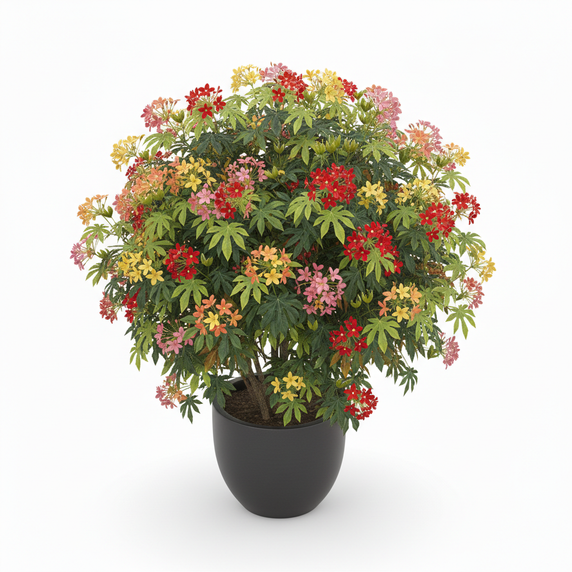
Ignite your space with the fiery, year-round blooms of the Jatropha Tree! This easy-care tropical beauty delivers a constant show of stunning red flowers, demanding little more than a sunny spot. It's the perfect statement piece for anyone seeking maximum visual impact with minimal fuss. Add a touch of perpetual summer to your home or garden today!
1. Basic Identification
Common Name: Jatropha Tree
Botanical Name: Jatropha integerrima
Former Name: Jatropha hastata
Plant Type: Flowering shrub/small tree
Plant Code / SKU: PLT-1736
Alternative Names:
Peregrina
Spicy Jatropha
Firecracker Bush
جاتروفا
2. Taxonomy & Classification
Order: Malpighiales
Family: Euphorbiaceae
Genus: Jatropha
3. Origin & Distribution
Native Range: West Indies (specifically Cuba and Hispaniola)
Distribution: Widely naturalized and cultivated in tropical and subtropical regions around the world.
4. Visual Characteristics
Leaves: Leaves are variable in shape, ranging from ovate and entire to deeply lobed or fiddle-shaped (pandurate). They are glossy, dark green, and can grow up to 4 inches long.
Flowers: Clusters of vibrant, star-shaped, 5-petaled flowers appear year-round in warm climates. The flowers are typically bright scarlet or vermilion red and grow in terminal cymes.
Stem/Trunk: Typically grows as a multi-stemmed shrub but can be trained into a small, single-trunk tree. Stems are slender and contain a milky sap.
5. Size & Dimensions
Mature Height: Typically 6 to 10 feet (1.8 to 3 meters), but can reach up to 15 feet in ideal conditions.
Mature Spread: 5 to 8 feet (1.5 to 2.4 meters).
Growth Rate: Fast.
6. Light Requirements
Indoor: Requires bright, direct sunlight. A south-facing window is ideal for best flowering.
Outdoor: Full sun to partial shade. More sun exposure results in more prolific blooming.
7. Watering Needs
Watering Frequency: Water regularly, allowing the top 1-2 inches of soil to dry out between waterings. It is moderately drought-tolerant once established but flowers best with consistent moisture.
Watering Method: Water the soil directly at the base of the plant until it runs from the drainage holes. Avoid waterlogged conditions.
8. Soil & Potting
Soil Type: Prefers well-draining, sandy, or loamy soil. It is tolerant of a variety of soil types as long as drainage is excellent.
Potting Mix: A standard, high-quality potting mix amended with perlite or sand to enhance drainage is suitable for container growing.
Repotting: Repot every 2-3 years or when the plant becomes root-bound, typically in the spring.
9. Temperature & Humidity
Temperature Range: Thrives in warm temperatures between 65°F and 85°F (18°C to 29°C). It is not frost-tolerant and can be damaged by temperatures below 40°F (4°C).
Humidity Level: Prefers moderate to high humidity but is quite adaptable to average household humidity levels.
10. Fertilization
Fertilizer Type: Use a balanced, all-purpose liquid fertilizer or a granular fertilizer formulated for flowering plants (e.g., with a higher phosphorus content).
Fertilizing Schedule: Fertilize every 2-4 weeks during the active growing season (spring and summer). Reduce feeding in the fall and winter.
11. Maintenance & Care Level
Care Level: Easy. It is a low-maintenance plant once established in suitable conditions.
Pruning: Prune in late winter or early spring to maintain a desired shape, control size, and encourage bushier growth. Remove any dead or damaged branches as needed.
12. Growth & Propagation
Growth Habit: An upright, rounded, multi-stemmed evergreen shrub or small tree.
Propagation Method: Easily propagated from semi-hardwood stem cuttings taken in spring or summer.
13. Common Problems
Pests: Can be susceptible to spider mites, mealybugs, scale insects, and aphids, particularly when grown indoors or in stressed conditions.
Diseases: Generally disease-resistant but can suffer from fungal root rot if the soil is kept consistently waterlogged.
14. Benefits & Uses
Ornamental Value: Highly prized for its continuous display of brilliant red flowers. Excellent as a specimen plant, in mixed borders, as a hedge, or in containers on patios and decks.
Ecological Benefits: The flowers are a valuable nectar source, attracting pollinators such as butterflies, bees, and hummingbirds.
15. Toxicity & Safety
Toxicity to Humans: All parts of the Jatropha integerrima are poisonous if ingested, particularly the seeds. The milky sap can cause skin irritation or an allergic reaction in sensitive individuals.
Toxicity to Pets: Toxic to cats, dogs, and other animals. Ingestion can cause severe gastrointestinal distress and other serious symptoms.