


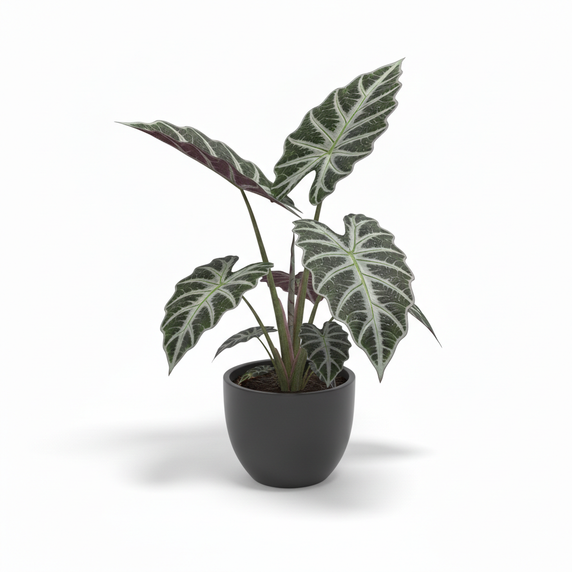





Transform your space with the unparalleled drama of the Alocasia sanderiana, the Kris Plant. This isn't just a plant; it's a living sculpture. Its striking, dark green, arrow-shaped leaves are etched with electrifying silver veins, creating a bold, high-contrast look that captivates and impresses. Perfect for the discerning plant lover who wants to make a statement, the Kris Plant brings a sophisticated, jungle-luxe vibe to any room. Dare to be bold—add this botanical masterpiece to your collection today.
Common Name: Kris Plant, Alocasia Sanderiana
Botanical Name: Alocasia sanderiana
Variant: Sanderiana
Arabic Name: اذن فيل
Country of Origin: Netherlands
Kingdom: Plantae
Order: Alismatales
Family: Araceae
Genus: Alocasia
Species: Alocasia sanderiana
The Alocasia sanderiana is native to Northern Mindanao in the Philippines. It is naturally found in tropical rainforest habitats, although it is now critically endangered in the wild due to over-collection and habitat loss.
This plant is renowned for its V-shaped, deeply lobed leaves that are dark green to almost black. The foliage is distinguished by its prominent, creamy white to silvery veins and wavy, scalloped margins that give it its "Kris" (dagger) name.
In an indoor setting, the Kris Plant typically grows to a height of 1 to 2 feet (30–60 cm). Individual leaves can reach lengths of 12 to 16 inches, making it a substantial architectural piece despite its medium overall height.
Prefers bright, indirect light. Direct sunlight will scorch the delicate leaves, while too little light will cause the plant to lose its vibrant contrast and may lead to dormancy.
Keep the soil consistently moist but never waterlogged. Water when the top 1 inch of soil feels dry. This plant is sensitive to the minerals in tap water; using filtered water or rainwater is highly recommended.
Requires a very well-draining, airy potting mix. A blend of peat moss or coco coir with plenty of perlite and orchid bark works best to prevent root rot while retaining necessary moisture.
Thrives in warm temperatures between 18°C and 27°C (65°F to 80°F). It requires high humidity (60% or higher). Use a humidifier or a pebble tray to maintain the moist air this tropical plant craves.
Feed with a balanced liquid fertilizer diluted to half-strength every 2–4 weeks during the growing season (spring and summer). Do not fertilize during the winter months when growth slows.
Maintenance Level: Moderate to High. It requires consistent monitoring of humidity and soil moisture. Regularly wipe the large leaves with a damp cloth to remove dust and keep the pores clear for respiration.
It has a moderate growth rate. Propagation is best achieved through rhizome division or by harvesting small corms (bulbs) found in the soil during repotting in the spring.
Susceptible to spider mites and mealybugs, especially in dry air. Overwatering quickly leads to root rot. If the plant experiences a sudden drop in temperature or light, it may enter a dormancy period where leaves die back.
Primarily used as a high-end ornamental plant for home and office décor. It is an effective air purifier, though its main appeal is its unique, sculptural aesthetic that fits well in modern and tropical interior designs.
Toxic to both humans and pets. Like most Alocasia, it contains calcium oxalate crystals which cause severe irritation of the mouth and throat, swelling, and digestive distress if ingested.
Transform your space with the unparalleled drama of the Alocasia sanderiana, the Kris Plant. This isn't just a plant; it's a living sculpture. Its striking, dark green, arrow-shaped leaves are etched with electrifying silver veins, creating a bold, high-contrast look that captivates and impresses. Perfect for the discerning plant lover who wants to make a statement, the Kris Plant brings a sophisticated, jungle-luxe vibe to any room. Dare to be bold—add this botanical masterpiece to your collection today.
Common Name: Kris Plant, Alocasia Sanderiana
Botanical Name: Alocasia sanderiana
Variant: Sanderiana
Arabic Name: اذن فيل
Country of Origin: Netherlands
Kingdom: Plantae
Order: Alismatales
Family: Araceae
Genus: Alocasia
Species: Alocasia sanderiana
The Alocasia sanderiana is native to Northern Mindanao in the Philippines. It is naturally found in tropical rainforest habitats, although it is now critically endangered in the wild due to over-collection and habitat loss.
This plant is renowned for its V-shaped, deeply lobed leaves that are dark green to almost black. The foliage is distinguished by its prominent, creamy white to silvery veins and wavy, scalloped margins that give it its "Kris" (dagger) name.
In an indoor setting, the Kris Plant typically grows to a height of 1 to 2 feet (30–60 cm). Individual leaves can reach lengths of 12 to 16 inches, making it a substantial architectural piece despite its medium overall height.
Prefers bright, indirect light. Direct sunlight will scorch the delicate leaves, while too little light will cause the plant to lose its vibrant contrast and may lead to dormancy.
Keep the soil consistently moist but never waterlogged. Water when the top 1 inch of soil feels dry. This plant is sensitive to the minerals in tap water; using filtered water or rainwater is highly recommended.
Requires a very well-draining, airy potting mix. A blend of peat moss or coco coir with plenty of perlite and orchid bark works best to prevent root rot while retaining necessary moisture.
Thrives in warm temperatures between 18°C and 27°C (65°F to 80°F). It requires high humidity (60% or higher). Use a humidifier or a pebble tray to maintain the moist air this tropical plant craves.
Feed with a balanced liquid fertilizer diluted to half-strength every 2–4 weeks during the growing season (spring and summer). Do not fertilize during the winter months when growth slows.
Maintenance Level: Moderate to High. It requires consistent monitoring of humidity and soil moisture. Regularly wipe the large leaves with a damp cloth to remove dust and keep the pores clear for respiration.
It has a moderate growth rate. Propagation is best achieved through rhizome division or by harvesting small corms (bulbs) found in the soil during repotting in the spring.
Susceptible to spider mites and mealybugs, especially in dry air. Overwatering quickly leads to root rot. If the plant experiences a sudden drop in temperature or light, it may enter a dormancy period where leaves die back.
Primarily used as a high-end ornamental plant for home and office décor. It is an effective air purifier, though its main appeal is its unique, sculptural aesthetic that fits well in modern and tropical interior designs.
Toxic to both humans and pets. Like most Alocasia, it contains calcium oxalate crystals which cause severe irritation of the mouth and throat, swelling, and digestive distress if ingested.
Take 20% off your first order
Enter the code below at checkout to get 20% off your first order