


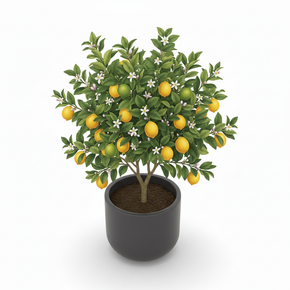




Experience the joy of harvesting your own lemons! Our vibrant Lemon Tree not only adds a touch of Mediterranean elegance to your space with its glossy green leaves and fragrant white blossoms but also rewards you with delicious, homegrown fruit. Perfect for a sunny patio or a bright indoor corner, this tree is a living, breathing statement piece that offers both beauty and utility. Imagine the taste of fresh lemonade made from lemons you grew yourself. Elevate your home and your health—bring home a Lemon Tree today!
Common Name: Lemon Tree / حامض (Hamed)
Botanical Name: Citrus limon
Variety: Standard
Color: Natural
Country of Origin: Spain
Family: Rutaceae
Kingdom: Plantae
Clade: Tracheophytes
Order: Sapindales
Family: Rutaceae
Genus: Citrus
Species: C. limon
Native to South Asia, primarily Northeastern India. It was introduced to Europe via southern Italy around the 2nd century AD and is now extensively cultivated in Mediterranean climates like Spain, as well as in California and Florida.
Features glossy, dark green, oval-shaped leaves that are evergreen. The tree produces highly fragrant white flowers with five petals, often showing a purple tint on the underside. The fruit is an ellipsoidal yellow berry known for its tart juice and aromatic zest.
When grown in containers, they typically reach a height of 3 to 6 feet (1–2 meters). In the ground, standard lemon trees can grow between 10 to 20 feet tall depending on the variety and pruning.
Requires full sun to thrive. It needs at least 6 to 8 hours of direct sunlight per day. If kept indoors, it should be placed in the brightest possible spot, preferably a south-facing window.
Requires regular watering to keep the soil moist but not waterlogged. Allow the top inch or two of soil to dry out before watering again. Ensure the pot has excellent drainage to prevent root rot.
Prefers well-draining, slightly acidic soil with a pH between 6.0 and 7.0. A specialized citrus potting mix or a blend of potting soil, peat moss, and perlite works best.
Prefers warm temperatures between 65°F and 85°F (18°C–29°C). They are sensitive to frost and should be moved indoors if temperatures drop below 50°F (10°C). Benefits from moderate to high humidity.
Use a high-nitrogen fertilizer or a specific citrus food during the growing season (spring through summer) every 4–6 weeks to support fruit production and foliage health.
Moderate. Requires consistent light, regular feeding, and occasional pruning to maintain its shape and remove any dead or crossing branches.
Moderate growth rate. Propagation is most successful via grafting or semi-hardwood cuttings. While they can be grown from seeds, the resulting fruit quality may vary from the parent plant.
Susceptible to pests such as spider mites, scale, and aphids. Yellowing leaves may indicate overwatering or a nutrient deficiency (like iron or nitrogen). Sudden leaf drop can be caused by cold drafts or environmental stress.
Provides edible fruit high in Vitamin C, fragrant blooms that act as natural air fresheners, and high ornamental value for both indoor and outdoor landscapes.
The fruit is safe and edible for humans. However, the leaves, stems, and fruit peel contain essential oils (like limonene) and psoralens that are toxic to dogs, cats, and horses if ingested.
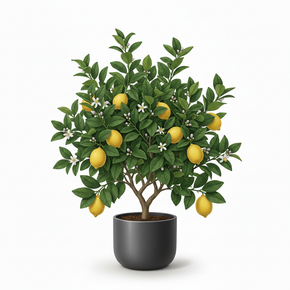
Experience the joy of harvesting your own lemons! Our vibrant Lemon Tree not only adds a touch of Mediterranean elegance to your space with its glossy green leaves and fragrant white blossoms but also rewards you with delicious, homegrown fruit. Perfect for a sunny patio or a bright indoor corner, this tree is a living, breathing statement piece that offers both beauty and utility. Imagine the taste of fresh lemonade made from lemons you grew yourself. Elevate your home and your health—bring home a Lemon Tree today!
Common Name: Lemon Tree / حامض (Hamed)
Botanical Name: Citrus limon
Variety: Standard
Color: Natural
Country of Origin: Spain
Family: Rutaceae
Kingdom: Plantae
Clade: Tracheophytes
Order: Sapindales
Family: Rutaceae
Genus: Citrus
Species: C. limon
Native to South Asia, primarily Northeastern India. It was introduced to Europe via southern Italy around the 2nd century AD and is now extensively cultivated in Mediterranean climates like Spain, as well as in California and Florida.
Features glossy, dark green, oval-shaped leaves that are evergreen. The tree produces highly fragrant white flowers with five petals, often showing a purple tint on the underside. The fruit is an ellipsoidal yellow berry known for its tart juice and aromatic zest.
When grown in containers, they typically reach a height of 3 to 6 feet (1–2 meters). In the ground, standard lemon trees can grow between 10 to 20 feet tall depending on the variety and pruning.
Requires full sun to thrive. It needs at least 6 to 8 hours of direct sunlight per day. If kept indoors, it should be placed in the brightest possible spot, preferably a south-facing window.
Requires regular watering to keep the soil moist but not waterlogged. Allow the top inch or two of soil to dry out before watering again. Ensure the pot has excellent drainage to prevent root rot.
Prefers well-draining, slightly acidic soil with a pH between 6.0 and 7.0. A specialized citrus potting mix or a blend of potting soil, peat moss, and perlite works best.
Prefers warm temperatures between 65°F and 85°F (18°C–29°C). They are sensitive to frost and should be moved indoors if temperatures drop below 50°F (10°C). Benefits from moderate to high humidity.
Use a high-nitrogen fertilizer or a specific citrus food during the growing season (spring through summer) every 4–6 weeks to support fruit production and foliage health.
Moderate. Requires consistent light, regular feeding, and occasional pruning to maintain its shape and remove any dead or crossing branches.
Moderate growth rate. Propagation is most successful via grafting or semi-hardwood cuttings. While they can be grown from seeds, the resulting fruit quality may vary from the parent plant.
Susceptible to pests such as spider mites, scale, and aphids. Yellowing leaves may indicate overwatering or a nutrient deficiency (like iron or nitrogen). Sudden leaf drop can be caused by cold drafts or environmental stress.
Provides edible fruit high in Vitamin C, fragrant blooms that act as natural air fresheners, and high ornamental value for both indoor and outdoor landscapes.
The fruit is safe and edible for humans. However, the leaves, stems, and fruit peel contain essential oils (like limonene) and psoralens that are toxic to dogs, cats, and horses if ingested.



Take 20% off your first order
Enter the code below at checkout to get 20% off your first order