




Transform your home into a Mediterranean oasis! Imagine the crisp scent of lemon blossoms in your living room and the unmatched taste of homegrown lemons in your tea. Our Lemon Trees are more than just plants; they are a lifestyle upgrade. Perfect as a statement piece and a source of fresh, organic fruit, this tree is a gift that keeps on giving. Easy to care for in a sunny spot, it’s your ticket to a brighter, fresher, and more flavorful home. Order yours today and start your citrus journey!
Common Name: Lemon Tree (Meyer)
Botanical Name: Citrus limon 'Meyer'
Arabic Name: شجرة ليمون
Family: Rutaceae
Country of Origin: Spain
Plant Color: Multicolor
Plant Variant: Meyer
Kingdom: Plantae
Order: Sapindales
Family: Rutaceae
Genus: Citrus
Species: Citrus limon
Cultivar: 'Meyer'
The Meyer lemon is native to China and is believed to be a cross between a traditional lemon and a mandarin orange. It was introduced to the United States in 1908. While historically Asian, this specific specimen variant is cultivated in Spain and distributed globally as a popular ornamental and fruiting plant.
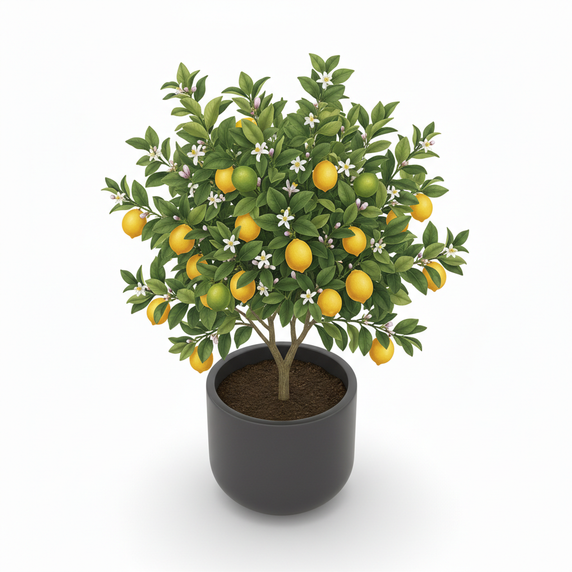
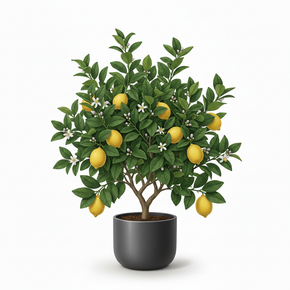
Meyer Lemon Trees feature glossy, dark green evergreen foliage. They produce highly fragrant, waxy white flowers that often show a purple tint at the base. The fruit is rounder than a standard lemon, with a thin, smooth, deep yellow to light orange rind when fully ripe.
When grown in indoor pots, these trees typically reach a height of 3 to 5 feet. In outdoor ground planting, they can reach 6 to 10 feet. The spread is usually proportional to its height, creating a bushy, rounded canopy.
Thrives in bright, direct sunlight. Indoors, it should be placed near a south-facing window where it can receive at least 6 to 8 hours of sun daily. Supplemental grow lights can be used if natural light is insufficient.
Requires consistent moisture but does not tolerate standing water. Water thoroughly when the top 2 inches of soil feel dry to the touch. Ensure the pot has excellent drainage to prevent root rot.
Requires a well-draining, slightly acidic soil mix. A combination of peat moss, perlite, and bark or a specialized citrus potting mix is ideal for maintaining the necessary pH and drainage.
Prefers temperatures between 65°F and 85°F. It is not frost-tolerant. It thrives in high humidity; using a pebble tray, misting the leaves, or utilizing a humidifier is recommended for indoor environments.
Feed with a high-nitrogen or citrus-specific fertilizer every 4–6 weeks during the active growing season (spring and summer). Reduce feeding frequency during the fall and winter months.
Maintenance is moderate. Regular monitoring for light, water, and pests is required. Pruning may be necessary to maintain shape and encourage airflow within the canopy.
Growth rate is moderate. Meyer lemons are typically propagated through semi-hardwood cuttings or by grafting onto hardy rootstocks to ensure disease resistance and fruit quality.
Susceptible to pests such as spider mites, scale, and whiteflies, especially indoors. Overwatering can lead to root rot, while yellowing leaves may indicate a nutrient deficiency, typically nitrogen or iron.
Provides fresh, aromatic fruit with a sweeter, less acidic flavor than standard lemons. Its fragrant blossoms serve as a natural air freshener. It is highly valued as an ornamental "statement piece" for home décor and office spaces.
The fruit is safe and edible for humans. However, the leaves, stems, and peel of Citrus limon contain essential oils (like limonene) and psoralens that are toxic to dogs, cats, and horses if ingested, potentially causing gastrointestinal upset or photosensitivity.
Transform your home into a Mediterranean oasis! Imagine the crisp scent of lemon blossoms in your living room and the unmatched taste of homegrown lemons in your tea. Our Lemon Trees are more than just plants; they are a lifestyle upgrade. Perfect as a statement piece and a source of fresh, organic fruit, this tree is a gift that keeps on giving. Easy to care for in a sunny spot, it’s your ticket to a brighter, fresher, and more flavorful home. Order yours today and start your citrus journey!
Common Name: Lemon Tree (Meyer)
Botanical Name: Citrus limon 'Meyer'
Arabic Name: شجرة ليمون
Family: Rutaceae
Country of Origin: Spain
Plant Color: Multicolor
Plant Variant: Meyer
Kingdom: Plantae
Order: Sapindales
Family: Rutaceae
Genus: Citrus
Species: Citrus limon
Cultivar: 'Meyer'
The Meyer lemon is native to China and is believed to be a cross between a traditional lemon and a mandarin orange. It was introduced to the United States in 1908. While historically Asian, this specific specimen variant is cultivated in Spain and distributed globally as a popular ornamental and fruiting plant.
Meyer Lemon Trees feature glossy, dark green evergreen foliage. They produce highly fragrant, waxy white flowers that often show a purple tint at the base. The fruit is rounder than a standard lemon, with a thin, smooth, deep yellow to light orange rind when fully ripe.
When grown in indoor pots, these trees typically reach a height of 3 to 5 feet. In outdoor ground planting, they can reach 6 to 10 feet. The spread is usually proportional to its height, creating a bushy, rounded canopy.
Thrives in bright, direct sunlight. Indoors, it should be placed near a south-facing window where it can receive at least 6 to 8 hours of sun daily. Supplemental grow lights can be used if natural light is insufficient.
Requires consistent moisture but does not tolerate standing water. Water thoroughly when the top 2 inches of soil feel dry to the touch. Ensure the pot has excellent drainage to prevent root rot.
Requires a well-draining, slightly acidic soil mix. A combination of peat moss, perlite, and bark or a specialized citrus potting mix is ideal for maintaining the necessary pH and drainage.
Prefers temperatures between 65°F and 85°F. It is not frost-tolerant. It thrives in high humidity; using a pebble tray, misting the leaves, or utilizing a humidifier is recommended for indoor environments.
Feed with a high-nitrogen or citrus-specific fertilizer every 4–6 weeks during the active growing season (spring and summer). Reduce feeding frequency during the fall and winter months.
Maintenance is moderate. Regular monitoring for light, water, and pests is required. Pruning may be necessary to maintain shape and encourage airflow within the canopy.
Growth rate is moderate. Meyer lemons are typically propagated through semi-hardwood cuttings or by grafting onto hardy rootstocks to ensure disease resistance and fruit quality.
Susceptible to pests such as spider mites, scale, and whiteflies, especially indoors. Overwatering can lead to root rot, while yellowing leaves may indicate a nutrient deficiency, typically nitrogen or iron.
Provides fresh, aromatic fruit with a sweeter, less acidic flavor than standard lemons. Its fragrant blossoms serve as a natural air freshener. It is highly valued as an ornamental "statement piece" for home décor and office spaces.
The fruit is safe and edible for humans. However, the leaves, stems, and peel of Citrus limon contain essential oils (like limonene) and psoralens that are toxic to dogs, cats, and horses if ingested, potentially causing gastrointestinal upset or photosensitivity.



Take 20% off your first order
Enter the code below at checkout to get 20% off your first order