


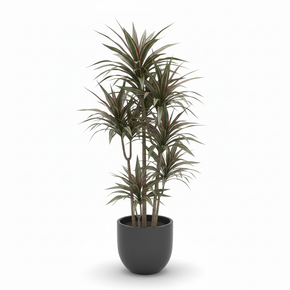
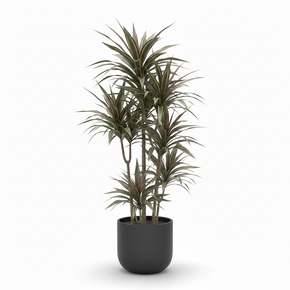



Introduce architectural elegance to your space with the Dracaena marginata 'Bicolor'. Famous for its dramatic, slender form and sword-like leaves edged in a vibrant reddish-pink, this plant is a living sculpture. Not just a pretty face, it's a powerhouse air-purifier and one of the easiest, most forgiving indoor trees you can own. Perfect for adding vertical interest to any corner, it thrives on neglect, making it the ideal choice for both seasoned plant parents and busy beginners.
Common Name: Madagascar Dragon Tree, Dracaena Bicolor
Botanical Name: Dracaena marginata 'Bicolor'
Scientific Information: Dracaena reflexa var. angustifolia
Kingdom: Plantae
Order: Asparagales
Family: Asparagaceae
Genus: Dracaena
Species: Dracaena marginata
Native to Madagascar, the Dracaena marginata is now grown worldwide as a popular ornamental plant. It thrives in subtropical and tropical climates but has adapted perfectly to indoor environments globally.
This variety features narrow, arching, sword-shaped leaves that are deep green with distinct reddish-pink margins. As the plant grows, it develops tall, slender, woody stems (canes) that can be trained to curve or grow straight, creating a palm-like appearance.
Indoors, it typically reaches heights of 6 to 10 feet, though it is a slow grower. The leaves usually measure 12 to 24 inches in length and are very narrow.
Prefers bright, indirect sunlight. It can tolerate medium light levels, but growth will slow significantly. Direct afternoon sun should be avoided as it can scorch the delicate leaves.
Drought-tolerant. Water only when the top 50-75% of the soil is dry. Overwatering can lead to root rot. It is sensitive to fluoride and salts in tap water, which may cause brown leaf tips.
Requires a well-draining potting mix, such as a peat-based mix with added perlite or lava rock to ensure aeration. Choose a pot with adequate drainage holes.
Thrives in temperatures between 65°F and 80°F (18°C–27°C). It prefers average to high humidity but manages well in standard household humidity levels. Keep away from cold drafts or AC vents.
Feed with a balanced liquid houseplant fertilizer diluted to half-strength once a month during the spring and summer growing seasons. No fertilizer is needed in winter.
Low maintenance. Care involves occasional dusting of the leaves with a damp cloth and pruning the top if the plant becomes too tall, which encourages branching.
Slow to moderate growth rate. It is easily propagated via stem cuttings or air layering.
Susceptible to spider mites, mealybugs, and scale if the air is too dry. Brown leaf tips are common if the water has too much fluoride or if the humidity is consistently too low.
Highly effective at removing indoor air toxins such as formaldehyde, benzene, and trichloroethylene. Its upright growth habit makes it ideal for narrow spaces and corners in homes and offices.
Toxic to cats and dogs if ingested. Contains saponins which can cause vomiting, salivation, and dilated pupils in pets. Keep out of reach of curious animals.
Introduce architectural elegance to your space with the Dracaena marginata 'Bicolor'. Famous for its dramatic, slender form and sword-like leaves edged in a vibrant reddish-pink, this plant is a living sculpture. Not just a pretty face, it's a powerhouse air-purifier and one of the easiest, most forgiving indoor trees you can own. Perfect for adding vertical interest to any corner, it thrives on neglect, making it the ideal choice for both seasoned plant parents and busy beginners.
Common Name: Madagascar Dragon Tree, Dracaena Bicolor
Botanical Name: Dracaena marginata 'Bicolor'
Scientific Information: Dracaena reflexa var. angustifolia
Kingdom: Plantae
Order: Asparagales
Family: Asparagaceae
Genus: Dracaena
Species: Dracaena marginata
Native to Madagascar, the Dracaena marginata is now grown worldwide as a popular ornamental plant. It thrives in subtropical and tropical climates but has adapted perfectly to indoor environments globally.
This variety features narrow, arching, sword-shaped leaves that are deep green with distinct reddish-pink margins. As the plant grows, it develops tall, slender, woody stems (canes) that can be trained to curve or grow straight, creating a palm-like appearance.
Indoors, it typically reaches heights of 6 to 10 feet, though it is a slow grower. The leaves usually measure 12 to 24 inches in length and are very narrow.
Prefers bright, indirect sunlight. It can tolerate medium light levels, but growth will slow significantly. Direct afternoon sun should be avoided as it can scorch the delicate leaves.
Drought-tolerant. Water only when the top 50-75% of the soil is dry. Overwatering can lead to root rot. It is sensitive to fluoride and salts in tap water, which may cause brown leaf tips.
Requires a well-draining potting mix, such as a peat-based mix with added perlite or lava rock to ensure aeration. Choose a pot with adequate drainage holes.
Thrives in temperatures between 65°F and 80°F (18°C–27°C). It prefers average to high humidity but manages well in standard household humidity levels. Keep away from cold drafts or AC vents.
Feed with a balanced liquid houseplant fertilizer diluted to half-strength once a month during the spring and summer growing seasons. No fertilizer is needed in winter.
Low maintenance. Care involves occasional dusting of the leaves with a damp cloth and pruning the top if the plant becomes too tall, which encourages branching.
Slow to moderate growth rate. It is easily propagated via stem cuttings or air layering.
Susceptible to spider mites, mealybugs, and scale if the air is too dry. Brown leaf tips are common if the water has too much fluoride or if the humidity is consistently too low.
Highly effective at removing indoor air toxins such as formaldehyde, benzene, and trichloroethylene. Its upright growth habit makes it ideal for narrow spaces and corners in homes and offices.
Toxic to cats and dogs if ingested. Contains saponins which can cause vomiting, salivation, and dilated pupils in pets. Keep out of reach of curious animals.


Take 20% off your first order
Enter the code below at checkout to get 20% off your first order