





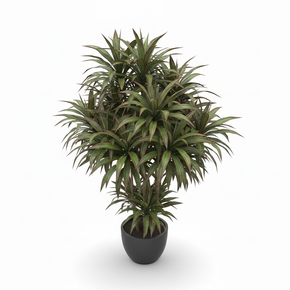
Elevate your interior with the sleek, architectural beauty of the Madagascar Dragon Tree. With its slender, graceful canes and a vibrant crown of deep green leaves finely edged in red, the Dracaena marginata is a living sculpture. It’s not just about looks; this plant is a hardworking air purifier and one of the most forgiving houseplants you can own. Perfect for adding a touch of sophisticated, natural drama to any corner, it thrives on neglect and still looks incredible. Make a statement that's effortlessly chic—bring home a Dragon Tree.
Common Name: Madagascar Dragon Tree, Dragon Tree
Botanical Name: Dracaena marginata
Arabic Name: دراسينيا
Variant: Marginata
Plant Color: Multicolor (Deep green with red edges)
Origin Country: Netherlands
Kingdom: Plantae
Clade: Tracheophytes
Order: Asparagales
Family: Asparagaceae
Genus: Dracaena
Species: Dracaena marginata (syn. Dracaena reflexa var. angustifolia)
The Dracaena marginata is native to Madagascar. It has been widely distributed across the globe as a popular ornamental plant due to its hardiness and striking vertical form.
This plant features thin, woody stems or "canes" that are topped with clusters of narrow, sword-shaped leaves. The foliage is naturally stiff and pointed, displaying a rich green center with distinct narrow margins of red or purple.
Indoors, the Dragon Tree can grow anywhere from 3 to 6 feet tall, though in ideal conditions it can reach up to 10 feet. It typically has a spread of 1 to 3 feet, maintaining a narrow, upright profile.
It thrives in bright, indirect sunlight. While it is highly adaptable and can tolerate lower light levels, its growth will slow and the red leaf margins may become less vibrant. Avoid direct, harsh afternoon sun which can burn the leaves.
Water when the top half of the soil is dry to the touch. Dracaenas are sensitive to overwatering; it is better to keep them slightly on the dry side. They are also sensitive to fluoride in tap water, which can cause brown leaf tips.
Requires a well-draining potting mix, such as a peat-based mix with perlite or sand added to ensure aeration. A pot with drainage holes is essential to prevent root rot.
Prefers warm temperatures between 65°F and 80°F (18°C–27°C). Protect it from cold drafts and temperatures below 50°F. It enjoys moderate humidity but adapts well to standard household humidity levels.
Feed with a balanced liquid fertilizer diluted to half-strength once a month during the growing season (spring and summer). Do not fertilize in the fall or winter.
Care Level: Easy. Maintenance involves wiping the leaves occasionally to remove dust and pruning the tops if the plant becomes too tall, which encourages new growth lower on the stem.
This is a slow-growing plant. It can be easily propagated through stem cuttings rooted in water or directly in moist soil during the spring or summer.
Susceptible to spider mites, mealybugs, and scale if the air is too dry. Common issues include brown leaf tips (usually caused by low humidity or chemicals in water) and yellowing lower leaves (which is a natural part of the aging process).
Renowned for its air-purifying qualities, it is effective at removing toxins like formaldehyde, xylene, and toluene from the air. Its architectural shape makes it a favorite for modern home decor and office spaces.
Toxic to pets. If ingested by cats or dogs, it can cause vomiting, drooling, and dilated pupils. Not considered highly toxic to humans, but ingestion may cause mild discomfort or irritation.
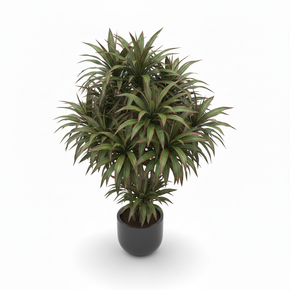
Elevate your interior with the sleek, architectural beauty of the Madagascar Dragon Tree. With its slender, graceful canes and a vibrant crown of deep green leaves finely edged in red, the Dracaena marginata is a living sculpture. It’s not just about looks; this plant is a hardworking air purifier and one of the most forgiving houseplants you can own. Perfect for adding a touch of sophisticated, natural drama to any corner, it thrives on neglect and still looks incredible. Make a statement that's effortlessly chic—bring home a Dragon Tree.
Common Name: Madagascar Dragon Tree, Dragon Tree
Botanical Name: Dracaena marginata
Arabic Name: دراسينيا
Variant: Marginata
Plant Color: Multicolor (Deep green with red edges)
Origin Country: Netherlands
Kingdom: Plantae
Clade: Tracheophytes
Order: Asparagales
Family: Asparagaceae
Genus: Dracaena
Species: Dracaena marginata (syn. Dracaena reflexa var. angustifolia)
The Dracaena marginata is native to Madagascar. It has been widely distributed across the globe as a popular ornamental plant due to its hardiness and striking vertical form.
This plant features thin, woody stems or "canes" that are topped with clusters of narrow, sword-shaped leaves. The foliage is naturally stiff and pointed, displaying a rich green center with distinct narrow margins of red or purple.
Indoors, the Dragon Tree can grow anywhere from 3 to 6 feet tall, though in ideal conditions it can reach up to 10 feet. It typically has a spread of 1 to 3 feet, maintaining a narrow, upright profile.
It thrives in bright, indirect sunlight. While it is highly adaptable and can tolerate lower light levels, its growth will slow and the red leaf margins may become less vibrant. Avoid direct, harsh afternoon sun which can burn the leaves.
Water when the top half of the soil is dry to the touch. Dracaenas are sensitive to overwatering; it is better to keep them slightly on the dry side. They are also sensitive to fluoride in tap water, which can cause brown leaf tips.
Requires a well-draining potting mix, such as a peat-based mix with perlite or sand added to ensure aeration. A pot with drainage holes is essential to prevent root rot.
Prefers warm temperatures between 65°F and 80°F (18°C–27°C). Protect it from cold drafts and temperatures below 50°F. It enjoys moderate humidity but adapts well to standard household humidity levels.
Feed with a balanced liquid fertilizer diluted to half-strength once a month during the growing season (spring and summer). Do not fertilize in the fall or winter.
Care Level: Easy. Maintenance involves wiping the leaves occasionally to remove dust and pruning the tops if the plant becomes too tall, which encourages new growth lower on the stem.
This is a slow-growing plant. It can be easily propagated through stem cuttings rooted in water or directly in moist soil during the spring or summer.
Susceptible to spider mites, mealybugs, and scale if the air is too dry. Common issues include brown leaf tips (usually caused by low humidity or chemicals in water) and yellowing lower leaves (which is a natural part of the aging process).
Renowned for its air-purifying qualities, it is effective at removing toxins like formaldehyde, xylene, and toluene from the air. Its architectural shape makes it a favorite for modern home decor and office spaces.
Toxic to pets. If ingested by cats or dogs, it can cause vomiting, drooling, and dilated pupils. Not considered highly toxic to humans, but ingestion may cause mild discomfort or irritation.


Take 20% off your first order
Enter the code below at checkout to get 20% off your first order