


Malus domestica
Experience the joy of harvesting your own fresh apples! Our premium Apple Trees are the perfect way to bring natural beauty and delicious, healthy fruit to your garden. Imagine stepping outside to pick a crisp, juicy apple straight from the branch. Easy to grow and a delight to watch through the seasons, from the stunning spring blossoms to the bountiful autumn harvest. Start your home orchard today!
1. Basic Identification
Common Name: Apple Tree
Botanical Name: Malus domestica
Former Name: Pyrus malus
Plant Type: Fruit Tree
Plant Code / SKU: PLT-1706
Alternative Names:
Domestic Apple
Orchard Apple
تفاح (Arabic)
2. Taxonomy & Classification
Order: Rosales
Family: Rosaceae
Genus: Malus
3. Origin & Distribution
Origin: Native to Central Asia, with its ancestor, Malus sieversii, still found wild in the mountains of Kazakhstan, Kyrgyzstan, and Tajikistan. Turkey is a major modern producer.
Distribution: Cultivated in temperate regions worldwide, with thousands of varieties grown across the globe.
4. Visual Characteristics
Leaves: Deciduous, simple, and ovate with serrated edges. They are typically a dark green color on top and paler underneath.
Flowers: Appear in spring, usually in clusters. They have five petals and are typically white to pink in color, creating a stunning seasonal display.
Fruit: The familiar apple, which is technically a pome. The fruit varies greatly in size, shape, and color (e.g., green, red, yellow) depending on the cultivar.
Stem/Trunk: A woody trunk with bark that is generally smooth and greyish-brown on young trees, becoming rougher and scaly with age.
5. Size & Dimensions
Height: Standard varieties can grow from 5 to 9 meters (15 to 30 feet) tall. Semi-dwarf and dwarf rootstocks produce smaller trees, typically 2 to 5 meters (6 to 15 feet).
Spread: The canopy can be as wide as the tree is tall, often reaching a spread of 9 meters (30 feet) for a mature standard tree.
6. Light Requirements
Requires full sun for optimal growth and fruit production. A minimum of 6 to 8 hours of direct, unfiltered sunlight per day is essential.
7. Watering Needs
Water deeply and regularly, especially for young trees establishing their root systems. Provide about 2-5 cm (1-2 inches) of water per week during the growing season, either from rainfall or irrigation. The soil should be kept consistently moist but not waterlogged. Mature trees have better drought tolerance but benefit from deep watering during prolonged dry spells.
8. Soil & Potting
Soil Type: Prefers well-draining, loamy soil that is rich in organic matter. Avoid heavy clay or waterlogged soils.
pH: Thrives in slightly acidic to neutral soil with a pH range of 6.0 to 7.0.
Potting: Young or dwarf varieties can be grown in large containers with excellent drainage, but standard trees must be planted in the ground to reach their full potential.
9. Temperature & Humidity
Temperature: As a temperate climate tree, it requires a period of winter dormancy with a specific number of "chill hours" (hours below 7°C or 45°F) to produce fruit. Most varieties are hardy in USDA zones 3-8.
Humidity: Tolerates a range of humidity levels but can be more susceptible to fungal diseases like apple scab and powdery mildew in regions with high humidity.
10. Fertilization
Fertilize in early spring before new growth begins. Use a balanced fertilizer (e.g., 10-10-10) or one formulated for fruit trees. A soil test is recommended to determine specific nutrient deficiencies. Avoid over-fertilizing with nitrogen, which can encourage excessive leaf growth at the expense of fruit production.
11. Maintenance & Care Level
Moderate. Requires annual pruning in late winter to maintain shape, remove dead or diseased wood, and encourage fruit production. Regular monitoring for pests and diseases is necessary. Thinning young fruit can lead to larger, healthier apples at harvest.
12. Growth & Propagation
Growth Rate: Moderate.
Propagation: Commercially propagated by grafting or budding a desired cultivar onto a selected rootstock. Rootstocks are chosen to control the tree's size, disease resistance, and cold hardiness. Growing from seed is not recommended for fruit production as the resulting tree will not be true to the parent variety.
13. Common Problems
Pests: Susceptible to codling moths, apple maggots, aphids, scale insects, and spider mites.
Diseases: Prone to fungal and bacterial diseases such as apple scab, fire blight, powdery mildew, and cedar-apple rust. Proper air circulation from pruning can help prevent many issues.
14. Benefits & Uses
Culinary: The fruit is highly versatile and is eaten fresh, juiced, fermented into cider, cooked into sauces and pies, and dried.
Ornamental: Valued in landscaping for their beautiful spring blossoms, attractive summer foliage, and the visual appeal of their fruit.
Ecological: Flowers provide an important source of nectar and pollen for bees and other pollinators.
15. Toxicity & Safety
Fruit: The flesh of the apple is safe and nutritious for humans and many animals.
Seeds: Apple seeds contain amygdalin, a compound that can release small amounts of cyanide when chewed or digested. Swallowing a few seeds accidentally is harmless, but consuming a large quantity of crushed seeds can be toxic.
Leaves & Stems: The leaves and stems are toxic to pets like dogs, cats, and horses as they also contain cyanide compounds.
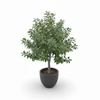
Malus domestica

Experience the joy of harvesting your own fresh apples! Our premium Apple Trees are the perfect way to bring natural beauty and delicious, healthy fruit to your garden. Imagine stepping outside to pick a crisp, juicy apple straight from the branch. Easy to grow and a delight to watch through the seasons, from the stunning spring blossoms to the bountiful autumn harvest. Start your home orchard today!
1. Basic Identification
Common Name: Apple Tree
Botanical Name: Malus domestica
Former Name: Pyrus malus
Plant Type: Fruit Tree
Plant Code / SKU: PLT-1706
Alternative Names:
Domestic Apple
Orchard Apple
تفاح (Arabic)
2. Taxonomy & Classification
Order: Rosales
Family: Rosaceae
Genus: Malus
3. Origin & Distribution
Origin: Native to Central Asia, with its ancestor, Malus sieversii, still found wild in the mountains of Kazakhstan, Kyrgyzstan, and Tajikistan. Turkey is a major modern producer.
Distribution: Cultivated in temperate regions worldwide, with thousands of varieties grown across the globe.
4. Visual Characteristics
Leaves: Deciduous, simple, and ovate with serrated edges. They are typically a dark green color on top and paler underneath.
Flowers: Appear in spring, usually in clusters. They have five petals and are typically white to pink in color, creating a stunning seasonal display.
Fruit: The familiar apple, which is technically a pome. The fruit varies greatly in size, shape, and color (e.g., green, red, yellow) depending on the cultivar.
Stem/Trunk: A woody trunk with bark that is generally smooth and greyish-brown on young trees, becoming rougher and scaly with age.
5. Size & Dimensions
Height: Standard varieties can grow from 5 to 9 meters (15 to 30 feet) tall. Semi-dwarf and dwarf rootstocks produce smaller trees, typically 2 to 5 meters (6 to 15 feet).
Spread: The canopy can be as wide as the tree is tall, often reaching a spread of 9 meters (30 feet) for a mature standard tree.
6. Light Requirements
Requires full sun for optimal growth and fruit production. A minimum of 6 to 8 hours of direct, unfiltered sunlight per day is essential.
7. Watering Needs
Water deeply and regularly, especially for young trees establishing their root systems. Provide about 2-5 cm (1-2 inches) of water per week during the growing season, either from rainfall or irrigation. The soil should be kept consistently moist but not waterlogged. Mature trees have better drought tolerance but benefit from deep watering during prolonged dry spells.
8. Soil & Potting
Soil Type: Prefers well-draining, loamy soil that is rich in organic matter. Avoid heavy clay or waterlogged soils.
pH: Thrives in slightly acidic to neutral soil with a pH range of 6.0 to 7.0.
Potting: Young or dwarf varieties can be grown in large containers with excellent drainage, but standard trees must be planted in the ground to reach their full potential.
9. Temperature & Humidity
Temperature: As a temperate climate tree, it requires a period of winter dormancy with a specific number of "chill hours" (hours below 7°C or 45°F) to produce fruit. Most varieties are hardy in USDA zones 3-8.
Humidity: Tolerates a range of humidity levels but can be more susceptible to fungal diseases like apple scab and powdery mildew in regions with high humidity.
10. Fertilization
Fertilize in early spring before new growth begins. Use a balanced fertilizer (e.g., 10-10-10) or one formulated for fruit trees. A soil test is recommended to determine specific nutrient deficiencies. Avoid over-fertilizing with nitrogen, which can encourage excessive leaf growth at the expense of fruit production.
11. Maintenance & Care Level
Moderate. Requires annual pruning in late winter to maintain shape, remove dead or diseased wood, and encourage fruit production. Regular monitoring for pests and diseases is necessary. Thinning young fruit can lead to larger, healthier apples at harvest.
12. Growth & Propagation
Growth Rate: Moderate.
Propagation: Commercially propagated by grafting or budding a desired cultivar onto a selected rootstock. Rootstocks are chosen to control the tree's size, disease resistance, and cold hardiness. Growing from seed is not recommended for fruit production as the resulting tree will not be true to the parent variety.
13. Common Problems
Pests: Susceptible to codling moths, apple maggots, aphids, scale insects, and spider mites.
Diseases: Prone to fungal and bacterial diseases such as apple scab, fire blight, powdery mildew, and cedar-apple rust. Proper air circulation from pruning can help prevent many issues.
14. Benefits & Uses
Culinary: The fruit is highly versatile and is eaten fresh, juiced, fermented into cider, cooked into sauces and pies, and dried.
Ornamental: Valued in landscaping for their beautiful spring blossoms, attractive summer foliage, and the visual appeal of their fruit.
Ecological: Flowers provide an important source of nectar and pollen for bees and other pollinators.
15. Toxicity & Safety
Fruit: The flesh of the apple is safe and nutritious for humans and many animals.
Seeds: Apple seeds contain amygdalin, a compound that can release small amounts of cyanide when chewed or digested. Swallowing a few seeds accidentally is harmless, but consuming a large quantity of crushed seeds can be toxic.
Leaves & Stems: The leaves and stems are toxic to pets like dogs, cats, and horses as they also contain cyanide compounds.