

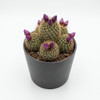




Add a bold pop of color to your space with Gymnocalycium mihanovichii. This compact moon cactus is a top choice for desks and shelves—neat, sculptural, and easy to care for. Just give it bright light, a well-draining cactus mix, and occasional deep watering. A perfect gift plant that looks premium without demanding daily attention.
Common Name: Moon Cactus, Hibotan Cactus
Botanical Name: Gymnocalycium mihanovichii
Arabic Name: صبّار الجمنوكاليسيوم
Stems: 1
Kingdom: Plantae
Order: Caryophyllales
Family: Cactaceae
Genus: Gymnocalycium
Species: Gymnocalycium mihanovichii
Native to South America, specifically Paraguay and Argentina. It was later popularized globally through cultivation and grafting techniques developed in Japan.
The moon cactus is famous for its bright, neon-colored globular scion (the top part), which can be red, pink, yellow, or orange. This colorful portion lacks chlorophyll and is grafted onto a green base (usually Hylocereus cactus) that provides the necessary nutrients through photosynthesis.
Typically reaches a height of 4 to 6 inches (10–15 cm). The colorful top usually grows to about 1 to 2 inches in diameter.
Requires bright, indirect light. Direct, harsh afternoon sunlight can scorch the colorful top, while too little light may cause the green base to stretch or the colors to fade.
Allow the soil to dry out completely between waterings. Water thoroughly and ensure all excess water drains out. Reduce watering significantly during the winter dormant season.
Needs a well-draining potting medium, such as a specialized cactus and succulent mix. A pot with drainage holes is essential to prevent water accumulation.
Prefers average room temperatures between 18°C and 24°C. It is not frost-tolerant and should be kept away from cold drafts. It thrives in low to average indoor humidity.
Feed once a month during the growing season (Spring and Summer) with a balanced liquid cactus fertilizer diluted to half strength.
Low maintenance. It is an ideal plant for beginners due to its slow growth rate and minimal watering requirements.
Since the colorful top cannot survive on its own, propagation is done by removing the small offsets (pups) that grow from the sides and grafting them onto a new rootstock cactus.
The most common issue is root rot caused by overwatering. Occasionally, the graft may fail over several years, or the plant may be susceptible to mealybugs and scale insects.
Primarily used as an ornamental indoor plant. Its small size makes it perfect for office desks, windowsills, and decorative arrangements. It is also a very popular gift plant due to its striking appearance.
Generally considered non-toxic to humans and pets. However, it does possess small spines that can cause physical irritation if handled roughly.
Add a bold pop of color to your space with Gymnocalycium mihanovichii. This compact moon cactus is a top choice for desks and shelves—neat, sculptural, and easy to care for. Just give it bright light, a well-draining cactus mix, and occasional deep watering. A perfect gift plant that looks premium without demanding daily attention.
Common Name: Moon Cactus, Hibotan Cactus
Botanical Name: Gymnocalycium mihanovichii
Arabic Name: صبّار الجمنوكاليسيوم
Stems: 1
Kingdom: Plantae
Order: Caryophyllales
Family: Cactaceae
Genus: Gymnocalycium
Species: Gymnocalycium mihanovichii
Native to South America, specifically Paraguay and Argentina. It was later popularized globally through cultivation and grafting techniques developed in Japan.
The moon cactus is famous for its bright, neon-colored globular scion (the top part), which can be red, pink, yellow, or orange. This colorful portion lacks chlorophyll and is grafted onto a green base (usually Hylocereus cactus) that provides the necessary nutrients through photosynthesis.
Typically reaches a height of 4 to 6 inches (10–15 cm). The colorful top usually grows to about 1 to 2 inches in diameter.
Requires bright, indirect light. Direct, harsh afternoon sunlight can scorch the colorful top, while too little light may cause the green base to stretch or the colors to fade.
Allow the soil to dry out completely between waterings. Water thoroughly and ensure all excess water drains out. Reduce watering significantly during the winter dormant season.
Needs a well-draining potting medium, such as a specialized cactus and succulent mix. A pot with drainage holes is essential to prevent water accumulation.
Prefers average room temperatures between 18°C and 24°C. It is not frost-tolerant and should be kept away from cold drafts. It thrives in low to average indoor humidity.
Feed once a month during the growing season (Spring and Summer) with a balanced liquid cactus fertilizer diluted to half strength.
Low maintenance. It is an ideal plant for beginners due to its slow growth rate and minimal watering requirements.
Since the colorful top cannot survive on its own, propagation is done by removing the small offsets (pups) that grow from the sides and grafting them onto a new rootstock cactus.
The most common issue is root rot caused by overwatering. Occasionally, the graft may fail over several years, or the plant may be susceptible to mealybugs and scale insects.
Primarily used as an ornamental indoor plant. Its small size makes it perfect for office desks, windowsills, and decorative arrangements. It is also a very popular gift plant due to its striking appearance.
Generally considered non-toxic to humans and pets. However, it does possess small spines that can cause physical irritation if handled roughly.
Take 20% off your first order
Enter the code below at checkout to get 20% off your first order