

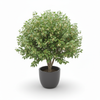
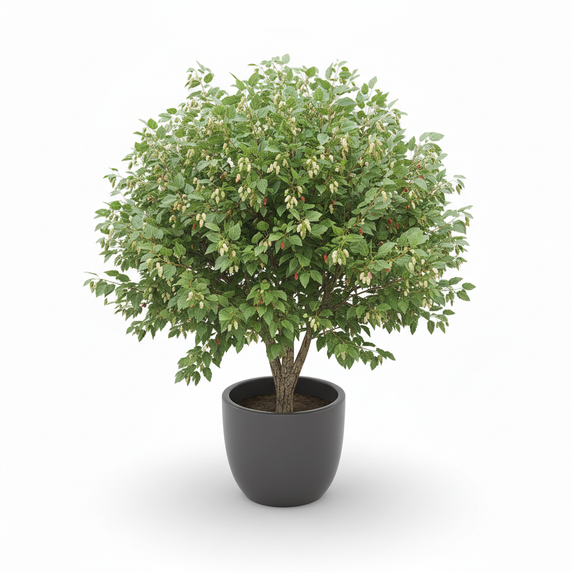





Elevate your garden or patio with the classic elegance of our Standard Mulberry Tree. This 'lollipop' style tree is not just a stunning ornamental piece; it's a living source of delicious, sweet mulberries right at your fingertips. Its compact, trained form makes it ideal for smaller spaces, containers, or as a formal accent in landscape design. Easy to care for and wonderfully productive, it brings both beauty and bounty to your home, attracting delightful birds and offering a harvest of fresh fruit year after year.
Common Name: Standard Mulberry Tree, White Mulberry
Botanical Name: Morus alba
Former Name: Not available
Plant Type: Deciduous Fruit Tree
Plant Code / SKU: PLT-1717
Alternative Names:
Silkworm Mulberry
Common Mulberry
توت (Arabic)
Order: Rosales
Family: Moraceae
Genus: Morus
Native to northern China and India. It has been widely cultivated and naturalized across the world in temperate and subtropical regions, including Southern Europe, the Middle East, Northern Africa, and North America.
Leaves: The leaves are glossy, light green, and heart-shaped (cordate), often with irregular lobes, especially on young shoots. They can be up to 20 cm (8 inches) long.
Flowers: Small, inconspicuous, greenish-yellow flowers that appear in dense, drooping clusters called catkins in the spring.
Fruit: The fruit is an aggregate of small drupes, resembling a small blackberry. It ripens from white or pink to red or dark purple in summer. The taste is typically sweet.
Stem / Trunk: Young stems are smooth and light brown. The bark on the main trunk becomes grayish-brown and develops fissures with age. In a 'Standard' form, it has a single, straight trunk with a pruned, rounded canopy on top, resembling a lollipop.
Height: A 'Standard' form is typically grafted to maintain a compact height of 1.8 to 3 meters (6-10 feet). The species in its natural form can grow to 10-20 meters (33-66 feet).
Width / Spread: The canopy of a standard tree is usually pruned to a spread of 1.5 to 2.5 meters (5-8 feet).
Growth Rate: Fast.
Prefers full sun for optimal growth and fruit production, requiring at least 6-8 hours of direct sunlight per day. It can tolerate partial shade, but fruiting may be reduced.
Water regularly and deeply after planting to establish a strong root system. Once established, it is quite drought-tolerant. Water during extended dry periods, especially when the tree is fruiting, to ensure a good harvest.
Soil Type: Highly adaptable to a wide range of soils, including clay, loam, and sand, but performs best in well-draining, fertile soil.
pH: Tolerates a broad pH range, from slightly acidic to slightly alkaline (6.0 to 8.0).
Potting: The standard form is well-suited for large containers. Ensure the pot has excellent drainage holes and use a quality potting mix.
Temperature: Very hardy and can withstand a wide range of temperatures. It is typically suitable for USDA hardiness zones 4 through 9.
Humidity: Adaptable to both low and high humidity environments.
Does not require heavy fertilization. Apply a balanced, slow-release fertilizer (e.g., 10-10-10) in early spring as new growth appears to encourage healthy foliage and fruit development.
Care Level: Low. It is considered an easy-to-grow and resilient tree.
Pruning: Prune in late winter or early spring while the tree is dormant. For a standard form, prune the canopy to maintain its rounded, compact shape, remove any dead or crossing branches, and trim any suckers growing from the base or trunk.
Pest & Disease Resistance: Generally resistant to pests and diseases. Can occasionally be affected by scale insects, canker, or bacterial blight.
Growth Habit: A fast-growing deciduous tree. The 'Standard' is a grafted variety, with the Morus alba canopy grafted onto a straight rootstock to create the 'lollipop' shape.
Propagation: Primarily propagated through hardwood or softwood cuttings. It can also be grown from seed, though the fruit quality may not be consistent with the parent plant. Grafting is used to create specific forms like the standard tree.
Pests: Birds are highly attracted to the ripe fruit. Scale insects and whiteflies can sometimes be an issue.
Diseases: Generally disease-resistant but can be susceptible to root rot in poorly drained soils, and occasionally bacterial blight or powdery mildew.
Other Issues: The dark-colored fruit can drop and stain patios, walkways, and other surfaces. The root system can be vigorous and shallow, so plant away from foundations and underground pipes.
Ornamental: The standard form is excellent as a specimen tree for formal gardens, patios, containers, and small spaces.
Edible: Produces an abundance of sweet, edible fruits that can be eaten fresh or used in jams, pies, and wines.
Ecological: Attracts birds and other wildlife. The leaves are the exclusive food source for the silkworm (Bombyx mori), which is crucial for silk production.
Other: The wood is durable and used in some regions for crafting and furniture. Various parts of the tree have been used in traditional medicine.
Human Toxicity: Ripe fruits are safe and edible. Unripe fruit and the milky white sap from the stem and leaves may cause mild stomach upset or skin irritation in sensitive individuals.
Pet Toxicity: According to the ASPCA, Morus species (Mulberry) are non-toxic to dogs, cats, and horses. However, consumption of large quantities of any plant material can cause gastrointestinal upset.
Elevate your garden or patio with the classic elegance of our Standard Mulberry Tree. This 'lollipop' style tree is not just a stunning ornamental piece; it's a living source of delicious, sweet mulberries right at your fingertips. Its compact, trained form makes it ideal for smaller spaces, containers, or as a formal accent in landscape design. Easy to care for and wonderfully productive, it brings both beauty and bounty to your home, attracting delightful birds and offering a harvest of fresh fruit year after year.
Common Name: Standard Mulberry Tree, White Mulberry
Botanical Name: Morus alba
Former Name: Not available
Plant Type: Deciduous Fruit Tree
Plant Code / SKU: PLT-1717
Alternative Names:
Silkworm Mulberry
Common Mulberry
توت (Arabic)
Order: Rosales
Family: Moraceae
Genus: Morus
Native to northern China and India. It has been widely cultivated and naturalized across the world in temperate and subtropical regions, including Southern Europe, the Middle East, Northern Africa, and North America.
Leaves: The leaves are glossy, light green, and heart-shaped (cordate), often with irregular lobes, especially on young shoots. They can be up to 20 cm (8 inches) long.
Flowers: Small, inconspicuous, greenish-yellow flowers that appear in dense, drooping clusters called catkins in the spring.
Fruit: The fruit is an aggregate of small drupes, resembling a small blackberry. It ripens from white or pink to red or dark purple in summer. The taste is typically sweet.
Stem / Trunk: Young stems are smooth and light brown. The bark on the main trunk becomes grayish-brown and develops fissures with age. In a 'Standard' form, it has a single, straight trunk with a pruned, rounded canopy on top, resembling a lollipop.
Height: A 'Standard' form is typically grafted to maintain a compact height of 1.8 to 3 meters (6-10 feet). The species in its natural form can grow to 10-20 meters (33-66 feet).
Width / Spread: The canopy of a standard tree is usually pruned to a spread of 1.5 to 2.5 meters (5-8 feet).
Growth Rate: Fast.
Prefers full sun for optimal growth and fruit production, requiring at least 6-8 hours of direct sunlight per day. It can tolerate partial shade, but fruiting may be reduced.
Water regularly and deeply after planting to establish a strong root system. Once established, it is quite drought-tolerant. Water during extended dry periods, especially when the tree is fruiting, to ensure a good harvest.
Soil Type: Highly adaptable to a wide range of soils, including clay, loam, and sand, but performs best in well-draining, fertile soil.
pH: Tolerates a broad pH range, from slightly acidic to slightly alkaline (6.0 to 8.0).
Potting: The standard form is well-suited for large containers. Ensure the pot has excellent drainage holes and use a quality potting mix.
Temperature: Very hardy and can withstand a wide range of temperatures. It is typically suitable for USDA hardiness zones 4 through 9.
Humidity: Adaptable to both low and high humidity environments.
Does not require heavy fertilization. Apply a balanced, slow-release fertilizer (e.g., 10-10-10) in early spring as new growth appears to encourage healthy foliage and fruit development.
Care Level: Low. It is considered an easy-to-grow and resilient tree.
Pruning: Prune in late winter or early spring while the tree is dormant. For a standard form, prune the canopy to maintain its rounded, compact shape, remove any dead or crossing branches, and trim any suckers growing from the base or trunk.
Pest & Disease Resistance: Generally resistant to pests and diseases. Can occasionally be affected by scale insects, canker, or bacterial blight.
Growth Habit: A fast-growing deciduous tree. The 'Standard' is a grafted variety, with the Morus alba canopy grafted onto a straight rootstock to create the 'lollipop' shape.
Propagation: Primarily propagated through hardwood or softwood cuttings. It can also be grown from seed, though the fruit quality may not be consistent with the parent plant. Grafting is used to create specific forms like the standard tree.
Pests: Birds are highly attracted to the ripe fruit. Scale insects and whiteflies can sometimes be an issue.
Diseases: Generally disease-resistant but can be susceptible to root rot in poorly drained soils, and occasionally bacterial blight or powdery mildew.
Other Issues: The dark-colored fruit can drop and stain patios, walkways, and other surfaces. The root system can be vigorous and shallow, so plant away from foundations and underground pipes.
Ornamental: The standard form is excellent as a specimen tree for formal gardens, patios, containers, and small spaces.
Edible: Produces an abundance of sweet, edible fruits that can be eaten fresh or used in jams, pies, and wines.
Ecological: Attracts birds and other wildlife. The leaves are the exclusive food source for the silkworm (Bombyx mori), which is crucial for silk production.
Other: The wood is durable and used in some regions for crafting and furniture. Various parts of the tree have been used in traditional medicine.
Human Toxicity: Ripe fruits are safe and edible. Unripe fruit and the milky white sap from the stem and leaves may cause mild stomach upset or skin irritation in sensitive individuals.
Pet Toxicity: According to the ASPCA, Morus species (Mulberry) are non-toxic to dogs, cats, and horses. However, consumption of large quantities of any plant material can cause gastrointestinal upset.

Take 20% off your first order
Enter the code below at checkout to get 20% off your first order