


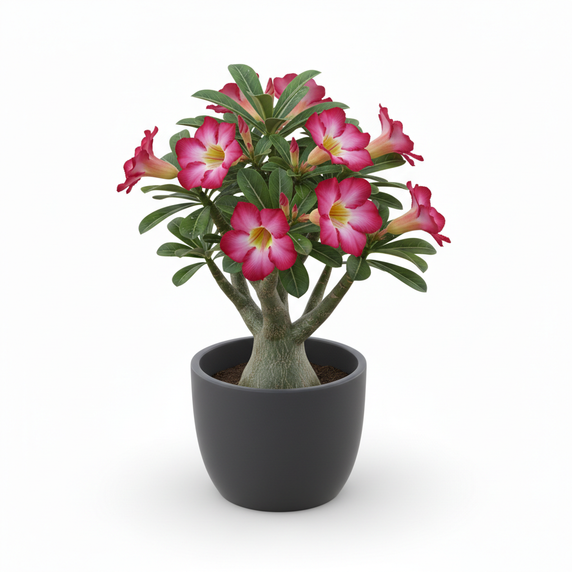




Ignite your outdoor space with the fiery, long-lasting blooms of the Moss Rose! This incredibly tough and stunningly beautiful succulent thrives in the sun and asks for very little in return. Its vibrant, jewel-toned flowers create a dense mat of color, perfect for garden beds, rockeries, or spilling gracefully from hanging baskets and containers. Effortlessly beautiful and incredibly resilient, the Moss Rose is the perfect choice for adding a splash of brilliant color that lasts all summer.
Common Name: Moss Rose (Naznaz)
Botanical Name: Portulaca grandiflora
Plant Variant: Standard
Color: Multicolor
Country of Origin: Netherlands
Arabic Name: نازناز
Stems: Not available
Kingdom: Plantae
Order: Caryophyllales
Family: Portulacaceae
Genus: Portulaca
Species: Portulaca grandiflora
Native to the hot, dry plains of South America, specifically Argentina, southern Brazil, and Uruguay. It has been naturalized in many tropical and subtropical regions worldwide due to its popularity as an ornamental garden plant.
A low-growing, prostrate succulent with fleshy, cylindrical, needle-like leaves that are bright green. The flowers are cup-shaped, approximately 2.5–4 cm in diameter, and appear in vivid shades of red, pink, orange, yellow, and white. Many cultivars feature double-petaled blooms that resemble miniature roses.
Height: 3 to 9 inches (8–23 cm)
Spread: 6 to 12 inches (15–30 cm)
Form: Mat-forming groundcover.
Full Sun. This plant requires at least 6 to 8 hours of direct sunlight daily to produce its best blooms. The flowers traditionally open in the sunlight and close at night or during heavy cloud cover.
Low to Moderate. As a succulent, it is highly drought-tolerant. Water only when the top inch of soil is completely dry. Avoid overwatering, which can lead to soggy roots.
Requires well-draining soil. Thrives in sandy, gravelly, or rocky soil with poor to average fertility. It is an excellent choice for rock gardens or containers with drainage holes.
Thrives in hot, dry climates. It is sensitive to frost and will not survive freezing temperatures. It performs best in temperatures above 15°C (60°F) and tolerates low humidity exceptionally well.
Minimal requirements. A balanced, water-soluble fertilizer applied once during the mid-summer growing season is sufficient to encourage continuous blooming.
Very Low Maintenance. It requires minimal deadheading and is generally pest-free. Its resilience makes it ideal for beginner gardeners or low-water landscapes.
Fast-growing annual (or tender perennial in frost-free zones). Easily propagated via seeds sown in spring or stem cuttings, which root quickly in warm soil.
Root rot is the most common issue, usually caused by overwatering or poorly draining soil. Occasionally susceptible to aphids or mealybugs in certain environments.
Excellent for groundcover, rockeries, edging, and xeriscaping. It works beautifully in hanging baskets and mixed containers. It is known to attract pollinators like bees and butterflies.
Portulaca grandiflora is generally considered non-toxic to cats, dogs, and horses according to the ASPCA. It is safe for humans, though it is primarily grown for ornamental purposes.
Ignite your outdoor space with the fiery, long-lasting blooms of the Moss Rose! This incredibly tough and stunningly beautiful succulent thrives in the sun and asks for very little in return. Its vibrant, jewel-toned flowers create a dense mat of color, perfect for garden beds, rockeries, or spilling gracefully from hanging baskets and containers. Effortlessly beautiful and incredibly resilient, the Moss Rose is the perfect choice for adding a splash of brilliant color that lasts all summer.
Common Name: Moss Rose (Naznaz)
Botanical Name: Portulaca grandiflora
Plant Variant: Standard
Color: Multicolor
Country of Origin: Netherlands
Arabic Name: نازناز
Stems: Not available
Kingdom: Plantae
Order: Caryophyllales
Family: Portulacaceae
Genus: Portulaca
Species: Portulaca grandiflora
Native to the hot, dry plains of South America, specifically Argentina, southern Brazil, and Uruguay. It has been naturalized in many tropical and subtropical regions worldwide due to its popularity as an ornamental garden plant.
A low-growing, prostrate succulent with fleshy, cylindrical, needle-like leaves that are bright green. The flowers are cup-shaped, approximately 2.5–4 cm in diameter, and appear in vivid shades of red, pink, orange, yellow, and white. Many cultivars feature double-petaled blooms that resemble miniature roses.
Height: 3 to 9 inches (8–23 cm)
Spread: 6 to 12 inches (15–30 cm)
Form: Mat-forming groundcover.
Full Sun. This plant requires at least 6 to 8 hours of direct sunlight daily to produce its best blooms. The flowers traditionally open in the sunlight and close at night or during heavy cloud cover.
Low to Moderate. As a succulent, it is highly drought-tolerant. Water only when the top inch of soil is completely dry. Avoid overwatering, which can lead to soggy roots.
Requires well-draining soil. Thrives in sandy, gravelly, or rocky soil with poor to average fertility. It is an excellent choice for rock gardens or containers with drainage holes.
Thrives in hot, dry climates. It is sensitive to frost and will not survive freezing temperatures. It performs best in temperatures above 15°C (60°F) and tolerates low humidity exceptionally well.
Minimal requirements. A balanced, water-soluble fertilizer applied once during the mid-summer growing season is sufficient to encourage continuous blooming.
Very Low Maintenance. It requires minimal deadheading and is generally pest-free. Its resilience makes it ideal for beginner gardeners or low-water landscapes.
Fast-growing annual (or tender perennial in frost-free zones). Easily propagated via seeds sown in spring or stem cuttings, which root quickly in warm soil.
Root rot is the most common issue, usually caused by overwatering or poorly draining soil. Occasionally susceptible to aphids or mealybugs in certain environments.
Excellent for groundcover, rockeries, edging, and xeriscaping. It works beautifully in hanging baskets and mixed containers. It is known to attract pollinators like bees and butterflies.
Portulaca grandiflora is generally considered non-toxic to cats, dogs, and horses according to the ASPCA. It is safe for humans, though it is primarily grown for ornamental purposes.
Take 20% off your first order
Enter the code below at checkout to get 20% off your first order