


Multicolor Grafted Bougainvillea Bonsai 'Grafted Bonsai'
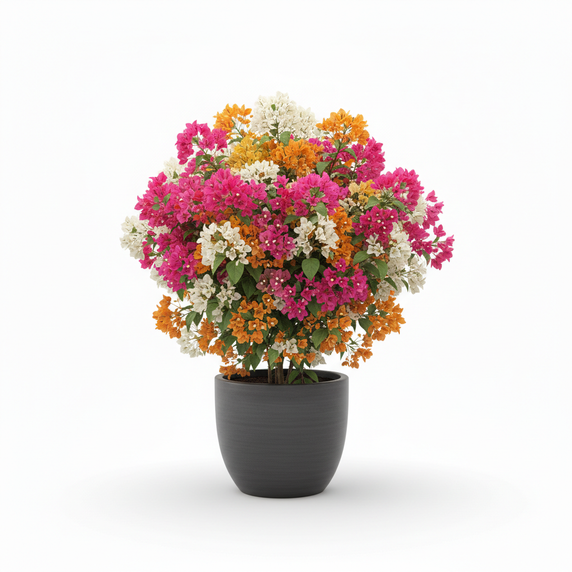
Transform your space with a living sculpture! Our Multicolor Grafted Bougainvillea Bonsai is a masterpiece of horticultural art, boasting a stunning explosion of pink, red, and orange paper-like bracts on a single, expertly trained tree. Perfect for bringing long-lasting, vibrant color to a sunny patio, balcony, or a bright indoor location. Each bonsai has a unique, aged trunk that adds a sense of tranquility and elegance. It's not just a plant; it's a statement piece that flowers profusely with the right care.
1. Basic Identification
Common Name: Multicolor Grafted Bougainvillea Bonsai
Botanical Name: Bougainvillea spectabilis
Variant: Grafted Bonsai
Color: Multicolor (Pink, Red, Orange)
Arabic Name: جهنمي
Country of Origin: Thailand
2. Taxonomy & Classification
Kingdom: Plantae
Order: Caryophyllales
Family: Nyctaginaceae
Genus: Bougainvillea
Species: Bougainvillea spectabilis
3. Origin & Distribution
While native to South America (specifically Brazil, Peru, and Argentina), this specific grafted bonsai variant is expertly cultivated in Thailand, which is world-renowned for its sophisticated grafting techniques and high-quality bougainvillea production.
4. Visual Characteristics
This bonsai features a thick, woody, and aged trunk that supports a canopy of vibrant, paper-like bracts in multiple colors including pink, red, and orange. The true flowers are small and white, nestled within the colorful bracts. The leaves are small, oval, and deep green, providing a lush backdrop to the floral display.
5. Size & Dimensions
As a bonsai, this plant is maintained as a medium-sized specimen. It typically reaches heights and widths of 12 to 24 inches (30-60 cm), depending on the specific age and training of the trunk.
6. Light Requirements
High light is essential. This plant thrives in full direct sunlight or very bright indirect light. If kept indoors, it must be placed in the sunniest spot available, such as a south-facing window. Lack of light will lead to fewer blooms and leaf drop.
7. Watering Needs
Bougainvilleas are drought-tolerant but require regular watering during their flowering period. Allow the top inch of soil to dry out before watering thoroughly. Avoid overwatering or letting the plant sit in water, as this can cause root rot.
8. Soil & Potting
Requires well-draining, slightly acidic soil. A mixture of potting soil, perlite, and pine bark is ideal for bonsai specimens to ensure adequate drainage and aeration.
9. Temperature & Humidity
Thrives in warm temperatures between 65°F and 85°F (18°C - 29°C). It is sensitive to frost and should be brought indoors if temperatures drop below 50°F (10°C). It appreciates moderate humidity but is relatively adaptable.
10. Fertilization
Feed every 2-4 weeks during the growing season (spring and summer) with a balanced, water-soluble fertilizer or a specialized hibiscus/bougainvillea fertilizer high in potassium to promote blooming.
11. Maintenance & Care Level
Moderate to High Care. This plant requires regular pruning and "pinching" to maintain its bonsai shape and encourage new growth and blooms. Regular monitoring of light and water levels is necessary for the best floral display.
12. Growth & Propagation
Grows at a moderate rate. This specific variant is propagated via grafting multiple color varieties onto a single hardy rootstock. For home propagation, semi-hardwood cuttings can be used, though grafting is required for the multicolor effect.
13. Common Problems
Susceptible to aphids, mealybugs, and spider mites. Leaf drop can occur if the plant is moved to a new location with different light levels or if it is overwatered. Thorns are present on the branches and should be handled with care.
14. Benefits & Uses
Primarily used as a high-end ornamental specimen for home decor, executive offices, and reception areas. It serves as a natural "living sculpture" that adds vibrant color and a sense of artistic elegance to any bright space.
15. Toxicity & Safety
The sap is considered mildly toxic to humans and pets if ingested, potentially causing gastrointestinal upset. Contact with the sap may also cause skin irritation for sensitive individuals. The plant possesses sharp thorns which can cause physical injury.
Multicolor Grafted Bougainvillea Bonsai 'Grafted Bonsai'
Transform your space with a living sculpture! Our Multicolor Grafted Bougainvillea Bonsai is a masterpiece of horticultural art, boasting a stunning explosion of pink, red, and orange paper-like bracts on a single, expertly trained tree. Perfect for bringing long-lasting, vibrant color to a sunny patio, balcony, or a bright indoor location. Each bonsai has a unique, aged trunk that adds a sense of tranquility and elegance. It's not just a plant; it's a statement piece that flowers profusely with the right care.
1. Basic Identification
Common Name: Multicolor Grafted Bougainvillea Bonsai
Botanical Name: Bougainvillea spectabilis
Variant: Grafted Bonsai
Color: Multicolor (Pink, Red, Orange)
Arabic Name: جهنمي
Country of Origin: Thailand
2. Taxonomy & Classification
Kingdom: Plantae
Order: Caryophyllales
Family: Nyctaginaceae
Genus: Bougainvillea
Species: Bougainvillea spectabilis
3. Origin & Distribution
While native to South America (specifically Brazil, Peru, and Argentina), this specific grafted bonsai variant is expertly cultivated in Thailand, which is world-renowned for its sophisticated grafting techniques and high-quality bougainvillea production.
4. Visual Characteristics
This bonsai features a thick, woody, and aged trunk that supports a canopy of vibrant, paper-like bracts in multiple colors including pink, red, and orange. The true flowers are small and white, nestled within the colorful bracts. The leaves are small, oval, and deep green, providing a lush backdrop to the floral display.
5. Size & Dimensions
As a bonsai, this plant is maintained as a medium-sized specimen. It typically reaches heights and widths of 12 to 24 inches (30-60 cm), depending on the specific age and training of the trunk.
6. Light Requirements
High light is essential. This plant thrives in full direct sunlight or very bright indirect light. If kept indoors, it must be placed in the sunniest spot available, such as a south-facing window. Lack of light will lead to fewer blooms and leaf drop.
7. Watering Needs
Bougainvilleas are drought-tolerant but require regular watering during their flowering period. Allow the top inch of soil to dry out before watering thoroughly. Avoid overwatering or letting the plant sit in water, as this can cause root rot.
8. Soil & Potting
Requires well-draining, slightly acidic soil. A mixture of potting soil, perlite, and pine bark is ideal for bonsai specimens to ensure adequate drainage and aeration.
9. Temperature & Humidity
Thrives in warm temperatures between 65°F and 85°F (18°C - 29°C). It is sensitive to frost and should be brought indoors if temperatures drop below 50°F (10°C). It appreciates moderate humidity but is relatively adaptable.
10. Fertilization
Feed every 2-4 weeks during the growing season (spring and summer) with a balanced, water-soluble fertilizer or a specialized hibiscus/bougainvillea fertilizer high in potassium to promote blooming.
11. Maintenance & Care Level
Moderate to High Care. This plant requires regular pruning and "pinching" to maintain its bonsai shape and encourage new growth and blooms. Regular monitoring of light and water levels is necessary for the best floral display.
12. Growth & Propagation
Grows at a moderate rate. This specific variant is propagated via grafting multiple color varieties onto a single hardy rootstock. For home propagation, semi-hardwood cuttings can be used, though grafting is required for the multicolor effect.
13. Common Problems
Susceptible to aphids, mealybugs, and spider mites. Leaf drop can occur if the plant is moved to a new location with different light levels or if it is overwatered. Thorns are present on the branches and should be handled with care.
14. Benefits & Uses
Primarily used as a high-end ornamental specimen for home decor, executive offices, and reception areas. It serves as a natural "living sculpture" that adds vibrant color and a sense of artistic elegance to any bright space.
15. Toxicity & Safety
The sap is considered mildly toxic to humans and pets if ingested, potentially causing gastrointestinal upset. Contact with the sap may also cause skin irritation for sensitive individuals. The plant possesses sharp thorns which can cause physical injury.