


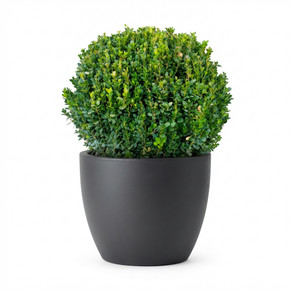


Add instant structure and elegance with Boxwood. Its dense evergreen foliage looks polished all year, whether you style it as a neat mound or keep it clipped for a formal topiary finish. Perfect for entrances, reception spaces, patios, and bright indoor corners—Boxwood delivers that “landscaped” feel with minimal effort and maximum impact.
Common Name: Boxwood
Botanical Name: Buxus sempervirens
Former Name: Not available
Plant Type: Evergreen shrub
Plant Code / SKU: PLT-0203
Alternative Names:
Common boxwood
European boxwood
ياس طوبة
Order: Buxales
Family: Buxaceae
Genus: Buxus
Species: B. sempervirens
Native to western and southern Europe, northwest Africa, and southwestern Asia. Naturally found from southern England and France through Italy and the Balkans to Turkey and Algeria. Widely cultivated as an ornamental in temperate regions worldwide.
Evergreen shrub with dense, opposite leaves. Leaves are elliptic to oval, 1–2.5 cm long, glossy dark green. Stems are slender and woody, with smooth grey bark. Flowers are inconspicuous, small, yellow-green. Fruit is a small three-part capsule.
Growth rate: slow (5–12 cm per year). Natural height up to 2–8 m if unpruned, typically maintained at 0.5–2 m in landscapes. Spread ranges from 0.5–6 m depending on cultivar and pruning. Leaf size 1–2.5 cm long and 0.5–1 cm wide.
Prefers full sun to partial shade. Best performance in dappled or morning sun; afternoon shade recommended in hot climates to prevent leaf scorch. Tolerates deep shade but with slower growth and reduced density.
Requires consistently moist, well-draining soil. Water regularly during establishment; once established, moderately drought tolerant but benefits from supplemental irrigation during prolonged dry periods. Avoid waterlogging.
Prefers fertile, well-draining soils with neutral to slightly alkaline pH (6.5–7.5). Tolerates various soil textures, including loam, clay, and sandy sites if moisture-retentive. Potting mix: quality loam-based or bark-amended compost with good drainage.
Hardy in USDA zones 5–9 (−23 °C to −15 °C). Prefers temperate climates with moderate humidity. Tolerates cold winters and mild summers; may suffer leaf burn in extreme heat and low humidity.
Apply balanced slow-release fertilizer in early spring. A second light application in midsummer can support growth. Avoid high nitrogen late in the season to reduce winter injury risk.
Low to moderate. Prune regularly to maintain shape, density, and size. Light trimming can be done throughout the growing season; more substantial pruning in late winter or early spring before new growth. Monitor for pests and diseases.
Propagation by semi-hardwood cuttings in summer (root within 4–6 weeks under mist). Layering can be successful in spring. Seed propagation is possible but slow and variable.
Diseases: box blight (Cylindrocladium buxicola), Volutella leaf spot, root rot in poorly drained soils. Pests: boxwood leafminer, boxwood mite, scale insects. Environmental: winter burn, leaf scorch in high sun or drought.
Ideal for formal hedges, topiary, borders, foundation plantings, and container gardening. Provides year-round evergreen structure and privacy screens. Works in mixed beds for texture contrast. Low-allergen ornamental.
All parts contain alkaloids (e.g., buxin) and are toxic if ingested by humans and animals; may cause nausea, vomiting, and diarrhea. Skin contact can cause irritation. Keep out of reach of children and pets.
Add instant structure and elegance with Boxwood. Its dense evergreen foliage looks polished all year, whether you style it as a neat mound or keep it clipped for a formal topiary finish. Perfect for entrances, reception spaces, patios, and bright indoor corners—Boxwood delivers that “landscaped” feel with minimal effort and maximum impact.
Common Name: Boxwood
Botanical Name: Buxus sempervirens
Former Name: Not available
Plant Type: Evergreen shrub
Plant Code / SKU: PLT-0203
Alternative Names:
Common boxwood
European boxwood
ياس طوبة
Order: Buxales
Family: Buxaceae
Genus: Buxus
Species: B. sempervirens
Native to western and southern Europe, northwest Africa, and southwestern Asia. Naturally found from southern England and France through Italy and the Balkans to Turkey and Algeria. Widely cultivated as an ornamental in temperate regions worldwide.
Evergreen shrub with dense, opposite leaves. Leaves are elliptic to oval, 1–2.5 cm long, glossy dark green. Stems are slender and woody, with smooth grey bark. Flowers are inconspicuous, small, yellow-green. Fruit is a small three-part capsule.
Growth rate: slow (5–12 cm per year). Natural height up to 2–8 m if unpruned, typically maintained at 0.5–2 m in landscapes. Spread ranges from 0.5–6 m depending on cultivar and pruning. Leaf size 1–2.5 cm long and 0.5–1 cm wide.
Prefers full sun to partial shade. Best performance in dappled or morning sun; afternoon shade recommended in hot climates to prevent leaf scorch. Tolerates deep shade but with slower growth and reduced density.
Requires consistently moist, well-draining soil. Water regularly during establishment; once established, moderately drought tolerant but benefits from supplemental irrigation during prolonged dry periods. Avoid waterlogging.
Prefers fertile, well-draining soils with neutral to slightly alkaline pH (6.5–7.5). Tolerates various soil textures, including loam, clay, and sandy sites if moisture-retentive. Potting mix: quality loam-based or bark-amended compost with good drainage.
Hardy in USDA zones 5–9 (−23 °C to −15 °C). Prefers temperate climates with moderate humidity. Tolerates cold winters and mild summers; may suffer leaf burn in extreme heat and low humidity.
Apply balanced slow-release fertilizer in early spring. A second light application in midsummer can support growth. Avoid high nitrogen late in the season to reduce winter injury risk.
Low to moderate. Prune regularly to maintain shape, density, and size. Light trimming can be done throughout the growing season; more substantial pruning in late winter or early spring before new growth. Monitor for pests and diseases.
Propagation by semi-hardwood cuttings in summer (root within 4–6 weeks under mist). Layering can be successful in spring. Seed propagation is possible but slow and variable.
Diseases: box blight (Cylindrocladium buxicola), Volutella leaf spot, root rot in poorly drained soils. Pests: boxwood leafminer, boxwood mite, scale insects. Environmental: winter burn, leaf scorch in high sun or drought.
Ideal for formal hedges, topiary, borders, foundation plantings, and container gardening. Provides year-round evergreen structure and privacy screens. Works in mixed beds for texture contrast. Low-allergen ornamental.
All parts contain alkaloids (e.g., buxin) and are toxic if ingested by humans and animals; may cause nausea, vomiting, and diarrhea. Skin contact can cause irritation. Keep out of reach of children and pets.


Take 20% off your first order
Enter the code below at checkout to get 20% off your first order