


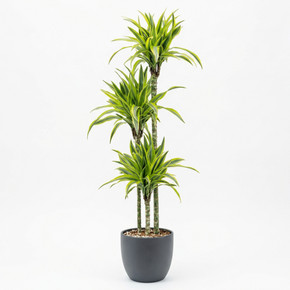


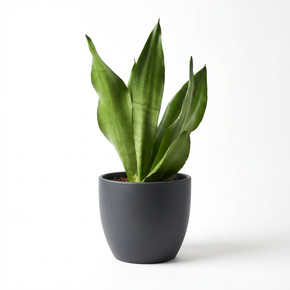
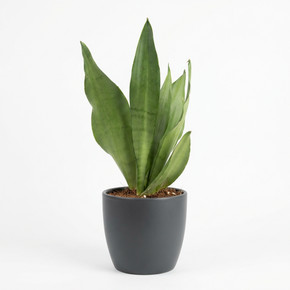
Add a clean, modern statement to any room with Dracaena reflexa. Its upright canes and glossy foliage look premium, yet it’s one of the easiest indoor plants to keep happy. Perfect for receptions, desks, and living spaces—just give it bright to medium indirect light and water when the top soil dries. A dependable green upgrade for busy lifestyles.
Common Name: Song of India
Botanical Name: Dracaena reflexa
Former Name: Pleomele reflexa
Plant Type: Foliage houseplant (Shrub)
Plant Code / SKU: PLT-0448
Alternative Names:
Song of India
Song of Jamaica
Pleomele
Order: Asparagales
Family: Asparagaceae
Subfamily: Nolinoideae
Genus: Dracaena
Native to Madagascar, Mauritius and Mozambique in the southwestern Indian Ocean. Widely naturalized and cultivated in tropical and subtropical regions worldwide.
Dracaena reflexa has upright, cane-like woody stems bearing clusters of lanceolate to elliptic glossy green leaves, 15–30 cm long. Leaves may be variegated in cultivated varieties. Small, fragrant, greenish-white flowers appear in panicles followed by orange-red berries when mature.
Indoors, typically reaches 1–2 m in height with a spread of 0.5–1 m. In outdoor tropical environments, can grow up to 4–6 m tall.
Prefers bright, indirect light. Tolerates medium light levels but growth may slow. Avoid direct midday sun to prevent leaf scorch.
Water when the top 2–3 cm of soil feels dry. Maintain evenly moist but not waterlogged soil. Reduce watering in winter; tolerate occasional drying.
Use a well-draining potting mix rich in organic matter (peat or coco coir) with perlite or coarse sand. pH preference slightly acidic to neutral (pH 6.0–7.0). Repot every 2–3 years or when root-bound.
Ideal temperature range 18–24°C (65–75°F), minimum 15°C (60°F). Prefers moderate to high humidity; leaf tips may brown in low humidity below 50%.
Feed with a balanced, water-soluble fertilizer (e.g., 10-10-10) every 4–6 weeks during spring and summer growth. Do not fertilize in winter dormancy. Flush soil periodically to prevent salt build-up.
Low to moderate care. Prune to control height and encourage branching. Remove yellowing or dead leaves. Wipe leaves to remove dust and maintain glossy appearance.
Grows as a slow to moderate grower with erect canes that branch with pruning. Propagate via stem cuttings: cut 10–15 cm sections, place in water or moist potting mix until roots develop. Air layering is also effective.
Leaf browning: often due to low humidity or fluoride in water. Yellow leaves: overwatering or poor drainage. Pests: susceptible to mealybugs, spider mites and scale; treat with insecticidal soap or neem oil.
Effective air purifier removing formaldehyde, xylene and toluene. Popular ornamental plant for offices, lobbies and living spaces due to its upright form and low maintenance needs.
Contains saponins that are toxic if ingested by pets or humans, causing vomiting, salivation and gastrointestinal discomfort. Keep out of reach of children and animals.
Add a clean, modern statement to any room with Dracaena reflexa. Its upright canes and glossy foliage look premium, yet it’s one of the easiest indoor plants to keep happy. Perfect for receptions, desks, and living spaces—just give it bright to medium indirect light and water when the top soil dries. A dependable green upgrade for busy lifestyles.
Common Name: Song of India
Botanical Name: Dracaena reflexa
Former Name: Pleomele reflexa
Plant Type: Foliage houseplant (Shrub)
Plant Code / SKU: PLT-0448
Alternative Names:
Song of India
Song of Jamaica
Pleomele
Order: Asparagales
Family: Asparagaceae
Subfamily: Nolinoideae
Genus: Dracaena
Native to Madagascar, Mauritius and Mozambique in the southwestern Indian Ocean. Widely naturalized and cultivated in tropical and subtropical regions worldwide.
Dracaena reflexa has upright, cane-like woody stems bearing clusters of lanceolate to elliptic glossy green leaves, 15–30 cm long. Leaves may be variegated in cultivated varieties. Small, fragrant, greenish-white flowers appear in panicles followed by orange-red berries when mature.
Indoors, typically reaches 1–2 m in height with a spread of 0.5–1 m. In outdoor tropical environments, can grow up to 4–6 m tall.
Prefers bright, indirect light. Tolerates medium light levels but growth may slow. Avoid direct midday sun to prevent leaf scorch.
Water when the top 2–3 cm of soil feels dry. Maintain evenly moist but not waterlogged soil. Reduce watering in winter; tolerate occasional drying.
Use a well-draining potting mix rich in organic matter (peat or coco coir) with perlite or coarse sand. pH preference slightly acidic to neutral (pH 6.0–7.0). Repot every 2–3 years or when root-bound.
Ideal temperature range 18–24°C (65–75°F), minimum 15°C (60°F). Prefers moderate to high humidity; leaf tips may brown in low humidity below 50%.
Feed with a balanced, water-soluble fertilizer (e.g., 10-10-10) every 4–6 weeks during spring and summer growth. Do not fertilize in winter dormancy. Flush soil periodically to prevent salt build-up.
Low to moderate care. Prune to control height and encourage branching. Remove yellowing or dead leaves. Wipe leaves to remove dust and maintain glossy appearance.
Grows as a slow to moderate grower with erect canes that branch with pruning. Propagate via stem cuttings: cut 10–15 cm sections, place in water or moist potting mix until roots develop. Air layering is also effective.
Leaf browning: often due to low humidity or fluoride in water. Yellow leaves: overwatering or poor drainage. Pests: susceptible to mealybugs, spider mites and scale; treat with insecticidal soap or neem oil.
Effective air purifier removing formaldehyde, xylene and toluene. Popular ornamental plant for offices, lobbies and living spaces due to its upright form and low maintenance needs.
Contains saponins that are toxic if ingested by pets or humans, causing vomiting, salivation and gastrointestinal discomfort. Keep out of reach of children and animals.






Take 20% off your first order
Enter the code below at checkout to get 20% off your first order