


Asparagaceae
Dracaena sanderiana
Bring instant, modern greenery to any space with Lucky Bamboo. Its clean, architectural canes look premium in homes, offices, and reception areas, and it’s famously easy to care for—just bright, indirect light and clean water (or a well-draining potting mix). A timeless choice for gifting and everyday decor with a calm, minimalist vibe.
1. Basic Identification
Common Name: Lucky Bamboo
Botanical Name: Dracaena sanderiana
Former Name: Not available
Plant Type: Foliage houseplant
Plant Code / SKU: PLT-0439
Alternative Names:
بامبو الحظ
2. Taxonomy & Classification
Order: Asparagales
Family: Asparagaceae
Genus: Dracaena
Species: D. sanderiana
3. Origin & Distribution
Native to the tropical rainforests of Central Africa, particularly Cameroon and surrounding regions. Widely cultivated and naturalized in parts of Southeast Asia as an ornamental and indoor plant.
4. Visual Characteristics
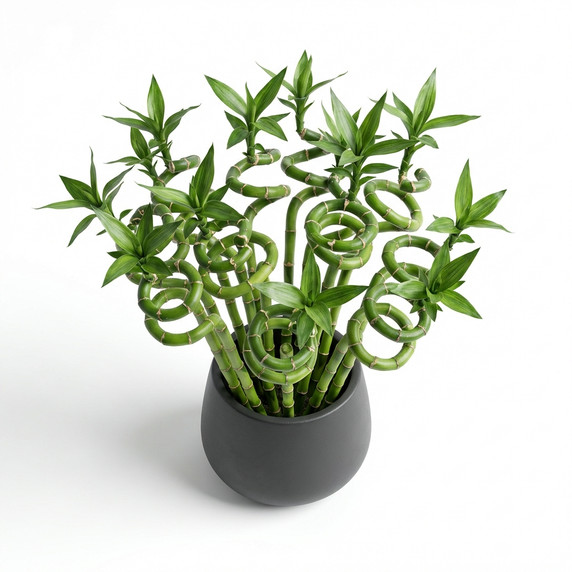
Features slender, upright canes with smooth green bark and lanceolate leaves that emerge from the stem tips. Leaves are glossy, bright green, typically 4–6 inches long and 1–2 inches wide. Stems can be braided or shaped into spirals for decorative effect.
5. Size & Dimensions
Commonly grows 12–24 inches (30–60 cm) tall indoors, with stem diameters of 0.75–1.5 inches (2–4 cm). In optimal conditions, can reach heights of up to 3 feet (90 cm) over time.
6. Light Requirements
Thrives in bright, indirect light. Tolerates low light but may grow more slowly. Avoid direct sunlight, which can scorch leaves.
7. Watering Needs
For hydroponic culture, keep roots submerged in clean, filtered or distilled water, changing water every 1–2 weeks. If potted in soil, maintain evenly moist conditions without waterlogging; allow the top 1–2 inches of soil to dry between waterings.
8. Soil & Potting
In soil, use a well-draining potting mix rich in organic matter, such as peat-based or coco coir blends with perlite. Ensure containers have drainage holes. Hydroponic culture can use decorative pebbles or glass beads to support stems.
9. Temperature & Humidity
Ideal temperature range 65–90°F (18–32°C). Sensitive to cold temperatures below 50°F (10°C). Prefers moderate to high humidity; thrives in environments above 40% relative humidity.
10. Fertilization
Apply a balanced, water-soluble houseplant fertilizer (e.g., 10-10-10 NPK) at half strength once a month during the growing season (spring through summer). In hydroponic setups, use a diluted liquid fertilizer every 6–8 weeks.
11. Maintenance & Care Level
Easy to care for and low maintenance. Remove yellow or damaged leaves promptly. Wipe leaves occasionally to remove dust. Pruning can control height and encourage branching.
12. Growth & Propagation
Propagate via stem cuttings: cut 4–6 inch (10–15 cm) sections below a node and place in water or moist potting medium until roots develop (2–4 weeks). New roots and shoots will emerge from the nodes.
13. Common Problems
Overwatering or poor water quality can lead to root rot and yellowing leaves. Brown leaf tips may indicate fluoride or chlorine in tap water. Pests include mealybugs, spider mites, and scale insects.
14. Benefits & Uses
Popular Feng Shui plant believed to bring good luck and prosperity. Acts as an air purifier by removing formaldehyde and benzene. Ideal decorative accent on desks, shelves, and low-light areas.
15. Toxicity & Safety
Considered mildly toxic to cats and dogs; ingestion may cause vomiting and diarrhea. May cause mild skin irritation in sensitive individuals. Keep out of reach of pets and children.

Dracaena sanderiana
Bring instant, modern greenery to any space with Lucky Bamboo. Its clean, architectural canes look premium in homes, offices, and reception areas, and it’s famously easy to care for—just bright, indirect light and clean water (or a well-draining potting mix). A timeless choice for gifting and everyday decor with a calm, minimalist vibe.
1. Basic Identification
Common Name: Lucky Bamboo
Botanical Name: Dracaena sanderiana
Former Name: Not available
Plant Type: Foliage houseplant
Plant Code / SKU: PLT-0439
Alternative Names:
بامبو الحظ
2. Taxonomy & Classification
Order: Asparagales
Family: Asparagaceae
Genus: Dracaena
Species: D. sanderiana
3. Origin & Distribution
Native to the tropical rainforests of Central Africa, particularly Cameroon and surrounding regions. Widely cultivated and naturalized in parts of Southeast Asia as an ornamental and indoor plant.
4. Visual Characteristics
Features slender, upright canes with smooth green bark and lanceolate leaves that emerge from the stem tips. Leaves are glossy, bright green, typically 4–6 inches long and 1–2 inches wide. Stems can be braided or shaped into spirals for decorative effect.
5. Size & Dimensions
Commonly grows 12–24 inches (30–60 cm) tall indoors, with stem diameters of 0.75–1.5 inches (2–4 cm). In optimal conditions, can reach heights of up to 3 feet (90 cm) over time.
6. Light Requirements
Thrives in bright, indirect light. Tolerates low light but may grow more slowly. Avoid direct sunlight, which can scorch leaves.
7. Watering Needs
For hydroponic culture, keep roots submerged in clean, filtered or distilled water, changing water every 1–2 weeks. If potted in soil, maintain evenly moist conditions without waterlogging; allow the top 1–2 inches of soil to dry between waterings.
8. Soil & Potting
In soil, use a well-draining potting mix rich in organic matter, such as peat-based or coco coir blends with perlite. Ensure containers have drainage holes. Hydroponic culture can use decorative pebbles or glass beads to support stems.
9. Temperature & Humidity
Ideal temperature range 65–90°F (18–32°C). Sensitive to cold temperatures below 50°F (10°C). Prefers moderate to high humidity; thrives in environments above 40% relative humidity.
10. Fertilization
Apply a balanced, water-soluble houseplant fertilizer (e.g., 10-10-10 NPK) at half strength once a month during the growing season (spring through summer). In hydroponic setups, use a diluted liquid fertilizer every 6–8 weeks.
11. Maintenance & Care Level
Easy to care for and low maintenance. Remove yellow or damaged leaves promptly. Wipe leaves occasionally to remove dust. Pruning can control height and encourage branching.
12. Growth & Propagation
Propagate via stem cuttings: cut 4–6 inch (10–15 cm) sections below a node and place in water or moist potting medium until roots develop (2–4 weeks). New roots and shoots will emerge from the nodes.
13. Common Problems
Overwatering or poor water quality can lead to root rot and yellowing leaves. Brown leaf tips may indicate fluoride or chlorine in tap water. Pests include mealybugs, spider mites, and scale insects.
14. Benefits & Uses
Popular Feng Shui plant believed to bring good luck and prosperity. Acts as an air purifier by removing formaldehyde and benzene. Ideal decorative accent on desks, shelves, and low-light areas.
15. Toxicity & Safety
Considered mildly toxic to cats and dogs; ingestion may cause vomiting and diarrhea. May cause mild skin irritation in sensitive individuals. Keep out of reach of pets and children.