

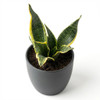

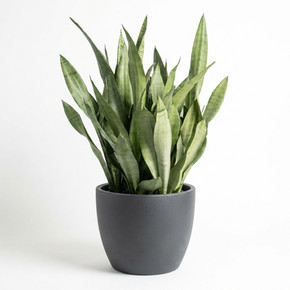
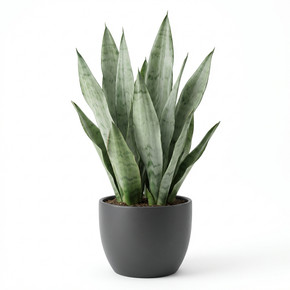


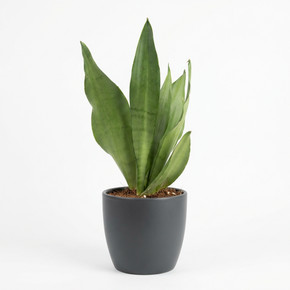
Bring effortless style to any room with the Snake Plant. Its bold, upright leaves and yellow-edged pattern add an instant modern look, while its tough nature means it stays beautiful even if you forget a watering. Ideal for desks, reception areas, and busy homes—this is the dependable indoor plant you can’t go wrong with.
Common Name: Snake Plant 'Laurentii'
Botanical Name: Dracaena trifasciata 'Laurentii'
Former Name: Sansevieria trifasciata 'Laurentii'
Plant Type: Foliage houseplant (Succulent)
Plant Code / SKU: PLT-0423
Alternative Names:
Mother-in-law's tongue 'Laurentii'
Devil's tongue
Saint George's sword
Snake plant
Arabic: جلد النمر
Order: Asparagales
Family: Asparagaceae
Genus: Dracaena (formerly Sansevieria)
Native to tropical West Africa, from Nigeria to the Democratic Republic of the Congo.
Widely cultivated and naturalized in tropical and subtropical regions worldwide as an ornamental houseplant.
Leaves: Erect, stiff, sword-shaped with a dark green center and yellow margins on 'Laurentii'.
Texture: Succulent, smooth, glossy.
Growth pattern: Forms upright rosettes arising from underground rhizomes.
Color: Variegated green and yellow.
Height: 60–120 cm (24–48 in); occasionally up to 150 cm outdoors.
Spread: 30–60 cm (12–24 in) wide.
Leaf length: 30–90 cm (12–35 in).
Leaf thickness: Approximately 2–3 cm (0.8–1.2 in).
Prefers bright, indirect light.
Tolerates low light but growth slows and variegation may fade.
Avoid direct midday sun to prevent leaf scorch.
Allow the top 2–3 cm (0.8–1.2 in) of soil to dry out between waterings.
Water sparingly; reduce frequency in winter.
Overwatering can lead to root rot.
Use a well-draining potting mix (cactus/succulent mix or peat-based with perlite).
Ensure pots have drainage holes.
pH: Slightly acidic to neutral (6.0–7.0).
Optimal temperature: 18–29 °C (65–85 °F).
Minimum: ~10 °C (50 °F); sensitive to frost.
Humidity: Average indoor humidity; avoid overly humid conditions.
Feed monthly during spring and summer with a balanced, water-soluble fertilizer diluted to half strength.
Do not fertilize in winter.
Care level: Very easy to moderate.
Low maintenance: Wipe leaves occasionally to remove dust.
Repot every 2–3 years or when root-bound.
Growth rate: Slow to moderate.
Propagation: Division of rhizomes; leaf cuttings in soil or water.
New divisions establish in 4–6 weeks under optimal conditions.
Root rot from overwatering.
Leaf tip browning due to underwatering, fluoride in water, or low humidity.
Pests: Mealybugs, spider mites, scale insects.
Variegation loss in low light conditions.
Air-purifying: Effective at removing formaldehyde, benzene, and trichloroethylene.
Decorative accent in homes, offices, and receptions.
Low-maintenance plant suitable for beginners and busy environments.
Contains insoluble calcium oxalates (saponins); mildly toxic if ingested.
Can cause gastrointestinal upset in pets (cats, dogs) and humans.
Keep out of reach of children and animals.
Bring effortless style to any room with the Snake Plant. Its bold, upright leaves and yellow-edged pattern add an instant modern look, while its tough nature means it stays beautiful even if you forget a watering. Ideal for desks, reception areas, and busy homes—this is the dependable indoor plant you can’t go wrong with.
Common Name: Snake Plant 'Laurentii'
Botanical Name: Dracaena trifasciata 'Laurentii'
Former Name: Sansevieria trifasciata 'Laurentii'
Plant Type: Foliage houseplant (Succulent)
Plant Code / SKU: PLT-0423
Alternative Names:
Mother-in-law's tongue 'Laurentii'
Devil's tongue
Saint George's sword
Snake plant
Arabic: جلد النمر
Order: Asparagales
Family: Asparagaceae
Genus: Dracaena (formerly Sansevieria)
Native to tropical West Africa, from Nigeria to the Democratic Republic of the Congo.
Widely cultivated and naturalized in tropical and subtropical regions worldwide as an ornamental houseplant.
Leaves: Erect, stiff, sword-shaped with a dark green center and yellow margins on 'Laurentii'.
Texture: Succulent, smooth, glossy.
Growth pattern: Forms upright rosettes arising from underground rhizomes.
Color: Variegated green and yellow.
Height: 60–120 cm (24–48 in); occasionally up to 150 cm outdoors.
Spread: 30–60 cm (12–24 in) wide.
Leaf length: 30–90 cm (12–35 in).
Leaf thickness: Approximately 2–3 cm (0.8–1.2 in).
Prefers bright, indirect light.
Tolerates low light but growth slows and variegation may fade.
Avoid direct midday sun to prevent leaf scorch.
Allow the top 2–3 cm (0.8–1.2 in) of soil to dry out between waterings.
Water sparingly; reduce frequency in winter.
Overwatering can lead to root rot.
Use a well-draining potting mix (cactus/succulent mix or peat-based with perlite).
Ensure pots have drainage holes.
pH: Slightly acidic to neutral (6.0–7.0).
Optimal temperature: 18–29 °C (65–85 °F).
Minimum: ~10 °C (50 °F); sensitive to frost.
Humidity: Average indoor humidity; avoid overly humid conditions.
Feed monthly during spring and summer with a balanced, water-soluble fertilizer diluted to half strength.
Do not fertilize in winter.
Care level: Very easy to moderate.
Low maintenance: Wipe leaves occasionally to remove dust.
Repot every 2–3 years or when root-bound.
Growth rate: Slow to moderate.
Propagation: Division of rhizomes; leaf cuttings in soil or water.
New divisions establish in 4–6 weeks under optimal conditions.
Root rot from overwatering.
Leaf tip browning due to underwatering, fluoride in water, or low humidity.
Pests: Mealybugs, spider mites, scale insects.
Variegation loss in low light conditions.
Air-purifying: Effective at removing formaldehyde, benzene, and trichloroethylene.
Decorative accent in homes, offices, and receptions.
Low-maintenance plant suitable for beginners and busy environments.
Contains insoluble calcium oxalates (saponins); mildly toxic if ingested.
Can cause gastrointestinal upset in pets (cats, dogs) and humans.
Keep out of reach of children and animals.





Take 20% off your first order
Enter the code below at checkout to get 20% off your first order