


Piperaceae
Peperomia obtusifolia
Bring effortless greenery to your space with Peperomia obtusifolia. Its thick, glossy leaves look polished all year, while its compact size fits neatly on desks, side tables, and reception counters. With simple watering and indirect light, it stays lush and tidy—an ideal gift and a reliable choice for busy plant owners.
1. Basic Identification
Common Name: Baby Rubber Plant / Pepper Face
Botanical Name: Peperomia obtusifolia
Family: Piperaceae
Arabic Name: ببروميا
2. Taxonomy & Classification
Kingdom: Plantae; Clade: Angiosperms; Order: Piperales; Family: Piperaceae; Genus: Peperomia; Species: P. obtusifolia.
3. Origin & Distribution
Native to Florida, Mexico, and the Caribbean. It is typically found growing as an understory epiphyte in tropical and subtropical forest settings.
4. Visual Characteristics
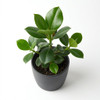
This plant is characterized by its thick, leathery, spoon-shaped leaves that are deep glossy green. Its sturdy, succulent-like stems grow upright and eventually trail slightly as they mature.
5. Size & Dimensions
Peperomia obtusifolia usually reaches a height and spread of 10 to 12 inches (25–30 cm), making it a compact and bushy houseplant.
6. Light Requirements
Prefers medium to bright indirect light. It can tolerate lower light levels, though growth may become "leggy." Avoid direct midday sun, which can scorch the foliage.
7. Watering Needs
Allow the top 50-75% of the soil to dry out before watering. Its thick leaves store water, making it more drought-tolerant than other tropicals but susceptible to root rot if overwatered.
8. Soil & Potting
Requires a well-draining potting medium. A mixture containing peat moss, perlite, or orchid bark is ideal. Cactus and succulent mixes also work well.
9. Temperature & Humidity
Thrives in temperatures between 18°C and 27°C (65°F–80°F). While it appreciates higher humidity, it adapts easily to typical indoor humidity levels.
10. Fertilization
Apply a balanced liquid fertilizer at half strength once a month during the active growing season (spring and summer). No fertilizer is needed in winter.
11. Maintenance & Care Level
Low maintenance and easy care. Occasional pruning helps maintain a compact shape, and wiping the leaves with a damp cloth keeps them dust-free and shiny.
12. Growth & Propagation
Has a moderate growth rate. It is easily propagated through stem cuttings or leaf cuttings placed in water or directly into moist soil.
13. Common Problems
The most common issue is root rot caused by overwatering. It is generally pest-resistant but can occasionally be affected by mealybugs or spider mites.
14. Benefits & Uses
Known for its air-purifying capabilities, specifically removing toxins like formaldehyde. Its small footprint makes it excellent for office desks, bookshelves, and tabletop decor.
15. Toxicity & Safety
Non-toxic to humans, cats, and dogs, making it a safe choice for pet-friendly and child-friendly environments.
Peperomia obtusifolia

Bring effortless greenery to your space with Peperomia obtusifolia. Its thick, glossy leaves look polished all year, while its compact size fits neatly on desks, side tables, and reception counters. With simple watering and indirect light, it stays lush and tidy—an ideal gift and a reliable choice for busy plant owners.
1. Basic Identification
Common Name: Baby Rubber Plant / Pepper Face
Botanical Name: Peperomia obtusifolia
Family: Piperaceae
Arabic Name: ببروميا
2. Taxonomy & Classification
Kingdom: Plantae; Clade: Angiosperms; Order: Piperales; Family: Piperaceae; Genus: Peperomia; Species: P. obtusifolia.
3. Origin & Distribution
Native to Florida, Mexico, and the Caribbean. It is typically found growing as an understory epiphyte in tropical and subtropical forest settings.
4. Visual Characteristics
This plant is characterized by its thick, leathery, spoon-shaped leaves that are deep glossy green. Its sturdy, succulent-like stems grow upright and eventually trail slightly as they mature.
5. Size & Dimensions
Peperomia obtusifolia usually reaches a height and spread of 10 to 12 inches (25–30 cm), making it a compact and bushy houseplant.
6. Light Requirements
Prefers medium to bright indirect light. It can tolerate lower light levels, though growth may become "leggy." Avoid direct midday sun, which can scorch the foliage.
7. Watering Needs
Allow the top 50-75% of the soil to dry out before watering. Its thick leaves store water, making it more drought-tolerant than other tropicals but susceptible to root rot if overwatered.
8. Soil & Potting
Requires a well-draining potting medium. A mixture containing peat moss, perlite, or orchid bark is ideal. Cactus and succulent mixes also work well.
9. Temperature & Humidity
Thrives in temperatures between 18°C and 27°C (65°F–80°F). While it appreciates higher humidity, it adapts easily to typical indoor humidity levels.
10. Fertilization
Apply a balanced liquid fertilizer at half strength once a month during the active growing season (spring and summer). No fertilizer is needed in winter.
11. Maintenance & Care Level
Low maintenance and easy care. Occasional pruning helps maintain a compact shape, and wiping the leaves with a damp cloth keeps them dust-free and shiny.
12. Growth & Propagation
Has a moderate growth rate. It is easily propagated through stem cuttings or leaf cuttings placed in water or directly into moist soil.
13. Common Problems
The most common issue is root rot caused by overwatering. It is generally pest-resistant but can occasionally be affected by mealybugs or spider mites.
14. Benefits & Uses
Known for its air-purifying capabilities, specifically removing toxins like formaldehyde. Its small footprint makes it excellent for office desks, bookshelves, and tabletop decor.
15. Toxicity & Safety
Non-toxic to humans, cats, and dogs, making it a safe choice for pet-friendly and child-friendly environments.