

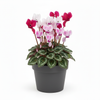





Bring elegance and color to your home with the exquisite Persian Cyclamen. With its gracefully swept-back petals that resemble butterflies in flight and beautifully patterned leaves, this plant is a true showstopper. It's the perfect remedy for the winter blues, blooming profusely when little else does. Ideal as a sophisticated centerpiece, a desk companion, or a heartfelt gift, the Cyclamen promises months of beauty. Order yours today and transform your space with its vibrant, living art!
Common Name: Persian Cyclamen, Florist's Cyclamen
Botanical Name: Cyclamen persicum
Arabic Name: بخور مريم
Variety: Standard
Color: Multicolor
Country of Origin: Netherlands
Kingdom: Plantae
Order: Ericales
Family: Primulaceae
Genus: Cyclamen
Species: Cyclamen persicum
Cyclamen persicum is native to the rocky hillsides, shrublands, and woodland openings of the eastern Mediterranean region, including parts of North Africa, Western Asia (such as Turkey and Palestine), and Southern Europe (Greece and Cyprus).
This plant is known for its heart-shaped or kidney-shaped leaves, which often feature intricate silver or white marbled patterns on a dark green base. The flowers are distinctive for their reflexed petals that grow upward, appearing like butterflies. They come in a variety of shades including white, pink, red, and lavender, often with a darker "eye" at the center.
The Persian Cyclamen typically reaches a height of 6 to 12 inches (15–30 cm) and a similar spread of about 6 to 12 inches, making it a compact choice for indoor surfaces.
Prefers bright, indirect light. During its blooming period in winter, it can tolerate some cool morning sun, but direct, hot afternoon sunlight should be avoided as it can cause the foliage to wilt and the flowers to fade prematurely.
Requires careful watering. It is best to water from the bottom by placing the pot in a tray of water for 15-20 minutes to avoid getting water on the central crown, which can cause rot. Keep the soil consistently moist but never waterlogged. Allow the top inch of soil to dry slightly before the next watering.
Needs a well-draining potting mix, ideally peat-based with some perlite or sand to ensure aeration. A slightly acidic soil pH is preferred for optimal nutrient uptake.
Thrives in cool temperatures, ideally between 50°F and 65°F (10°C to 18°C). High temperatures will trigger the plant to go into dormancy early. It appreciates moderate to high humidity; place the pot on a pebble tray to increase local moisture, but do not mist the plant directly.
Apply a balanced liquid fertilizer diluted to half-strength every two weeks while the plant is actively growing and flowering. Stop fertilizing once the plant stops blooming and enters its dormant phase in the summer.
Care Level: Moderate. Maintenance involves "deadheading" spent flowers and yellowing leaves by pulling the stems sharply from the base (rather than cutting them) to prevent stem rot and encourage more blooms.
Persian Cyclamen grows from a round tuber. Propagation is primarily done through seeds, though it is a slow process. Tubers can also be divided during their dormant summer period, provided each section has a growth bud.
Prone to crown rot if overwatered or if water sits on the tuber. It may also be affected by cyclamen mites, spider mites, or aphids. Yellowing leaves are common if the environment is too warm or if the plant is moving into its natural summer dormancy.
Primarily used as an ornamental indoor plant for its striking winter blooms and decorative foliage. It is a popular choice for home decor, office desks, and as a seasonal gift during the cooler months.
Toxic to humans and pets (cats and dogs). The plant contains cyclamine, which is especially concentrated in the tubers. Ingestion can cause drooling, vomiting, diarrhea, and in large quantities, more severe cardiac issues or seizures.
Bring elegance and color to your home with the exquisite Persian Cyclamen. With its gracefully swept-back petals that resemble butterflies in flight and beautifully patterned leaves, this plant is a true showstopper. It's the perfect remedy for the winter blues, blooming profusely when little else does. Ideal as a sophisticated centerpiece, a desk companion, or a heartfelt gift, the Cyclamen promises months of beauty. Order yours today and transform your space with its vibrant, living art!
Common Name: Persian Cyclamen, Florist's Cyclamen
Botanical Name: Cyclamen persicum
Arabic Name: بخور مريم
Variety: Standard
Color: Multicolor
Country of Origin: Netherlands
Kingdom: Plantae
Order: Ericales
Family: Primulaceae
Genus: Cyclamen
Species: Cyclamen persicum
Cyclamen persicum is native to the rocky hillsides, shrublands, and woodland openings of the eastern Mediterranean region, including parts of North Africa, Western Asia (such as Turkey and Palestine), and Southern Europe (Greece and Cyprus).
This plant is known for its heart-shaped or kidney-shaped leaves, which often feature intricate silver or white marbled patterns on a dark green base. The flowers are distinctive for their reflexed petals that grow upward, appearing like butterflies. They come in a variety of shades including white, pink, red, and lavender, often with a darker "eye" at the center.
The Persian Cyclamen typically reaches a height of 6 to 12 inches (15–30 cm) and a similar spread of about 6 to 12 inches, making it a compact choice for indoor surfaces.
Prefers bright, indirect light. During its blooming period in winter, it can tolerate some cool morning sun, but direct, hot afternoon sunlight should be avoided as it can cause the foliage to wilt and the flowers to fade prematurely.
Requires careful watering. It is best to water from the bottom by placing the pot in a tray of water for 15-20 minutes to avoid getting water on the central crown, which can cause rot. Keep the soil consistently moist but never waterlogged. Allow the top inch of soil to dry slightly before the next watering.
Needs a well-draining potting mix, ideally peat-based with some perlite or sand to ensure aeration. A slightly acidic soil pH is preferred for optimal nutrient uptake.
Thrives in cool temperatures, ideally between 50°F and 65°F (10°C to 18°C). High temperatures will trigger the plant to go into dormancy early. It appreciates moderate to high humidity; place the pot on a pebble tray to increase local moisture, but do not mist the plant directly.
Apply a balanced liquid fertilizer diluted to half-strength every two weeks while the plant is actively growing and flowering. Stop fertilizing once the plant stops blooming and enters its dormant phase in the summer.
Care Level: Moderate. Maintenance involves "deadheading" spent flowers and yellowing leaves by pulling the stems sharply from the base (rather than cutting them) to prevent stem rot and encourage more blooms.
Persian Cyclamen grows from a round tuber. Propagation is primarily done through seeds, though it is a slow process. Tubers can also be divided during their dormant summer period, provided each section has a growth bud.
Prone to crown rot if overwatered or if water sits on the tuber. It may also be affected by cyclamen mites, spider mites, or aphids. Yellowing leaves are common if the environment is too warm or if the plant is moving into its natural summer dormancy.
Primarily used as an ornamental indoor plant for its striking winter blooms and decorative foliage. It is a popular choice for home decor, office desks, and as a seasonal gift during the cooler months.
Toxic to humans and pets (cats and dogs). The plant contains cyclamine, which is especially concentrated in the tubers. Ingestion can cause drooling, vomiting, diarrhea, and in large quantities, more severe cardiac issues or seizures.


Take 20% off your first order
Enter the code below at checkout to get 20% off your first order