


Petunia
Transform your garden into a riot of color with our premium Petunia plants! Famous for their breathtaking, trumpet-shaped blooms and non-stop flowering performance, Petunias are the ultimate choice for stunning hanging baskets, vibrant window boxes, and colorful garden beds. Easy to grow and available in a rainbow of shades, they bring effortless beauty to any sunny spot. Order yours today and get ready for a summer-long spectacle!
1. Basic Identification
Common Name: Petunia
Botanical Name: Petunia × atkinsiana
Arabic Name: بتونيا
Variant: Standard
Color: Multicolor
Country of Origin: Netherlands
Stems: Not available
Family: Solanaceae
2. Taxonomy & Classification
Kingdom: Plantae
Clade: Angiosperms
Clade: Eudicots
Clade: Asterids
Order: Solanales
Family: Solanaceae
Genus: Petunia
Species: Petunia × atkinsiana (Hybrid species)
3. Origin & Distribution
Petunias are native to South America. The modern garden petunia is a hybrid species (Petunia × atkinsiana) developed from crosses between Petunia axillaris and Petunia integrifolia. They have since become one of the most popular ornamental plants distributed worldwide.
4. Visual Characteristics
Petunias are known for their funnel-shaped or trumpet-shaped flowers that come in a vast array of colors, patterns, and textures. The foliage is typically light to dark green, hairy, and somewhat sticky to the touch. Growth habits range from mounding to trailing.
5. Size & Dimensions
Height: 6 to 18 inches (15–45 cm)
Spread: 18 inches to 4 feet (45–120 cm) depending on the variety, with trailing types covering significantly more ground or spilling over containers.
6. Light Requirements
Petunias require full sun for optimal blooming, ideally receiving at least 6 to 8 hours of direct sunlight daily. While they can grow in partial shade, they will produce fewer flowers and may become leggy.
7. Watering Needs
These plants prefer consistent moisture. Soil should be kept moist but well-drained. During hot summer months, container-grown petunias may require daily watering. Avoid watering the foliage directly to prevent fungal issues.
8. Soil & Potting
Petunias thrive in light, fertile, and well-draining soil. A standard high-quality commercial potting mix is ideal for containers. They prefer a slightly acidic to neutral soil pH (6.0 to 7.0).
9. Temperature & Humidity
They prefer temperatures between 60°F and 75°F (15-24°C) but can tolerate temperatures up to 90°F (32°C) if watered properly. They are frost-sensitive and are typically treated as annuals in temperate climates. High humidity can sometimes encourage fungal diseases like gray mold.
10. Fertilization
Petunias are heavy feeders. It is recommended to apply a balanced, water-soluble fertilizer every 1 to 2 weeks during the growing season to support continuous and vigorous flowering.
11. Maintenance & Care Level
Care Level: Easy. Maintenance includes regular deadheading (removing spent blooms) to encourage the plant to produce more flowers. Leggy plants can be trimmed back mid-season to stimulate new, bushier growth.
12. Growth & Propagation
They are fast-growing plants. Propagation is most commonly achieved through seeds, though many modern hybrids are also propagated via soft-wood cuttings to ensure true-to-type traits.
13. Common Problems
Common pests include aphids, slugs, and whiteflies. They are also susceptible to tobacco mosaic virus, powdery mildew, and root rot if the soil is allowed to remain waterlogged or if there is poor air circulation.
14. Benefits & Uses
Primarily used for ornamental purposes in garden beds, borders, window boxes, and hanging baskets. They are excellent for attracting pollinators such as bees, butterflies, and hummingbirds to the garden.
15. Toxicity & Safety
Petunias are non-toxic to humans and are categorized as non-toxic to dogs, cats, and horses by the ASPCA, making them a safe choice for households with pets and children.

Petunia
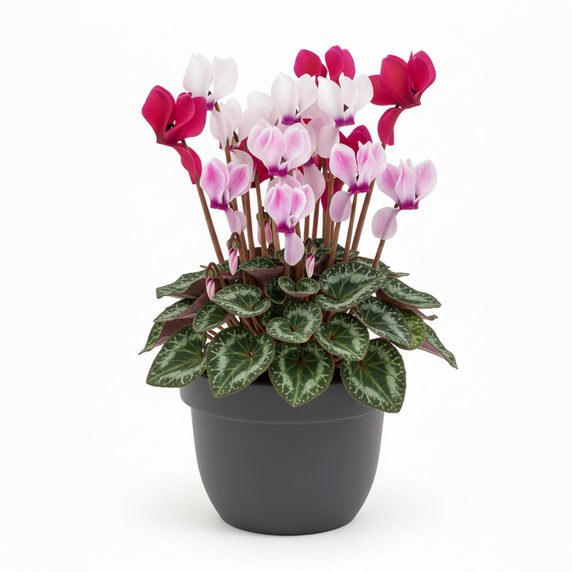
Transform your garden into a riot of color with our premium Petunia plants! Famous for their breathtaking, trumpet-shaped blooms and non-stop flowering performance, Petunias are the ultimate choice for stunning hanging baskets, vibrant window boxes, and colorful garden beds. Easy to grow and available in a rainbow of shades, they bring effortless beauty to any sunny spot. Order yours today and get ready for a summer-long spectacle!
1. Basic Identification
Common Name: Petunia
Botanical Name: Petunia × atkinsiana
Arabic Name: بتونيا
Variant: Standard
Color: Multicolor
Country of Origin: Netherlands
Stems: Not available
Family: Solanaceae
2. Taxonomy & Classification
Kingdom: Plantae
Clade: Angiosperms
Clade: Eudicots
Clade: Asterids
Order: Solanales
Family: Solanaceae
Genus: Petunia
Species: Petunia × atkinsiana (Hybrid species)
3. Origin & Distribution
Petunias are native to South America. The modern garden petunia is a hybrid species (Petunia × atkinsiana) developed from crosses between Petunia axillaris and Petunia integrifolia. They have since become one of the most popular ornamental plants distributed worldwide.
4. Visual Characteristics
Petunias are known for their funnel-shaped or trumpet-shaped flowers that come in a vast array of colors, patterns, and textures. The foliage is typically light to dark green, hairy, and somewhat sticky to the touch. Growth habits range from mounding to trailing.
5. Size & Dimensions
Height: 6 to 18 inches (15–45 cm)
Spread: 18 inches to 4 feet (45–120 cm) depending on the variety, with trailing types covering significantly more ground or spilling over containers.
6. Light Requirements
Petunias require full sun for optimal blooming, ideally receiving at least 6 to 8 hours of direct sunlight daily. While they can grow in partial shade, they will produce fewer flowers and may become leggy.
7. Watering Needs
These plants prefer consistent moisture. Soil should be kept moist but well-drained. During hot summer months, container-grown petunias may require daily watering. Avoid watering the foliage directly to prevent fungal issues.
8. Soil & Potting
Petunias thrive in light, fertile, and well-draining soil. A standard high-quality commercial potting mix is ideal for containers. They prefer a slightly acidic to neutral soil pH (6.0 to 7.0).
9. Temperature & Humidity
They prefer temperatures between 60°F and 75°F (15-24°C) but can tolerate temperatures up to 90°F (32°C) if watered properly. They are frost-sensitive and are typically treated as annuals in temperate climates. High humidity can sometimes encourage fungal diseases like gray mold.
10. Fertilization
Petunias are heavy feeders. It is recommended to apply a balanced, water-soluble fertilizer every 1 to 2 weeks during the growing season to support continuous and vigorous flowering.
11. Maintenance & Care Level
Care Level: Easy. Maintenance includes regular deadheading (removing spent blooms) to encourage the plant to produce more flowers. Leggy plants can be trimmed back mid-season to stimulate new, bushier growth.
12. Growth & Propagation
They are fast-growing plants. Propagation is most commonly achieved through seeds, though many modern hybrids are also propagated via soft-wood cuttings to ensure true-to-type traits.
13. Common Problems
Common pests include aphids, slugs, and whiteflies. They are also susceptible to tobacco mosaic virus, powdery mildew, and root rot if the soil is allowed to remain waterlogged or if there is poor air circulation.
14. Benefits & Uses
Primarily used for ornamental purposes in garden beds, borders, window boxes, and hanging baskets. They are excellent for attracting pollinators such as bees, butterflies, and hummingbirds to the garden.
15. Toxicity & Safety
Petunias are non-toxic to humans and are categorized as non-toxic to dogs, cats, and horses by the ASPCA, making them a safe choice for households with pets and children.