


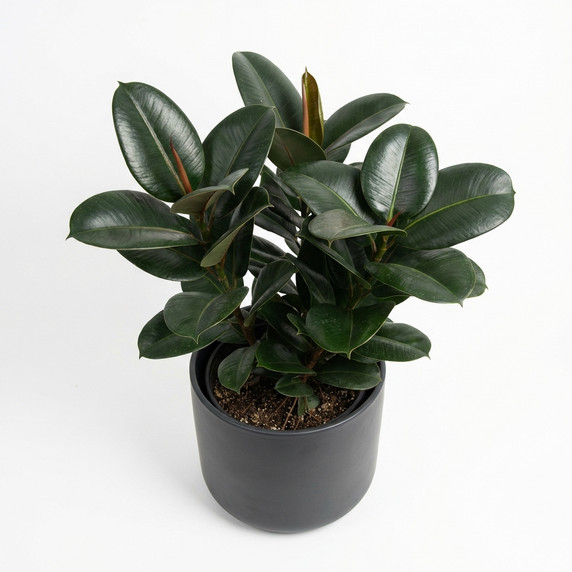
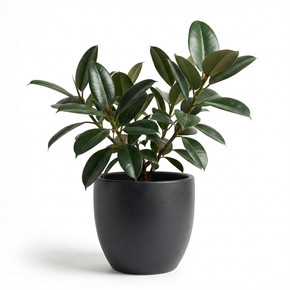


Bring instant premium greenery into your space with the Rubber Plant. Its bold, glossy leaves and upright silhouette make it a standout floor plant for receptions, living rooms, and modern offices. Easy to maintain with simple “water-when-dry” care, Ficus elastica rewards you with steady growth and a clean, polished look all year—an effortless upgrade for any interior.
Common Name: Rubber Plant
Botanical Name: Ficus elastica
Plant Variant: Standard
Plant Color: Natural
Plant Country: Unknown
SKU: PLT-0444
Arabic Name: فيكس مطاط
Stems: 2
Family: Moraceae
Order: Rosales
Family: Moraceae
Genus: Ficus
Native to eastern regions of the Indian subcontinent (India, Nepal, Bhutan) and Southeast Asia (Myanmar, Malaysia, Indonesia) extending to southern China. Widely cultivated worldwide as an ornamental indoor and outdoor plant.
Leaves: Broad, glossy, elliptical, 15–30 cm long, deep green; new leaves emerge lighter and unfold from a reddish sheath.
Stems: Upright, woody stems often producing aerial roots; smooth gray-brown bark.
Form: Upright shrub or small tree with a dense crown of foliage.
Texture: Leathery leaves with a polished appearance.
Indoor height: Typically 1.5–2.5 m; spread: 0.6–1 m.
Leaf dimensions: 15–30 cm long, 10–15 cm wide.
Pot size: Recommended 25–30 cm diameter for mature specimens.
Prefers bright, indirect light; tolerates moderate light; avoid direct midday sun which can scorch leaves; insufficient light leads to leggy growth and smaller leaves.
Allow top 2–3 cm of soil to dry between waterings; water thoroughly until excess drains; avoid waterlogged conditions; reduce frequency in winter when growth slows.
Well-draining mix: peat-based potting soil with perlite or coarse sand; pH 6.0–7.0.
Repot every 2–3 years or when rootbound, preferably in spring.
Optimal temperature: 18–24 °C (65–75 °F); minimum 15 °C (59 °F).
Humidity: Prefers moderate to high humidity (40–60%); leaf misting or humidity tray beneficial in dry environments.
Feed with balanced liquid houseplant fertilizer (e.g., 10-10-10 NPK) every 4–6 weeks during spring and summer; suspend feeding in fall and winter.
Care level: Easy.
Maintenance: Wipe leaves periodically to remove dust; prune to control shape and remove dead foliage; support tall specimens with stakes if necessary.
Growth rate: Moderate to fast (up to 30 cm per year under ideal conditions).
Propagation: Stem cuttings in water or soil; remove 10–15 cm tip cutting with at least two nodes; root in moist medium with bottom heat.
Overwatering: Yellowing leaves, root rot.
Underwatering: Browning leaf edges, leaf drop.
Low humidity: Brown leaf tips.
Pests: Mealybugs, scale, spider mites; treat with insecticidal soap or neem oil.
Improves indoor air quality by removing VOCs; adds tropical aesthetic; suitable as floor specimen in offices, lobbies, living spaces; low-allergen ornamental.
All parts contain latex and ficin, toxic if ingested by pets and humans; can cause skin irritation; keep out of reach of children and pets.
Bring instant premium greenery into your space with the Rubber Plant. Its bold, glossy leaves and upright silhouette make it a standout floor plant for receptions, living rooms, and modern offices. Easy to maintain with simple “water-when-dry” care, Ficus elastica rewards you with steady growth and a clean, polished look all year—an effortless upgrade for any interior.
Common Name: Rubber Plant
Botanical Name: Ficus elastica
Plant Variant: Standard
Plant Color: Natural
Plant Country: Unknown
SKU: PLT-0444
Arabic Name: فيكس مطاط
Stems: 2
Family: Moraceae
Order: Rosales
Family: Moraceae
Genus: Ficus
Native to eastern regions of the Indian subcontinent (India, Nepal, Bhutan) and Southeast Asia (Myanmar, Malaysia, Indonesia) extending to southern China. Widely cultivated worldwide as an ornamental indoor and outdoor plant.
Leaves: Broad, glossy, elliptical, 15–30 cm long, deep green; new leaves emerge lighter and unfold from a reddish sheath.
Stems: Upright, woody stems often producing aerial roots; smooth gray-brown bark.
Form: Upright shrub or small tree with a dense crown of foliage.
Texture: Leathery leaves with a polished appearance.
Indoor height: Typically 1.5–2.5 m; spread: 0.6–1 m.
Leaf dimensions: 15–30 cm long, 10–15 cm wide.
Pot size: Recommended 25–30 cm diameter for mature specimens.
Prefers bright, indirect light; tolerates moderate light; avoid direct midday sun which can scorch leaves; insufficient light leads to leggy growth and smaller leaves.
Allow top 2–3 cm of soil to dry between waterings; water thoroughly until excess drains; avoid waterlogged conditions; reduce frequency in winter when growth slows.
Well-draining mix: peat-based potting soil with perlite or coarse sand; pH 6.0–7.0.
Repot every 2–3 years or when rootbound, preferably in spring.
Optimal temperature: 18–24 °C (65–75 °F); minimum 15 °C (59 °F).
Humidity: Prefers moderate to high humidity (40–60%); leaf misting or humidity tray beneficial in dry environments.
Feed with balanced liquid houseplant fertilizer (e.g., 10-10-10 NPK) every 4–6 weeks during spring and summer; suspend feeding in fall and winter.
Care level: Easy.
Maintenance: Wipe leaves periodically to remove dust; prune to control shape and remove dead foliage; support tall specimens with stakes if necessary.
Growth rate: Moderate to fast (up to 30 cm per year under ideal conditions).
Propagation: Stem cuttings in water or soil; remove 10–15 cm tip cutting with at least two nodes; root in moist medium with bottom heat.
Overwatering: Yellowing leaves, root rot.
Underwatering: Browning leaf edges, leaf drop.
Low humidity: Brown leaf tips.
Pests: Mealybugs, scale, spider mites; treat with insecticidal soap or neem oil.
Improves indoor air quality by removing VOCs; adds tropical aesthetic; suitable as floor specimen in offices, lobbies, living spaces; low-allergen ornamental.
All parts contain latex and ficin, toxic if ingested by pets and humans; can cause skin irritation; keep out of reach of children and pets.







Take 20% off your first order
Enter the code below at checkout to get 20% off your first order