

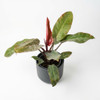





Philodendron Erubescens 'Pink Princess' is a true royalty of the indoor plant world. Famous for its striking deep burgundy leaves and contrasting splashes of bright bubblegum pink, this rare aroid is a spectacular statement piece for any collection. Each leaf is unique, offering a different pattern of variegation that makes every plant a one-of-a-kind living work of art, perfect for adding a touch of exotic luxury to your home.
Common Name: Pink Princess Philodendron
Botanical Name: Philodendron erubescens 'Pink Princess'
Arabic Name: فيلوديندرون "برينسس بينك"
Plant Variant: Pink Princess
Plant Color: Pink, Green, and Dark Burgundy
Plant Country: Colombia
Stems: Vining/Climbing
Family: Araceae
Location: Indoor
Philodendron 'Pink Princess' is a cultivar of the species Philodendron erubescens. It belongs to the family Araceae, commonly known as aroids. This genus is characterized by its diverse growth habits and impressive foliage, categorized under the order Alismatales.
The parent species, Philodendron erubescens, is native to the tropical rainforests of Colombia in South America. The 'Pink Princess' cultivar was developed through selective breeding to stabilize its unique pink variegation, making it a highly sought-after plant worldwide.
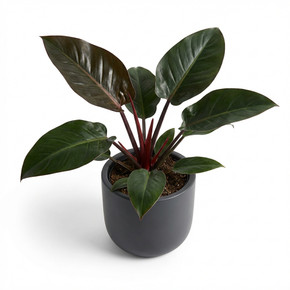
This plant features glossy, heart-shaped leaves that emerge in shades of dark green, maroon, or deep burgundy. The most striking feature is the high-contrast pink variegation, which appears as splashes, flecks, or even half-moon sectors on the foliage. The stems are typically dark red or purplish.
Indoors, the Pink Princess can grow to a height of 2 to 4 feet when provided with a support such as a moss pole. Individual leaves can grow between 8 to 12 inches in length as the plant matures.
Requires bright, indirect light to maintain its vibrant variegation. While it can tolerate lower light, the pink portions may fade or the plant may produce entirely green leaves. Avoid direct sunlight, which can burn the delicate pink patches.
Water when the top 1–2 inches of soil feel dry to the touch. It prefers consistent moisture but is sensitive to overwatering. Ensure the pot has excellent drainage to prevent root rot.
A well-draining, chunky aroid mix is ideal. A combination of orchid bark, perlite, peat moss (or coco coir), and horticultural charcoal provides the aeration and drainage necessary for healthy root growth.
Thrives in temperatures between 65°F and 80°F (18°C–27°C). As a tropical plant, it enjoys high humidity levels (60% or higher); use a humidifier or pebble tray in drier environments.
Feed with a balanced, water-soluble liquid fertilizer once a month during the growing season (spring and summer). Reduce or stop fertilization during the fall and winter months.
Moderate. While it is not overly finicky, its variegation levels and climbing habit require attention. Regular wiping of the leaves to remove dust and providing a climbing support are recommended for optimal growth.
This is a climbing plant that grows at a moderate pace. It can be easily propagated through stem cuttings. Ensure each cutting has at least one node and one or two leaves; these can be rooted in water or moist sphagnum moss.
Common issues include "reversion," where the plant loses its pink color due to low light. It is also susceptible to common pests like spider mites, mealybugs, and fungus gnats, as well as root rot if the soil remains too wet.
Beyond its immense aesthetic appeal as a collector's item, it serves as an excellent air-purifying plant, removing common household toxins. It is a perfect focal point for interior design and office spaces.
Like most aroids, it contains insoluble calcium oxalate crystals. It is toxic to humans, cats, and dogs if ingested, causing mouth irritation, swelling, and digestive upset.
Philodendron Erubescens 'Pink Princess' is a true royalty of the indoor plant world. Famous for its striking deep burgundy leaves and contrasting splashes of bright bubblegum pink, this rare aroid is a spectacular statement piece for any collection. Each leaf is unique, offering a different pattern of variegation that makes every plant a one-of-a-kind living work of art, perfect for adding a touch of exotic luxury to your home.
Common Name: Pink Princess Philodendron
Botanical Name: Philodendron erubescens 'Pink Princess'
Arabic Name: فيلوديندرون "برينسس بينك"
Plant Variant: Pink Princess
Plant Color: Pink, Green, and Dark Burgundy
Plant Country: Colombia
Stems: Vining/Climbing
Family: Araceae
Location: Indoor
Philodendron 'Pink Princess' is a cultivar of the species Philodendron erubescens. It belongs to the family Araceae, commonly known as aroids. This genus is characterized by its diverse growth habits and impressive foliage, categorized under the order Alismatales.
The parent species, Philodendron erubescens, is native to the tropical rainforests of Colombia in South America. The 'Pink Princess' cultivar was developed through selective breeding to stabilize its unique pink variegation, making it a highly sought-after plant worldwide.
This plant features glossy, heart-shaped leaves that emerge in shades of dark green, maroon, or deep burgundy. The most striking feature is the high-contrast pink variegation, which appears as splashes, flecks, or even half-moon sectors on the foliage. The stems are typically dark red or purplish.
Indoors, the Pink Princess can grow to a height of 2 to 4 feet when provided with a support such as a moss pole. Individual leaves can grow between 8 to 12 inches in length as the plant matures.
Requires bright, indirect light to maintain its vibrant variegation. While it can tolerate lower light, the pink portions may fade or the plant may produce entirely green leaves. Avoid direct sunlight, which can burn the delicate pink patches.
Water when the top 1–2 inches of soil feel dry to the touch. It prefers consistent moisture but is sensitive to overwatering. Ensure the pot has excellent drainage to prevent root rot.
A well-draining, chunky aroid mix is ideal. A combination of orchid bark, perlite, peat moss (or coco coir), and horticultural charcoal provides the aeration and drainage necessary for healthy root growth.
Thrives in temperatures between 65°F and 80°F (18°C–27°C). As a tropical plant, it enjoys high humidity levels (60% or higher); use a humidifier or pebble tray in drier environments.
Feed with a balanced, water-soluble liquid fertilizer once a month during the growing season (spring and summer). Reduce or stop fertilization during the fall and winter months.
Moderate. While it is not overly finicky, its variegation levels and climbing habit require attention. Regular wiping of the leaves to remove dust and providing a climbing support are recommended for optimal growth.
This is a climbing plant that grows at a moderate pace. It can be easily propagated through stem cuttings. Ensure each cutting has at least one node and one or two leaves; these can be rooted in water or moist sphagnum moss.
Common issues include "reversion," where the plant loses its pink color due to low light. It is also susceptible to common pests like spider mites, mealybugs, and fungus gnats, as well as root rot if the soil remains too wet.
Beyond its immense aesthetic appeal as a collector's item, it serves as an excellent air-purifying plant, removing common household toxins. It is a perfect focal point for interior design and office spaces.
Like most aroids, it contains insoluble calcium oxalate crystals. It is toxic to humans, cats, and dogs if ingested, causing mouth irritation, swelling, and digestive upset.




Take 20% off your first order
Enter the code below at checkout to get 20% off your first order

