

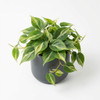


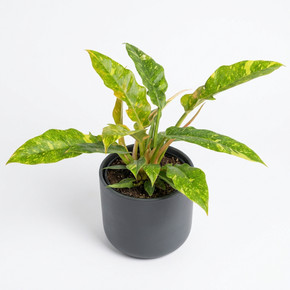
Bring effortless jungle vibes to your space with the Heartleaf Philodendron. Its cascading vines and heart-shaped leaves instantly soften corners, brighten workspaces, and look stunning in hanging planters or trained up a pole. Tough, adaptable, and beginner-friendly—this is the go-to indoor plant for stylish greenery with minimal fuss.
Common Name: Heartleaf Philodendron
Botanical Name: Philodendron hederaceum
Plant Variant: Standard
Plant Color: Multicolor
Plant Country: Unknown
SKU: PLT-0610
Arabic Name: فيلودندرون قلب
Stems: 5
Family: Araceae
Order: Alismatales
Family: Araceae
Genus: Philodendron
Species: P. hederaceum
Native to tropical regions of Central and South America, including southern Mexico, the Caribbean, and northern Argentina. Widely cultivated as an indoor ornamental plant across North America, Europe, Asia, and beyond.
Features trailing or climbing vines with glossy, heart-shaped leaves that emerge light green and deepen to rich emerald. Mature leaves typically measure 3–5 inches long. New growth appears on slender, twining stems that may climb supports or cascade over container edges.
Indoors, vines can reach 3–6 ft (1–2 m) in length, depending on support and pruning. Leaves average 3–5 in (7–13 cm) in length and 2–4 in (5–10 cm) in width. Plant height varies with training; untrained specimens form a draping mound.
Thrives in bright, indirect light. Tolerates medium to low light but growth slows and internodes lengthen. Avoid direct midday sun, which can scorch foliage. Near an east- or north-facing window is ideal.
Keep soil evenly moist but not waterlogged. Water when the top 1–2 in (2.5–5 cm) of soil feels dry. Reduce frequency in winter. Avoid letting the plant sit in standing water to prevent root rot.
Use a well-draining potting mix containing peat or coco coir, perlite, and pine bark. Aroids bark mix or standard indoor potting soil amended with perlite works well. Repot every 1–2 years to refresh media and accommodate root growth.
Optimal temperature range 65–85 °F (18–29 °C); minimum 55 °F (13 °C). Prefers moderate to high humidity (40–60%+). In drier indoor air, increase humidity with pebble trays, misting, or a humidifier.
Feed with a balanced liquid fertilizer (e.g., 20-20-20) diluted to half strength every 4–6 weeks during spring and summer. Suspend feeding in fall and winter when growth slows.
Easy. Prune to control length and encourage bushier growth. Wipe leaves occasionally to remove dust. Provide support (moss pole or trellis) if vertical growth is desired. Inspect regularly for pests.
Propagate via stem cuttings with at least one node. Place cuttings in water or directly into moist medium; roots form in 2–4 weeks. Maintain warm, humid conditions for best success.
Yellowing leaves: overwatering or poor drainage. Brown leaf edges: low humidity or underwatering. Pests: spider mites, mealybugs, scale. Treat infestations with insecticidal soap or neem oil.
Excellent air-purifying qualities. Ideal for hanging baskets, shelves, terrariums, or trained on poles. Adds lush, tropical ambiance to interiors. Beginner-friendly and adaptable to various décor styles.
Contains insoluble calcium oxalate crystals; toxic if ingested by pets (cats, dogs) and humans. May cause oral irritation, drooling, vomiting. Keep out of reach of children and animals.
Bring effortless jungle vibes to your space with the Heartleaf Philodendron. Its cascading vines and heart-shaped leaves instantly soften corners, brighten workspaces, and look stunning in hanging planters or trained up a pole. Tough, adaptable, and beginner-friendly—this is the go-to indoor plant for stylish greenery with minimal fuss.
Common Name: Heartleaf Philodendron
Botanical Name: Philodendron hederaceum
Plant Variant: Standard
Plant Color: Multicolor
Plant Country: Unknown
SKU: PLT-0610
Arabic Name: فيلودندرون قلب
Stems: 5
Family: Araceae
Order: Alismatales
Family: Araceae
Genus: Philodendron
Species: P. hederaceum
Native to tropical regions of Central and South America, including southern Mexico, the Caribbean, and northern Argentina. Widely cultivated as an indoor ornamental plant across North America, Europe, Asia, and beyond.
Features trailing or climbing vines with glossy, heart-shaped leaves that emerge light green and deepen to rich emerald. Mature leaves typically measure 3–5 inches long. New growth appears on slender, twining stems that may climb supports or cascade over container edges.
Indoors, vines can reach 3–6 ft (1–2 m) in length, depending on support and pruning. Leaves average 3–5 in (7–13 cm) in length and 2–4 in (5–10 cm) in width. Plant height varies with training; untrained specimens form a draping mound.
Thrives in bright, indirect light. Tolerates medium to low light but growth slows and internodes lengthen. Avoid direct midday sun, which can scorch foliage. Near an east- or north-facing window is ideal.
Keep soil evenly moist but not waterlogged. Water when the top 1–2 in (2.5–5 cm) of soil feels dry. Reduce frequency in winter. Avoid letting the plant sit in standing water to prevent root rot.
Use a well-draining potting mix containing peat or coco coir, perlite, and pine bark. Aroids bark mix or standard indoor potting soil amended with perlite works well. Repot every 1–2 years to refresh media and accommodate root growth.
Optimal temperature range 65–85 °F (18–29 °C); minimum 55 °F (13 °C). Prefers moderate to high humidity (40–60%+). In drier indoor air, increase humidity with pebble trays, misting, or a humidifier.
Feed with a balanced liquid fertilizer (e.g., 20-20-20) diluted to half strength every 4–6 weeks during spring and summer. Suspend feeding in fall and winter when growth slows.
Easy. Prune to control length and encourage bushier growth. Wipe leaves occasionally to remove dust. Provide support (moss pole or trellis) if vertical growth is desired. Inspect regularly for pests.
Propagate via stem cuttings with at least one node. Place cuttings in water or directly into moist medium; roots form in 2–4 weeks. Maintain warm, humid conditions for best success.
Yellowing leaves: overwatering or poor drainage. Brown leaf edges: low humidity or underwatering. Pests: spider mites, mealybugs, scale. Treat infestations with insecticidal soap or neem oil.
Excellent air-purifying qualities. Ideal for hanging baskets, shelves, terrariums, or trained on poles. Adds lush, tropical ambiance to interiors. Beginner-friendly and adaptable to various décor styles.
Contains insoluble calcium oxalate crystals; toxic if ingested by pets (cats, dogs) and humans. May cause oral irritation, drooling, vomiting. Keep out of reach of children and animals.





Take 20% off your first order
Enter the code below at checkout to get 20% off your first order