


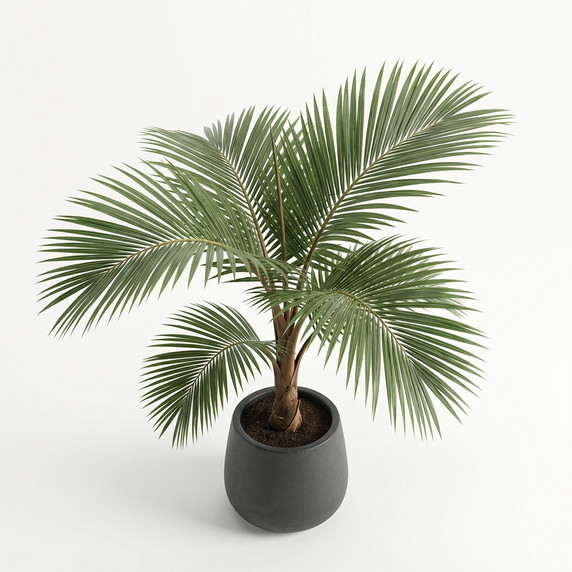


Bring instant resort vibes to your space with the Canary Island Date Palm. Its dramatic feather fronds and strong trunk make it the perfect centerpiece for entrances, patios, and bright atriums. Tough, heat-tolerant, and easy to care for, this palm delivers a premium look with minimal effort—just give it sun, good drainage, and deep watering.
Common Name: Canary Island Date Palm
Botanical Name: Phoenix canariensis
Former Name: Not available
Plant Type: Palm tree (Outdoor houseplant)
Plant Code / SKU: PLT-0429
Alternative Names:
Canary Date Palm
نخيل ملكي
Order: Arecales
Family: Arecaceae
Genus: Phoenix
Species: P. canariensis
Native to the Canary Islands (off the northwest coast of Africa).
Widely cultivated in Mediterranean, subtropical, and warm temperate regions worldwide, including California, Florida, Australia, and South Africa.
Trunk: Single, stout, grey‐brown, up to 60–90 cm in diameter with persistent leaf base fibers.
Leaves: Pinnate feather fronds up to 4–6 m long; arching leaflets are linear, dark green, and arranged along a central rachis.
Crown: Dense, spherical canopy of 75–125 fronds.
Flowers & Fruit: Small yellow‐white flowers on branching inflorescences; fruit are oblong orange to red drupes (~2 cm long).
Height: 10–20 m at maturity in landscape; slower and smaller when container‐grown.
Spread: 6–8 m crown width outdoors.
Growth Rate: Moderate, ~30–60 cm per year under ideal conditions.
Pot Size: Minimum 50 cm diameter for juvenile specimens; can be grown in larger containers or beds.
Full sun preferred (minimum 6 hours direct light daily).
Tolerates light shade but may become leggy and produce fewer fronds.
Regular deep watering during establishment (first 1–2 years).
Once established, drought tolerant; water when top 5–8 cm of soil is dry.
Avoid waterlogging; ensure good drainage to prevent root rot.
Soil: Well‐draining sandy loam or loamy soil with good aeration.
pH: Slightly acidic to neutral (6.0–8.0).
Potting Mix: Commercial palm or cactus mix amended with coarse sand/perlite.
Repotting: Every 2–3 years for container plants, increasing pot size gradually.
Hardiness: USDA zones 9b–11.
Optimal Temperature: 18–30 °C.
Tolerance: Can withstand brief dips to 5 °C but damaged below freezing.
Humidity: Prefers moderate humidity; tolerates dry air once established.
Apply slow‐release palm fertilizer high in potassium and magnesium (e.g., 8-2-12 + Mg) in spring and mid‐summer.
Supplement with micronutrients (Fe, Mn) to prevent chlorosis.
Container plants: feed every 6–8 weeks during growing season.
Low to moderate care.
Remove dead or damaged fronds to maintain appearance and prevent pests.
Monitor for nutrient deficiencies; adjust fertilization and pH as needed.
Propagation by seed: fresh seeds germinate in 1–3 months at 25–30 °C.
Seedlings develop slowly; transplant when several fronds appear.
Vegetative propagation not practical; no viable offshoots.
Pests: Red palm weevil, scale insects, spider mites.
Diseases: Fusarium wilt, Ganoderma butt rot, leaf spot.
Deficiencies: Iron and magnesium chlorosis causing yellowing between leaf veins.
Prevention: Ensure proper drainage, air circulation, and balanced nutrition.
Ornamental focal point in landscapes, patios, and large containers.
Provides tropical ambiance and shade.
Enhances property value and curb appeal.
Indoor use in large atriums and conservatories.
Non-toxic to humans and pets.
No known allergenic sap; wear gloves when pruning to avoid minor skin irritation.
Bring instant resort vibes to your space with the Canary Island Date Palm. Its dramatic feather fronds and strong trunk make it the perfect centerpiece for entrances, patios, and bright atriums. Tough, heat-tolerant, and easy to care for, this palm delivers a premium look with minimal effort—just give it sun, good drainage, and deep watering.
Common Name: Canary Island Date Palm
Botanical Name: Phoenix canariensis
Former Name: Not available
Plant Type: Palm tree (Outdoor houseplant)
Plant Code / SKU: PLT-0429
Alternative Names:
Canary Date Palm
نخيل ملكي
Order: Arecales
Family: Arecaceae
Genus: Phoenix
Species: P. canariensis
Native to the Canary Islands (off the northwest coast of Africa).
Widely cultivated in Mediterranean, subtropical, and warm temperate regions worldwide, including California, Florida, Australia, and South Africa.
Trunk: Single, stout, grey‐brown, up to 60–90 cm in diameter with persistent leaf base fibers.
Leaves: Pinnate feather fronds up to 4–6 m long; arching leaflets are linear, dark green, and arranged along a central rachis.
Crown: Dense, spherical canopy of 75–125 fronds.
Flowers & Fruit: Small yellow‐white flowers on branching inflorescences; fruit are oblong orange to red drupes (~2 cm long).
Height: 10–20 m at maturity in landscape; slower and smaller when container‐grown.
Spread: 6–8 m crown width outdoors.
Growth Rate: Moderate, ~30–60 cm per year under ideal conditions.
Pot Size: Minimum 50 cm diameter for juvenile specimens; can be grown in larger containers or beds.
Full sun preferred (minimum 6 hours direct light daily).
Tolerates light shade but may become leggy and produce fewer fronds.
Regular deep watering during establishment (first 1–2 years).
Once established, drought tolerant; water when top 5–8 cm of soil is dry.
Avoid waterlogging; ensure good drainage to prevent root rot.
Soil: Well‐draining sandy loam or loamy soil with good aeration.
pH: Slightly acidic to neutral (6.0–8.0).
Potting Mix: Commercial palm or cactus mix amended with coarse sand/perlite.
Repotting: Every 2–3 years for container plants, increasing pot size gradually.
Hardiness: USDA zones 9b–11.
Optimal Temperature: 18–30 °C.
Tolerance: Can withstand brief dips to 5 °C but damaged below freezing.
Humidity: Prefers moderate humidity; tolerates dry air once established.
Apply slow‐release palm fertilizer high in potassium and magnesium (e.g., 8-2-12 + Mg) in spring and mid‐summer.
Supplement with micronutrients (Fe, Mn) to prevent chlorosis.
Container plants: feed every 6–8 weeks during growing season.
Low to moderate care.
Remove dead or damaged fronds to maintain appearance and prevent pests.
Monitor for nutrient deficiencies; adjust fertilization and pH as needed.
Propagation by seed: fresh seeds germinate in 1–3 months at 25–30 °C.
Seedlings develop slowly; transplant when several fronds appear.
Vegetative propagation not practical; no viable offshoots.
Pests: Red palm weevil, scale insects, spider mites.
Diseases: Fusarium wilt, Ganoderma butt rot, leaf spot.
Deficiencies: Iron and magnesium chlorosis causing yellowing between leaf veins.
Prevention: Ensure proper drainage, air circulation, and balanced nutrition.
Ornamental focal point in landscapes, patios, and large containers.
Provides tropical ambiance and shade.
Enhances property value and curb appeal.
Indoor use in large atriums and conservatories.
Non-toxic to humans and pets.
No known allergenic sap; wear gloves when pruning to avoid minor skin irritation.

Take 20% off your first order
Enter the code below at checkout to get 20% off your first order