

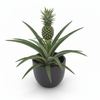






Ready for a houseplant that's as bold as you are? The Pineapple Plant isn't just a plant; it's a statement. With its dramatic, spiky foliage and the jaw-dropping feature of a real pineapple growing right on top, it's guaranteed to be the star of your collection. Surprisingly low-maintenance, this tropical beauty thrives on sunlight and brings a fun, exotic vibe to any space. Perfect as an unforgettable gift or a treat for yourself. Grow your own piece of paradise—add this amazing plant to your cart today!
Common Name: Pineapple Plant / اناناس
Botanical Name: Ananas comosus
Plant Variant: Standard
Plant Color: Green
Plant Country: Netherlands
Stems: Central stalk bearing fruit
Family: Bromeliaceae
Kingdom: Plantae
Clade: Tracheophytes
Order: Poales
Family: Bromeliaceae
Genus: Ananas
Species: A. comosus
The Pineapple plant is native to South America, specifically the region between southern Brazil and Paraguay. It was spread throughout the continent by the Tupi-Guarani people and was later introduced to the Caribbean and eventually Europe and Asia following colonial expeditions.
This plant features a dense rosette of long, stiff, sword-shaped leaves that are typically dark green and may have serrated edges. From the center of the rosette, a thick peduncle grows, topped by a miniature, ornamental pineapple fruit crowned with its own small tuft of leaves.
In an indoor environment, the plant typically reaches a height and spread of 2 to 3 feet (60–90 cm). The ornamental fruit itself remains small compared to commercial agricultural varieties.
Pineapple plants thrive in bright, direct light. For best growth and fruit development, they should receive at least 6 to 8 hours of sunlight daily. They can tolerate bright indirect light, but growth may slow down.
Water the plant when the top inch of soil feels dry. They are somewhat drought-tolerant once established. It is important to water both the soil and the center of the rosette, but avoid letting water sit for too long in the leaves to prevent rot.
Requires a well-draining potting mix. A mixture of peat, sand, and perlite, or a commercial bromeliad or cactus mix, is ideal. Ensure the pot has adequate drainage holes to prevent waterlogging.
Being tropical, they prefer warm temperatures between 18°C and 30°C (65°F – 85°F). They are sensitive to frost and should be kept away from cold drafts. They enjoy high humidity; misting the leaves or using a humidifier can help in dry indoor environments.
Apply a balanced, water-soluble fertilizer at half strength every month during the spring and summer growing seasons. Reduce fertilization during the winter months.
The care level is considered Easy to Moderate. The plant is hardy and low-maintenance, though achieving a large, mature fruit requires consistent light and patience.
Growth is relatively slow. Propagation is most commonly achieved by cutting the leafy crown off a mature pineapple fruit and rooting it in soil, or by separating "suckers" or "pups" that emerge from the base of the mother plant.
The most common issues are root rot caused by overwatering and leaf tip burn due to low humidity. Pests such as mealybugs and scale insects may occasionally appear and should be treated with neem oil or insecticidal soap.
In addition to its striking ornamental value, the Pineapple plant is known for its air-purifying qualities. It is unique among many houseplants for producing oxygen and absorbing carbon dioxide at night (CAM photosynthesis), making it an excellent bedroom plant.
According to the provided data, this plant is not considered pet-safe (the spiky leaves can cause physical injury). However, it is labeled as human-safe, though the sap may cause mild skin irritation in sensitive individuals and the unripe fruit can be toxic if ingested.
Ready for a houseplant that's as bold as you are? The Pineapple Plant isn't just a plant; it's a statement. With its dramatic, spiky foliage and the jaw-dropping feature of a real pineapple growing right on top, it's guaranteed to be the star of your collection. Surprisingly low-maintenance, this tropical beauty thrives on sunlight and brings a fun, exotic vibe to any space. Perfect as an unforgettable gift or a treat for yourself. Grow your own piece of paradise—add this amazing plant to your cart today!
Common Name: Pineapple Plant / اناناس
Botanical Name: Ananas comosus
Plant Variant: Standard
Plant Color: Green
Plant Country: Netherlands
Stems: Central stalk bearing fruit
Family: Bromeliaceae
Kingdom: Plantae
Clade: Tracheophytes
Order: Poales
Family: Bromeliaceae
Genus: Ananas
Species: A. comosus
The Pineapple plant is native to South America, specifically the region between southern Brazil and Paraguay. It was spread throughout the continent by the Tupi-Guarani people and was later introduced to the Caribbean and eventually Europe and Asia following colonial expeditions.
This plant features a dense rosette of long, stiff, sword-shaped leaves that are typically dark green and may have serrated edges. From the center of the rosette, a thick peduncle grows, topped by a miniature, ornamental pineapple fruit crowned with its own small tuft of leaves.
In an indoor environment, the plant typically reaches a height and spread of 2 to 3 feet (60–90 cm). The ornamental fruit itself remains small compared to commercial agricultural varieties.
Pineapple plants thrive in bright, direct light. For best growth and fruit development, they should receive at least 6 to 8 hours of sunlight daily. They can tolerate bright indirect light, but growth may slow down.
Water the plant when the top inch of soil feels dry. They are somewhat drought-tolerant once established. It is important to water both the soil and the center of the rosette, but avoid letting water sit for too long in the leaves to prevent rot.
Requires a well-draining potting mix. A mixture of peat, sand, and perlite, or a commercial bromeliad or cactus mix, is ideal. Ensure the pot has adequate drainage holes to prevent waterlogging.
Being tropical, they prefer warm temperatures between 18°C and 30°C (65°F – 85°F). They are sensitive to frost and should be kept away from cold drafts. They enjoy high humidity; misting the leaves or using a humidifier can help in dry indoor environments.
Apply a balanced, water-soluble fertilizer at half strength every month during the spring and summer growing seasons. Reduce fertilization during the winter months.
The care level is considered Easy to Moderate. The plant is hardy and low-maintenance, though achieving a large, mature fruit requires consistent light and patience.
Growth is relatively slow. Propagation is most commonly achieved by cutting the leafy crown off a mature pineapple fruit and rooting it in soil, or by separating "suckers" or "pups" that emerge from the base of the mother plant.
The most common issues are root rot caused by overwatering and leaf tip burn due to low humidity. Pests such as mealybugs and scale insects may occasionally appear and should be treated with neem oil or insecticidal soap.
In addition to its striking ornamental value, the Pineapple plant is known for its air-purifying qualities. It is unique among many houseplants for producing oxygen and absorbing carbon dioxide at night (CAM photosynthesis), making it an excellent bedroom plant.
According to the provided data, this plant is not considered pet-safe (the spiky leaves can cause physical injury). However, it is labeled as human-safe, though the sap may cause mild skin irritation in sensitive individuals and the unripe fruit can be toxic if ingested.
Take 20% off your first order
Enter the code below at checkout to get 20% off your first order