





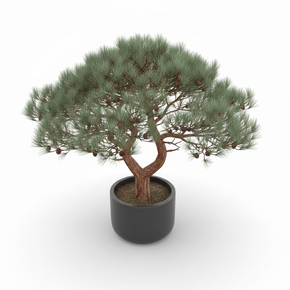
Transform your garden with the timeless elegance of the Italian Stone Pine. With its stunning, architectural umbrella canopy and lush green needles, this Pinus pinea is more than a plant—it's a living sculpture. Ideal for creating a focal point in any landscape, it's also the source of delicious gourmet pine nuts. Drought-resistant and sun-loving, it brings Mediterranean grandeur right to your doorstep. Order now to invest in a lifetime of natural beauty.
Common Name: Italian Stone Pine
Botanical Name: Pinus pinea
Former Name: Not available
Plant Type: Evergreen conifer tree
Plant Code / SKU: PLT-1701
Alternative Names:
Stone Pine
Umbrella Pine
Parasol Pine
Pignolia Nut Pine
Order: Pinales
Family: Pinaceae
Genus: Pinus
Native Range: Mediterranean region, including Southern Europe, North Africa, and the Levant.
Habitat: Coastal forests, sand dunes, and rocky hillsides in Mediterranean climates. It is well-adapted to sandy, poor soils.
Foliage: Needles are long (10-20 cm), bright to mid-green, and grow in pairs (fascicles of two). They are stiff and pointed.
Bark: Thick, reddish-brown and deeply fissured into broad, scaly plates on mature trees.
Flowers/Cones: Produces large, round to ovoid seed cones that are 8-15 cm long. The cones are shiny light brown and take 36 months to mature, the longest of any pine species. They contain the edible pine nuts.
Form/Shape: Young trees have a bushy, globular shape. Mature trees develop a distinctive, broad, umbrella-like canopy on a short, stout trunk.
Mature Height: 12-25 meters (40-80 feet)
Mature Spread: 6-12 meters (20-40 feet)
Growth Rate: Slow to moderate.
Sun Exposure: Full sun. Requires at least 6-8 hours of direct sunlight per day for optimal growth and cone production. It is not tolerant of shade.
Watering Frequency: Highly drought-tolerant once established. Young trees need regular watering to establish their root system. For mature trees, water deeply but infrequently during extended periods of drought. Allow the soil to dry out completely between waterings.
Soil Type: Prefers well-drained, sandy, or loamy soils. It is adaptable to poor and rocky soils but does not tolerate waterlogged or heavy clay conditions.
Soil pH: Adaptable to a range of soil pH, from acidic to slightly alkaline (6.0 to 8.0).
Potting: Can be grown in large containers when young, but it is a large tree best suited for landscape planting. Use a well-draining potting mix, such as one formulated for cacti and succulents.
Temperature Tolerance: Hardy in USDA zones 8-10. It thrives in hot, dry summers and can withstand winter temperatures down to approximately -12°C (10°F) once established.
Humidity: Prefers low to moderate humidity and is well-suited to coastal environments, showing good tolerance to salt spray.
Fertilizer Needs: Low. In most landscape settings, it does not require fertilization. If planted in very poor soil, a single application of a balanced, slow-release fertilizer for evergreen trees in the spring can be beneficial.
Care Level: Low. This is a resilient and low-maintenance tree once it is established.
Pruning: Little to no pruning is required to maintain its natural shape. Prune only to remove dead, damaged, or crossing branches during the dormant season (late winter).
Propagation Method: Primarily propagated from seed (the pine nuts). Seeds have a hard coat and benefit from a period of cold, moist stratification for 30-60 days to enhance germination.
Germination: Sow seeds in spring in a well-draining seed-starting mix.
Pests: Generally pest-resistant. May occasionally be affected by pine processionary moths, aphids, or pine shoot beetles in its native range.
Diseases: Susceptible to root rot in poorly drained soils. Fungal diseases like needle blight or rust can occur in overly humid conditions with poor air circulation.
Landscaping: A superb specimen tree for parks and large gardens due to its unique architectural form. Used for shade, as a windbreak, and in Mediterranean or coastal-themed landscapes.
Culinary: It is the primary commercial source of edible pine nuts (pignoli), a gourmet ingredient used worldwide in pesto, salads, desserts, and other dishes.
Other Uses: The timber is used for furniture and construction, and its resin has been used for various purposes historically.
Toxicity to Humans: Non-toxic. The seeds (pine nuts) are edible and widely consumed.
Toxicity to Pets: Non-toxic to cats and dogs according to the ASPCA. While the needles are not toxic, ingestion of a large quantity could cause mild gastrointestinal upset.
Transform your garden with the timeless elegance of the Italian Stone Pine. With its stunning, architectural umbrella canopy and lush green needles, this Pinus pinea is more than a plant—it's a living sculpture. Ideal for creating a focal point in any landscape, it's also the source of delicious gourmet pine nuts. Drought-resistant and sun-loving, it brings Mediterranean grandeur right to your doorstep. Order now to invest in a lifetime of natural beauty.
Common Name: Italian Stone Pine
Botanical Name: Pinus pinea
Former Name: Not available
Plant Type: Evergreen conifer tree
Plant Code / SKU: PLT-1701
Alternative Names:
Stone Pine
Umbrella Pine
Parasol Pine
Pignolia Nut Pine
Order: Pinales
Family: Pinaceae
Genus: Pinus
Native Range: Mediterranean region, including Southern Europe, North Africa, and the Levant.
Habitat: Coastal forests, sand dunes, and rocky hillsides in Mediterranean climates. It is well-adapted to sandy, poor soils.
Foliage: Needles are long (10-20 cm), bright to mid-green, and grow in pairs (fascicles of two). They are stiff and pointed.
Bark: Thick, reddish-brown and deeply fissured into broad, scaly plates on mature trees.
Flowers/Cones: Produces large, round to ovoid seed cones that are 8-15 cm long. The cones are shiny light brown and take 36 months to mature, the longest of any pine species. They contain the edible pine nuts.
Form/Shape: Young trees have a bushy, globular shape. Mature trees develop a distinctive, broad, umbrella-like canopy on a short, stout trunk.
Mature Height: 12-25 meters (40-80 feet)
Mature Spread: 6-12 meters (20-40 feet)
Growth Rate: Slow to moderate.
Sun Exposure: Full sun. Requires at least 6-8 hours of direct sunlight per day for optimal growth and cone production. It is not tolerant of shade.
Watering Frequency: Highly drought-tolerant once established. Young trees need regular watering to establish their root system. For mature trees, water deeply but infrequently during extended periods of drought. Allow the soil to dry out completely between waterings.
Soil Type: Prefers well-drained, sandy, or loamy soils. It is adaptable to poor and rocky soils but does not tolerate waterlogged or heavy clay conditions.
Soil pH: Adaptable to a range of soil pH, from acidic to slightly alkaline (6.0 to 8.0).
Potting: Can be grown in large containers when young, but it is a large tree best suited for landscape planting. Use a well-draining potting mix, such as one formulated for cacti and succulents.
Temperature Tolerance: Hardy in USDA zones 8-10. It thrives in hot, dry summers and can withstand winter temperatures down to approximately -12°C (10°F) once established.
Humidity: Prefers low to moderate humidity and is well-suited to coastal environments, showing good tolerance to salt spray.
Fertilizer Needs: Low. In most landscape settings, it does not require fertilization. If planted in very poor soil, a single application of a balanced, slow-release fertilizer for evergreen trees in the spring can be beneficial.
Care Level: Low. This is a resilient and low-maintenance tree once it is established.
Pruning: Little to no pruning is required to maintain its natural shape. Prune only to remove dead, damaged, or crossing branches during the dormant season (late winter).
Propagation Method: Primarily propagated from seed (the pine nuts). Seeds have a hard coat and benefit from a period of cold, moist stratification for 30-60 days to enhance germination.
Germination: Sow seeds in spring in a well-draining seed-starting mix.
Pests: Generally pest-resistant. May occasionally be affected by pine processionary moths, aphids, or pine shoot beetles in its native range.
Diseases: Susceptible to root rot in poorly drained soils. Fungal diseases like needle blight or rust can occur in overly humid conditions with poor air circulation.
Landscaping: A superb specimen tree for parks and large gardens due to its unique architectural form. Used for shade, as a windbreak, and in Mediterranean or coastal-themed landscapes.
Culinary: It is the primary commercial source of edible pine nuts (pignoli), a gourmet ingredient used worldwide in pesto, salads, desserts, and other dishes.
Other Uses: The timber is used for furniture and construction, and its resin has been used for various purposes historically.
Toxicity to Humans: Non-toxic. The seeds (pine nuts) are edible and widely consumed.
Toxicity to Pets: Non-toxic to cats and dogs according to the ASPCA. While the needles are not toxic, ingestion of a large quantity could cause mild gastrointestinal upset.

Take 20% off your first order
Enter the code below at checkout to get 20% off your first order