


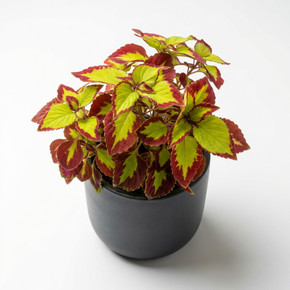


Bring instant color to any space with Coleus—one of the most striking foliage plants you can grow. Its patterned leaves deliver a lush, designer look on desks, entryways, patios, and shaded balconies. Quick to fill a pot, easy to shape, and simple to propagate, coleus is the perfect choice for high-impact décor with minimal effort.
Common Name: Coleus
Botanical Name: Plectranthus scutellarioides
Former Name: Solenostemon scutellarioides
Plant Type: Annual foliage plant
Plant Code / SKU: PLT-0469
Alternative Names:
Painted nettle
Flame nettle
كوليوس
Order: Lamiales
Family: Lamiaceae
Genus: Plectranthus
Native to tropical regions of Africa and parts of Asia. Widely cultivated as an ornamental plant, coleus has naturalized in many warm-climate areas worldwide, including Central and South America, the Caribbean, and Southeast Asia.
Leaves: Opposite, ovate with serrated margins; highly variable in color—combinations of green, red, pink, purple, yellow, and white form bold patterns.
Stems: Square, succulent, often matching or contrasting leaf colors.
Flowers: Small, tubular, lavender to blue, borne on erect spikes; typically removed to maintain foliage vigor.
Height: 20–60 cm (8–24 in)
Spread: 20–45 cm (8–18 in)
Growth Habit: mounded, bushy; fills container quickly
Bright, indirect light is ideal to maintain vivid leaf coloration. Tolerates 2–4 hours of morning sun or filtered afternoon sun. In deep shade, colors may dull; in harsh midday sun, leaves can scorch.
Keep soil evenly moist but not water-logged. Water when the top 1–2 cm (0.5–1 in) of soil feels dry. Avoid allowing the soil to dry out completely, which can cause leaf wilting and drop.
Use a well-draining potting mix, such as a blend of peat moss, perlite, and compost. pH ideally between 6.0 and 7.0. Repot annually or when root-bound; refresh medium to replenish nutrients and maintain drainage.
Temperature: 15–24 °C (60–75 °F); minimum 10 °C (50 °F).
Humidity: Prefers moderate to high humidity (50–70%). In dry indoor air, occasional misting or a humidity tray is beneficial.
Feed with a balanced, water-soluble fertilizer (e.g., 10-10-10 or 20-20-20) at half strength every 2–4 weeks during the growing season (spring through early autumn). Reduce feeding in cooler months.
Care Level: Low to moderate. Pinch back regularly to encourage bushiness and prevent legginess. Remove flower spikes promptly to direct energy into foliage. Monitor for pests and adjust watering as needed.
Growth Rate: Fast. Can double in mass over a single growing season.
Propagation: Very easy from stem cuttings. Take 5–8 cm (2–3 in) tip cuttings, remove lower leaves, and root in water or moist potting mix within 1–2 weeks.
Pests: Aphids, whiteflies, mealybugs, spider mites.
Diseases: Powdery mildew in humid, poorly ventilated conditions; root rot from overwatering.
Cultural Issues: Leaf scorch from excessive sun; leggy growth from insufficient light.
Ornamental: Ideal for containers, hanging baskets, borders, and mixed plantings. Provides instant, high-contrast color.
Indoor Décor: Brightens low-light entryways and offices.
Wildlife: Flowers attract hummingbirds and butterflies.
Generally considered non-toxic to humans and pets by the ASPCA. Minimal risk if ingested, though large quantities may cause mild gastrointestinal upset.
Bring instant color to any space with Coleus—one of the most striking foliage plants you can grow. Its patterned leaves deliver a lush, designer look on desks, entryways, patios, and shaded balconies. Quick to fill a pot, easy to shape, and simple to propagate, coleus is the perfect choice for high-impact décor with minimal effort.
Common Name: Coleus
Botanical Name: Plectranthus scutellarioides
Former Name: Solenostemon scutellarioides
Plant Type: Annual foliage plant
Plant Code / SKU: PLT-0469
Alternative Names:
Painted nettle
Flame nettle
كوليوس
Order: Lamiales
Family: Lamiaceae
Genus: Plectranthus
Native to tropical regions of Africa and parts of Asia. Widely cultivated as an ornamental plant, coleus has naturalized in many warm-climate areas worldwide, including Central and South America, the Caribbean, and Southeast Asia.
Leaves: Opposite, ovate with serrated margins; highly variable in color—combinations of green, red, pink, purple, yellow, and white form bold patterns.
Stems: Square, succulent, often matching or contrasting leaf colors.
Flowers: Small, tubular, lavender to blue, borne on erect spikes; typically removed to maintain foliage vigor.
Height: 20–60 cm (8–24 in)
Spread: 20–45 cm (8–18 in)
Growth Habit: mounded, bushy; fills container quickly
Bright, indirect light is ideal to maintain vivid leaf coloration. Tolerates 2–4 hours of morning sun or filtered afternoon sun. In deep shade, colors may dull; in harsh midday sun, leaves can scorch.
Keep soil evenly moist but not water-logged. Water when the top 1–2 cm (0.5–1 in) of soil feels dry. Avoid allowing the soil to dry out completely, which can cause leaf wilting and drop.
Use a well-draining potting mix, such as a blend of peat moss, perlite, and compost. pH ideally between 6.0 and 7.0. Repot annually or when root-bound; refresh medium to replenish nutrients and maintain drainage.
Temperature: 15–24 °C (60–75 °F); minimum 10 °C (50 °F).
Humidity: Prefers moderate to high humidity (50–70%). In dry indoor air, occasional misting or a humidity tray is beneficial.
Feed with a balanced, water-soluble fertilizer (e.g., 10-10-10 or 20-20-20) at half strength every 2–4 weeks during the growing season (spring through early autumn). Reduce feeding in cooler months.
Care Level: Low to moderate. Pinch back regularly to encourage bushiness and prevent legginess. Remove flower spikes promptly to direct energy into foliage. Monitor for pests and adjust watering as needed.
Growth Rate: Fast. Can double in mass over a single growing season.
Propagation: Very easy from stem cuttings. Take 5–8 cm (2–3 in) tip cuttings, remove lower leaves, and root in water or moist potting mix within 1–2 weeks.
Pests: Aphids, whiteflies, mealybugs, spider mites.
Diseases: Powdery mildew in humid, poorly ventilated conditions; root rot from overwatering.
Cultural Issues: Leaf scorch from excessive sun; leggy growth from insufficient light.
Ornamental: Ideal for containers, hanging baskets, borders, and mixed plantings. Provides instant, high-contrast color.
Indoor Décor: Brightens low-light entryways and offices.
Wildlife: Flowers attract hummingbirds and butterflies.
Generally considered non-toxic to humans and pets by the ASPCA. Minimal risk if ingested, though large quantities may cause mild gastrointestinal upset.

Take 20% off your first order
Enter the code below at checkout to get 20% off your first order