

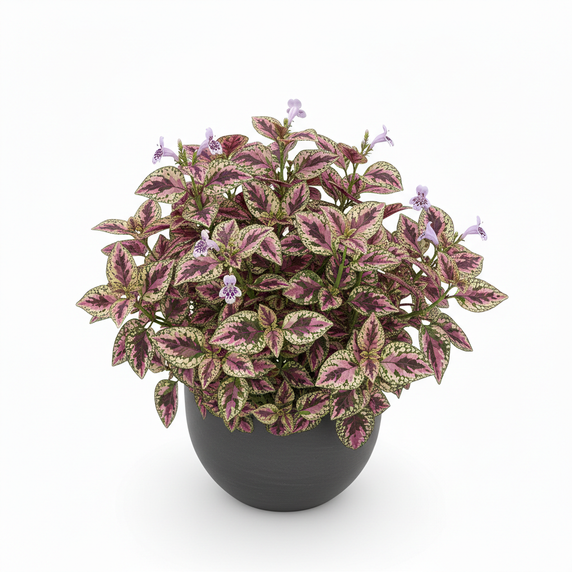




Instantly brighten any room with the playful charm of the Polka Dot Plant! Nicknamed 'Freckle Face,' its stunning leaves are splattered with vibrant shades of pink, red, or white, making each plant a unique work of art. Perfectly sized for desks and shelves, this pet-safe beauty is easy to care for, thriving in bright, indirect light. It's the ideal choice for adding a pop of personality and life to your space or as a delightful gift for any plant lover.
Common Name: Polka Dot Plant, Freckle Face, خد العروس
Botanical Name: Hypoestes phyllostachya
Variant: Standard
Color: Multicolor
Country of Origin: Netherlands
Kingdom: Plantae
Order: Lamiales
Family: Acanthaceae
Genus: Hypoestes
Species: Hypoestes phyllostachya
Native to Madagascar, the Polka Dot Plant is widely naturalized in tropical areas around the world. In its native habitat, it grows as an evergreen shrub in the understory of tropical forests.
The plant is famous for its ovate green leaves that appear to be splashed with spots of pink, red, or white. The foliage is soft and grows on slender stems. While it can produce small, light purple or lilac flowers in spikes, the blooms are generally considered secondary to the spectacular foliage.
As a houseplant, it usually stays compact, reaching about 15–30 cm (6–12 inches) in height and width. If not pruned, it can become leggy and reach up to 90 cm (3 feet) in warmer outdoor climates.
Prefers bright, indirect light. Direct sunlight can scorch the delicate leaves, while too little light will cause the plant to lose its vibrant variegation and become "leggy" as it stretches toward a light source.
Keep the soil consistently moist but not waterlogged. The Polka Dot Plant is known for "fainting" (wilting dramatically) when it needs water, but it usually perks up quickly after being watered. High water quality (distilled or filtered) is often preferred to prevent leaf tip browning.
Thrives in well-draining, rich potting soil. A mixture of peat moss, perlite, and standard potting soil is ideal to retain moisture while allowing for adequate drainage.
Prefers warm temperatures between 18°C and 27°C (65-80°F). As a tropical plant, it loves high humidity. Mist the leaves frequently or use a humidifier/pebble tray to keep the air moist, especially in dry indoor environments.
Feed every 2–4 weeks during the growing season (spring and summer) with a balanced liquid fertilizer diluted to half strength. Reduce feeding in the winter months.
Care Level: Easy to Moderate. Regular maintenance involves "pinching" back the growing tips to encourage a bushier, more compact growth habit. Removing flower spikes can also help the plant focus its energy on foliage growth.
Fast-growing. It can be easily propagated through stem cuttings placed in water or directly in moist soil. It also grows readily from seed, though cultivars may vary in variegation.
Susceptible to aphids, spider mites, and whiteflies. Overwatering can lead to root rot, while low humidity may cause leaf curling or crispy edges. Loss of color is typically a sign of insufficient light.
Primarily used as a decorative indoor plant for desks, shelves, and terrariums. It is valued for its air-purifying properties and its ability to add high-contrast color to indoor plant arrangements.
The Polka Dot Plant is considered non-toxic to cats, dogs, and horses, making it a safe choice for pet owners. It is also safe for humans.
Instantly brighten any room with the playful charm of the Polka Dot Plant! Nicknamed 'Freckle Face,' its stunning leaves are splattered with vibrant shades of pink, red, or white, making each plant a unique work of art. Perfectly sized for desks and shelves, this pet-safe beauty is easy to care for, thriving in bright, indirect light. It's the ideal choice for adding a pop of personality and life to your space or as a delightful gift for any plant lover.
Common Name: Polka Dot Plant, Freckle Face, خد العروس
Botanical Name: Hypoestes phyllostachya
Variant: Standard
Color: Multicolor
Country of Origin: Netherlands
Kingdom: Plantae
Order: Lamiales
Family: Acanthaceae
Genus: Hypoestes
Species: Hypoestes phyllostachya
Native to Madagascar, the Polka Dot Plant is widely naturalized in tropical areas around the world. In its native habitat, it grows as an evergreen shrub in the understory of tropical forests.
The plant is famous for its ovate green leaves that appear to be splashed with spots of pink, red, or white. The foliage is soft and grows on slender stems. While it can produce small, light purple or lilac flowers in spikes, the blooms are generally considered secondary to the spectacular foliage.
As a houseplant, it usually stays compact, reaching about 15–30 cm (6–12 inches) in height and width. If not pruned, it can become leggy and reach up to 90 cm (3 feet) in warmer outdoor climates.
Prefers bright, indirect light. Direct sunlight can scorch the delicate leaves, while too little light will cause the plant to lose its vibrant variegation and become "leggy" as it stretches toward a light source.
Keep the soil consistently moist but not waterlogged. The Polka Dot Plant is known for "fainting" (wilting dramatically) when it needs water, but it usually perks up quickly after being watered. High water quality (distilled or filtered) is often preferred to prevent leaf tip browning.
Thrives in well-draining, rich potting soil. A mixture of peat moss, perlite, and standard potting soil is ideal to retain moisture while allowing for adequate drainage.
Prefers warm temperatures between 18°C and 27°C (65-80°F). As a tropical plant, it loves high humidity. Mist the leaves frequently or use a humidifier/pebble tray to keep the air moist, especially in dry indoor environments.
Feed every 2–4 weeks during the growing season (spring and summer) with a balanced liquid fertilizer diluted to half strength. Reduce feeding in the winter months.
Care Level: Easy to Moderate. Regular maintenance involves "pinching" back the growing tips to encourage a bushier, more compact growth habit. Removing flower spikes can also help the plant focus its energy on foliage growth.
Fast-growing. It can be easily propagated through stem cuttings placed in water or directly in moist soil. It also grows readily from seed, though cultivars may vary in variegation.
Susceptible to aphids, spider mites, and whiteflies. Overwatering can lead to root rot, while low humidity may cause leaf curling or crispy edges. Loss of color is typically a sign of insufficient light.
Primarily used as a decorative indoor plant for desks, shelves, and terrariums. It is valued for its air-purifying properties and its ability to add high-contrast color to indoor plant arrangements.
The Polka Dot Plant is considered non-toxic to cats, dogs, and horses, making it a safe choice for pet owners. It is also safe for humans.
Take 20% off your first order
Enter the code below at checkout to get 20% off your first order