


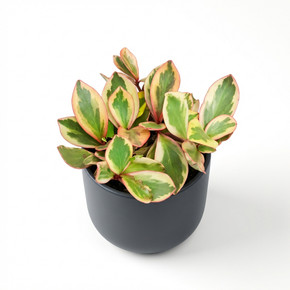
Bring a clean, modern green look to any room with the Baby Rubber Plant. Its thick, glossy leaves stay lush with minimal effort, making it a reliable choice for busy homes and professional spaces. Place it in bright to medium indirect light, water when partly dry, and enjoy a compact, polished plant that looks great year-round.
Common Name: Baby Rubber Plant
Botanical Name: Peperomia obtusifolia
Former Name: Not available
Plant Type: Foliage houseplant (Peperomia)
Plant Code / SKU: PLT-0427
Alternative Names:
American rubber plant
Pepper face
بيبيروميا
Baby rubber
Order: Piperales
Family: Piperaceae
Genus: Peperomia
Native to Florida, the Caribbean and northern South America.
Thrives in the understory of tropical forests.
Widely cultivated worldwide as an ornamental houseplant.
Leaves: Thick, glossy, fleshy, oval to round, typically 3–8 cm long; deep green, sometimes with pale variegation in other varieties.
Stems: Succulent, upright, light green to brownish.
Growth Habit: Compact, clumping form; leaves emerge alternately along the stem.
Typical Height: 20–30 cm (8–12 inches).
Typical Spread: 20–30 cm (8–12 inches).
Leaf Length: 3–8 cm (1.2–3 inches).
Bright, indirect light is ideal.
Tolerates medium indirect light.
Avoid direct sun, which can scorch leaves.
Allow the top 2–3 cm (1 inch) of soil to dry between waterings.
Water thoroughly, then let excess drain.
Reduce frequency in winter; avoid waterlogging to prevent root rot.
Use a well-draining, peat-based potting mix with perlite or coarse sand.
A mix designed for succulents or aroid blends works well.
Repot every 2–3 years or when root-bound, using a container with drainage holes.
Optimal Temperature: 18–24 °C (65–75 °F).
Minimum Temperature: 16 °C (60 °F); avoid cold drafts.
Humidity: Prefers moderate humidity (40–60%); tolerates average home levels.
Feed with a balanced, water-soluble houseplant fertilizer diluted to half strength.
Apply once a month during spring and summer growing seasons.
Suspend feeding in fall and winter.
Care Level: Low to moderate.
Prune occasional leggy stems to maintain compact shape.
Wipe leaves occasionally to remove dust and encourage photosynthesis.
Propagation Methods: Stem cuttings or leaf cuttings.
Place cuttings in water or directly in moist potting mix; roots form in 2–4 weeks.
Division: Separate offsets at repotting.
Overwatering: Leads to root rot, yellowing leaves.
Underwatering: Causes leaf drop, wrinkled foliage.
Pests: Susceptible to mealybugs, spider mites and fungus gnats.
Leaf Browning: Often due to direct sun or low humidity.
Decorative accent for desks, shelves and tabletops.
Compact size ideal for small spaces and office environments.
Helps improve indoor air quality by filtering toxins like formaldehyde.
Non-toxic to cats, dogs and humans (confirmed by ASPCA).
Safe for homes with children and pets.
Bring a clean, modern green look to any room with the Baby Rubber Plant. Its thick, glossy leaves stay lush with minimal effort, making it a reliable choice for busy homes and professional spaces. Place it in bright to medium indirect light, water when partly dry, and enjoy a compact, polished plant that looks great year-round.
Common Name: Baby Rubber Plant
Botanical Name: Peperomia obtusifolia
Former Name: Not available
Plant Type: Foliage houseplant (Peperomia)
Plant Code / SKU: PLT-0427
Alternative Names:
American rubber plant
Pepper face
بيبيروميا
Baby rubber
Order: Piperales
Family: Piperaceae
Genus: Peperomia
Native to Florida, the Caribbean and northern South America.
Thrives in the understory of tropical forests.
Widely cultivated worldwide as an ornamental houseplant.
Leaves: Thick, glossy, fleshy, oval to round, typically 3–8 cm long; deep green, sometimes with pale variegation in other varieties.
Stems: Succulent, upright, light green to brownish.
Growth Habit: Compact, clumping form; leaves emerge alternately along the stem.
Typical Height: 20–30 cm (8–12 inches).
Typical Spread: 20–30 cm (8–12 inches).
Leaf Length: 3–8 cm (1.2–3 inches).
Bright, indirect light is ideal.
Tolerates medium indirect light.
Avoid direct sun, which can scorch leaves.
Allow the top 2–3 cm (1 inch) of soil to dry between waterings.
Water thoroughly, then let excess drain.
Reduce frequency in winter; avoid waterlogging to prevent root rot.
Use a well-draining, peat-based potting mix with perlite or coarse sand.
A mix designed for succulents or aroid blends works well.
Repot every 2–3 years or when root-bound, using a container with drainage holes.
Optimal Temperature: 18–24 °C (65–75 °F).
Minimum Temperature: 16 °C (60 °F); avoid cold drafts.
Humidity: Prefers moderate humidity (40–60%); tolerates average home levels.
Feed with a balanced, water-soluble houseplant fertilizer diluted to half strength.
Apply once a month during spring and summer growing seasons.
Suspend feeding in fall and winter.
Care Level: Low to moderate.
Prune occasional leggy stems to maintain compact shape.
Wipe leaves occasionally to remove dust and encourage photosynthesis.
Propagation Methods: Stem cuttings or leaf cuttings.
Place cuttings in water or directly in moist potting mix; roots form in 2–4 weeks.
Division: Separate offsets at repotting.
Overwatering: Leads to root rot, yellowing leaves.
Underwatering: Causes leaf drop, wrinkled foliage.
Pests: Susceptible to mealybugs, spider mites and fungus gnats.
Leaf Browning: Often due to direct sun or low humidity.
Decorative accent for desks, shelves and tabletops.
Compact size ideal for small spaces and office environments.
Helps improve indoor air quality by filtering toxins like formaldehyde.
Non-toxic to cats, dogs and humans (confirmed by ASPCA).
Safe for homes with children and pets.


Take 20% off your first order
Enter the code below at checkout to get 20% off your first order